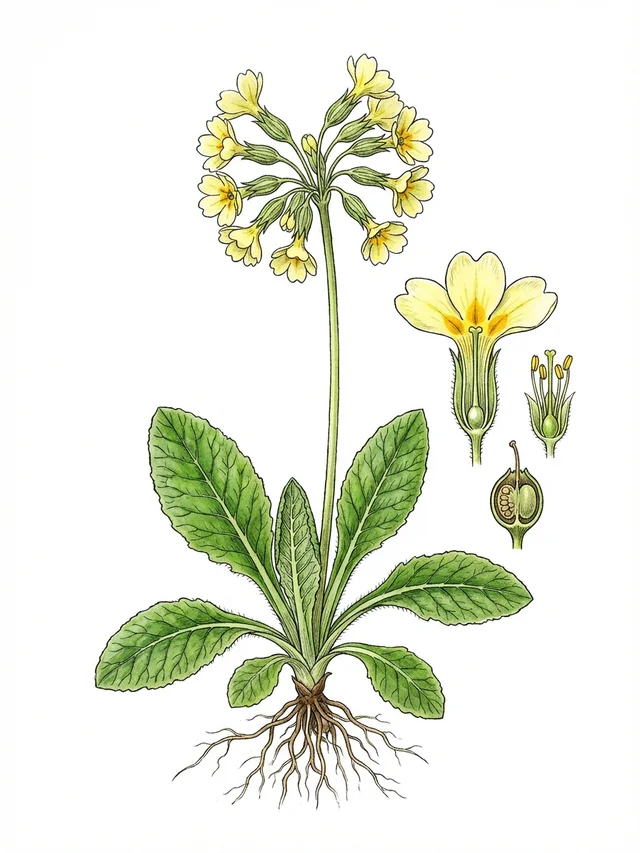
 Image to followAI-generated illustration
Trifolium hybridum
Trifolium hybridum
FamilyGenus: Trifoliumnative in Germany
🌿
89
Species
interact
🔗
316
Interactions
documented
🐛
2
Host relationships
Species
About this species
An introduced and established clover of sunny grasslands, flowering from May to September and providing substantial nectar and pollen.
Ecological network
Click to highlight connections · Click again to open the species page
Loading network...
PollinationLarval hostFlower visit
Ecological significance
The long flowering season and high nectar and pollen scores mean the plant supports a wide range of pollinators in grassland, arable margin and woodland edge habitats. It is an established introduced species.
Annual cycle
Flowering runs from May to September; the plant is a terrestrial herb.
Standort & Merkmale
Light
Sonne
Moisture
Frisch (Mäßig feucht)
Soil
Mittelzehrer (Normaler Boden)
Flowering period
Mai – Sep
Soil reaction
Basisch / Kalkhold
Bioregion
Continental
Nectar value
5
Pollen value
5
Growth form
Krautige Pflanze
Woodiness
Nicht verholzt
Leaf type
Breitblättrig
Plant height
0.433 m
Morphological traits: TRY ID3 (CC BY 3.0) & TRY ID81 (CC BY)
Nectar
334.5677 µl/Blüte
Pflege & Anbau
Position in full sun on fresh, moderately moist soil of normal fertility; calcareous to neutral substrates suit it best.
Scientific profile
Trifolium hybridum is an introduced, established, herbaceous legume. It reaches around 0.4 m in height and bears broad leaves on non-woody stems. The plant flowers from May to September, consistently scoring 5 out of 6 for both nectar and pollen value. It favours sunny sites with fresh, moderately moist, calcareous to neutral soils of medium fertility. It is most typical of fat meadows and intensive grassland but also occurs in arable weed communities and at woodland edges. The species forms arbuscular mycorrhizas, tolerates only low levels of disturbance, and avoids saline ground.
Pollinators & visitors
63 Arten interagieren mit dieser Pflanze
Bombus hypnorumBombus lucorumPieris brassicaeHalictus tumulorumBombus vestalisAphantopus hyperantusAglais urticaeBombus terrestrisLasiommata megeraCoenonympha pamphilusNomada flavaAricia agestisErynnis tagesNomada fulvicornisLeptidea sinapisGonepteryx rhamniColias croceusBombus lapidariusAndrena labialisBombus barbutellusBombus pascuorumBombus muscorumBombus monticolaBombus magnusBombus hortorumThymelicus sylvestrisVanessa atalantaOsmia aurulentaMelitta leporinaBombus pratorumPieris napiPolyommatus icarusPieris rapaeHalictus confususBombus ruderatusBombus rupestrisLasioglossum lativentreBombus humilisAndrena nitidaAndrena wilkellaAndrena nigroaeneaBombus jonellusBombus sylvarumApis melliferaThymelicus lineolaAndrena ovatulaElkalyce argiadesBombus sylvestrisAndrena flavipesHalictus rubicundus
Other flower visitors
24 other species visit the flowers
Anthicus antherinusUrsus arctosHarpalus rufipesAmara communisHarpalus griseusAmara lunicollisAmara ovataCantharis fuscaTrechus quadristriatusAgrypnus murinusHarpalus distinguendusAmara plebejaHemicrepidius nigerHarpalus affinisDiachromus germanusHarpalus rubripesPoecilus cupreusAmara convexiorMisumena vatiaOedemera nobilisAnisodactylus binotatusHemicrepidius hirtusHemipenthes morioProtapion fulvipes
Sources & data origin
•Interaktionsdaten via GloBI (CC-BY 4.0)
•pollinator_interactions
•Baden-Böhm F, App M, Thiele J (2022) — The FloRes Database: A floral resources trait database for pollinator habitat-assessment generated by a multistep workflow. Johann Heinrich von Thünen-Institut, Dryad, DOI: 10.5061/dryad.djh9w0w29 (CC0)
•FloraWeb / BfN
•EIVE 1.0 — Dengler et al. (2023), DOI: 10.3897/VCS.98324 (CC BY 4.0)
•EuPPollNet — Kuppler et al. (2025), DOI: 10.1111/geb.70000 (CC BY 4.0)
•Database of Pollinator Interactions (DoPI) — Pocock et al. (2022), DOI: 10.1002/ecy.3801 (CC BY)
•GBIF Backbone Taxonomy — GBIF Secretariat (2024), DOI: 10.15468/39omei (CC BY 4.0)
•TRY Categorical Traits (ID3) — Kattge et al. (2012), DOI: 10.17871/TRY.3 (CC BY 3.0)
•TRY Global Spectrum (ID81) — Díaz et al. (2016/2021), DOI: 10.17871/TRY.81 (CC BY)
•Checklist Alien Plants Belgium — Verloove F (2023), Botanic Garden Meise (CC BY 4.0)
•Govaerts R et al. (2025) — World Checklist of Vascular Plants (WCVP) v14. Royal Botanic Gardens, Kew. DOI: 10.34885/xs7h-ze42 (CC BY 4.0)
All data is licensed under CC BY 4.0, CC0, or compatible terms. Attribution according to license conditions. Full source overview →