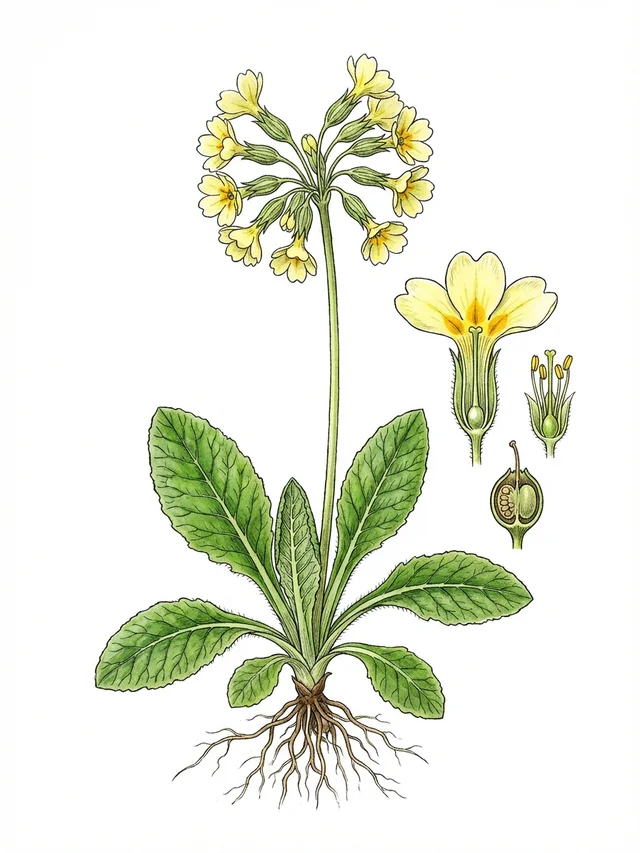
 Image to followAI-generated illustration
Trifolium medium
Trifolium medium
FamilyGenus: Trifoliumnative in Germany
🌿
106
Species
interact
🔗
1309
Interactions
documented
🐛
7
Host relationships
Species
About this species
Trifolium medium is a native herbaceous plant in Great Britain, bearing pinkish-red flower heads, occasionally white, from May to August. It favours partial shade and fresh, moderately moist, nutrient-poor soils, reaching about 28 cm in height. It poses no toxicity risk to children.
Ecological network
Click to highlight connections · Click again to open the species page
Loading network...
PollinationLarval hostFlower visit
Ecological significance
Trifolium medium is a native component of British grassland flora, particularly in nutrient-poor, lightly disturbed settings.
Annual cycle
The plant produces new growth in spring and blooms from May to August. As a herbaceous species, its above-ground parts die back at the end of the growing season.
Safety note
All parts of the plant are non-toxic and it is safe around children.
Standort & Merkmale
Light
Halbschatten
Moisture
Frisch (Mäßig feucht)
Soil
Schwachzehrer (Magerer Boden)
Flowering period
Mai – Aug
Soil reaction
Mäßig sauer bis neutral
Bioregion
Continental
Growth form
Krautige Pflanze
Woodiness
Nicht verholzt
Leaf type
Breitblättrig
Plant height
0.284 m
Morphological traits: TRY ID3 (CC BY 3.0) & TRY ID81 (CC BY)
Pflege & Anbau
•
Light: Full sun to partial shade.
•
Soil: Lean, nutrient-poor substrate; neutral to slightly acid.
•
Water: Keep soil fresh (moderately moist), especially during establishment.
•
Feeding: No additional fertiliser is required; it thrives on poor soils.
•
Maintenance: Cut back after flowering if a tidy appearance is desired. Allow seed to set for naturalising.
Scientific profile
Trifolium medium, a member of the pea family (Fabaceae), is a native herbaceous plant in Great Britain. It has a non-woody, erect to ascending growth form and typically reaches a height of about 28 cm. The broad, elliptical-oblong leaflets are glabrous above and softly hairy and greyish beneath. Between May and August, spherical flower heads 25–35 mm across open, composed of pinkish-red florets that are occasionally white. The plant grows in full sun to partial shade, on fresh, moderately moist, nutrient-poor soils with a neutral to slightly acid reaction. It is adapted to moderately warm conditions and tolerates low levels of disturbance. The diaspore (seed) mass averages 2.1 mg, and the species retains a terrestrial, exclusively herbaceous habit.
Pollinators & visitors
80 Arten interagieren mit dieser Pflanze
Lasiommata megeraPolyommatus icarusThymelicus lineolaPieris rapaeMelitta leporinaBombus vestalisNomada flavaErynnis tagesGonepteryx rhamniColias croceusNomada fulvicornisHalictus tumulorumCoenonympha pamphilusLeptidea sinapisBombus monticolaBombus lucorumBombus muscorumBombus hypnorumBombus pascuorumBombus hortorumApis melliferaBombus pratorumAndrena labialisBombus magnusOsmia aurulentaBombus lapidariusPieris brassicaeVanessa atalantaThymelicus sylvestrisHalictus confususLasioglossum lativentreBombus jonellusMelanargia galatheaBombus sylvarumManiola jurtinaCryptocephalus aureolusZygaena purpuralisBombus humilisCyaniris semiargusCallophrys rubipyrausta purpuralisBombus terrestrisColias hyaleSpeyeria aglajaCoenonympha iphis (Denis & Schiffermüller), 1776Helophilus pendulusPsithyrus bohemicusEpisyrphus balteatus (DeGeer,1776)Psithyrus campestrisBombus schrencki
Host relationships
7 species use this plant as a host
Other flower visitors
19 other species visit the flowers
Meligethes aeneus (Fabricius,1775)Rhagonycha fulva (Scopoli,1763)Closterotomus norwegicus (Gmelin,1790)Brassicogethes aeneusSarcophaga subvicinaAcrididaeAdelphocoris seticornisLeptopterna dolabrataClosterotomus norvegicusDelphacidaeTetrixMiridaePsithyrusPlebejus amandaEriothrix rufomaculatusNymphalidaeHelinaLeptopterna dolobrata (Linnaeus,1758)BOMMUS
Sources & data origin
•Interaktionsdaten via GloBI (CC-BY 4.0)
•pollinator_interactions
•FloraWeb / BfN
•EIVE 1.0 — Dengler et al. (2023), DOI: 10.3897/VCS.98324 (CC BY 4.0)
•GBIF Backbone Taxonomy — GBIF Secretariat (2024), DOI: 10.15468/39omei (CC BY 4.0)
•TRY Categorical Traits (ID3) — Kattge et al. (2012), DOI: 10.17871/TRY.3 (CC BY 3.0)
•TRY Global Spectrum (ID81) — Díaz et al. (2016/2021), DOI: 10.17871/TRY.81 (CC BY)
•Govaerts R et al. (2025) — World Checklist of Vascular Plants (WCVP) v14. Royal Botanic Gardens, Kew. DOI: 10.34885/xs7h-ze42 (CC BY 4.0)
All data is licensed under CC BY 4.0, CC0, or compatible terms. Attribution according to license conditions. Full source overview →