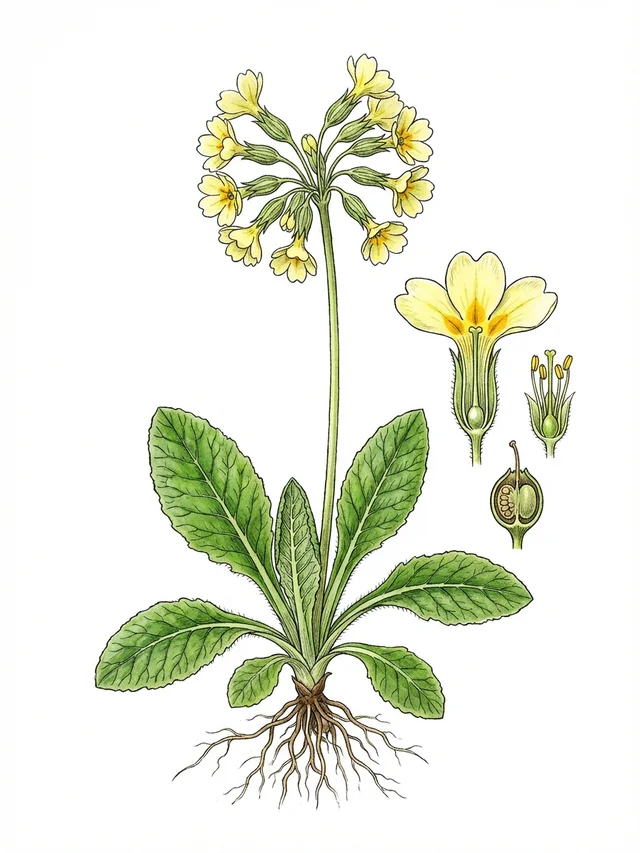
 Image to followAI-generated illustration
Tripleurospermum inodorum
Tripleurospermum inodorum
FamilyGenus: Tripleurospermumnative in Germany
🌿
136
Species
interact
🔗
213
Interactions
documented
🐛
2
Host relationships
Species
About this species
An established archaeophyte in Great Britain, Tripleurospermum inodorum is a non-woody, broad-leaved herbaceous plant favouring sunny sites with nutrient-rich, moderately moist soils. Its daisy-like blooms appear from June to November, providing abundant nectar and pollen for insects. It typically occurs in nutrient-rich meadows, intensive grassland and ruderal habitats.
Ecological network
Click to highlight connections · Click again to open the species page
Loading network...
PollinationLarval hostFlower visit
Ecological significance
The plant supports insect pollinators with its long flowering season and abundant nectar and pollen. No further ecological impacts are documented.
Annual cycle
Flowering occurs from June to November. The plant is herbaceous and non-woody; details of its full annual life cycle are not provided in the data.
Standort & Merkmale
Light
Sonne
Moisture
Frisch (Mäßig feucht)
Soil
Starkzehrer (Nährstoffreicher/Fetter Boden)
Flowering period
Jun – Nov
Soil reaction
Mäßig sauer bis neutral
Bioregion
Continental
Nectar value
5
Pollen value
5
Growth form
Krautige Pflanze
Woodiness
Nicht verholzt
Leaf type
Breitblättrig
Plant height
0.7 m
Morphological traits: TRY ID3 (CC BY 3.0) & TRY ID81 (CC BY)
Scientific profile
Tripleurospermum inodorum is a herbaceous, non-woody plant in the Asteraceae family, growing up to 0.7 m tall. It bears broad leaves and forms arbuscular mycorrhizal associations. Ecological indicator values place it in sunny, moderately warm settings on fresh, nutrient-rich soils with a neutral to weakly acidic reaction. Derived habitat preferences, with moderate confidence, highlight nutrient-rich meadows and intensive grassland as a primary habitat, with secondary occurrences on nutrient-rich ruderal sites. The plant flowers from June to November, producing blooms that offer high nectar and pollen values (score 5), making it attractive to pollinating insects. Its diaspores are small, averaging 0.37 mg, and mean leaf area is approximately 261 mm². Tripleurospermum inodorum is recorded as an established archaeophyte in Great Britain, with a first record dating to 1500.
Pollinators & visitors
83 Arten interagieren mit dieser Pflanze
Polyommatus icarusLasioglossum malachurumSphecodes gibbusHalictus rubicundusLasioglossum fulvicorneManiola jurtinaColletes daviesanusAndrena flavipesAndrena denticulataBombus lapidariusPieris rapaePieris brassicaeThymelicus sylvestrisBombus sylvestrisSphecodes geoffrellusLycaena phlaeasPieris napiColias croceusAnthophila fabricianaHylaeus communisHylaeus brevicornisApis melliferaAndrena labiataLasioglossum leucopusBombus pascuorumLasioglossum lativentreAndrena nitidaVespula germanicaSphecodes ephippiusAndrena dorsataLasioglossum villosulumPyronia tithonusHalictus tumulorumVespula vulgarisAndrena minutulaAndrena clarkellaLasioglossum pauxillumLasioglossum laticepsHalictus simplexLasioglossum xanthopusAndrena chrysoscelesLasioglossum morioAndrena nigroaeneaLasioglossum calceatumNomada flavoguttataClytus arietisBombus pratorumStictoleptura rubraHalictus subauratusTrichodes apiarius
Other flower visitors
51 other species visit the flowers
Coccinella septempunctataoedemera luridaBrassicogethes aeneusTytthaspis sedecimpunctataRhagonycha fulvaHippodamia variegataOedemera nobilisPseudovadonia lividaPlutella xylostellaSapygina decemguttataAdalia bipunctataPhyllobius pomaceusStenopterus rufusCoccinula quatuordecimpustulataClosterotomus norwegicus (Gmelin,1790)Eriothrix rufomaculataBellardia vulgarisDelia platuraHelina setiventrisHylemya vagansParegle audaculaPhaonia incanaRhinophora lepidaSarcophaga melanuraSiphona geniculataAmara bifronsKateretes rufilabrisHydrellia griseolaHelina reversioQuedius boopsAprostocetus annulatusOlibrus aeneusScaptomyza pallidaMicrodynerus exilisMusca autumnalisBotanophila striolataLucilia caesarSepsis cynipseaBellardia pandiaEmpis lividaDelia radicumLucilia sericataMeligethes nigrescensHydrotaea dentipesScathophaga stercorariaSiphona cristataPollenia rudisNeomyia cornicinaMeligethes aeneusMorellia aenescens
Sources & data origin
•Interaktionsdaten via GloBI (CC-BY 4.0)
•Cook et al. (2025) UK Butterfly & Moth Traits (DOI: 10.5285/dbc7cc17-cbbd-49dd-bab4-8e8855768d66)
•pollinator_interactions
•Baden-Böhm F, App M, Thiele J (2022) — The FloRes Database: A floral resources trait database for pollinator habitat-assessment generated by a multistep workflow. Johann Heinrich von Thünen-Institut, Dryad, DOI: 10.5061/dryad.djh9w0w29 (CC0)
•EIVE 1.0 — Dengler et al. (2023), DOI: 10.3897/VCS.98324 (CC BY 4.0)
•EuPPollNet — Kuppler et al. (2025), DOI: 10.1111/geb.70000 (CC BY 4.0)
•Database of Pollinator Interactions (DoPI) — Pocock et al. (2022), DOI: 10.1002/ecy.3801 (CC BY)
•GBIF Backbone Taxonomy — GBIF Secretariat (2024), DOI: 10.15468/39omei (CC BY 4.0)
•TRY Categorical Traits (ID3) — Kattge et al. (2012), DOI: 10.17871/TRY.3 (CC BY 3.0)
•TRY Global Spectrum (ID81) — Díaz et al. (2016/2021), DOI: 10.17871/TRY.81 (CC BY)
•Govaerts R et al. (2025) — World Checklist of Vascular Plants (WCVP) v14. Royal Botanic Gardens, Kew. DOI: 10.34885/xs7h-ze42 (CC BY 4.0)
All data is licensed under CC BY 4.0, CC0, or compatible terms. Attribution according to license conditions. Full source overview →