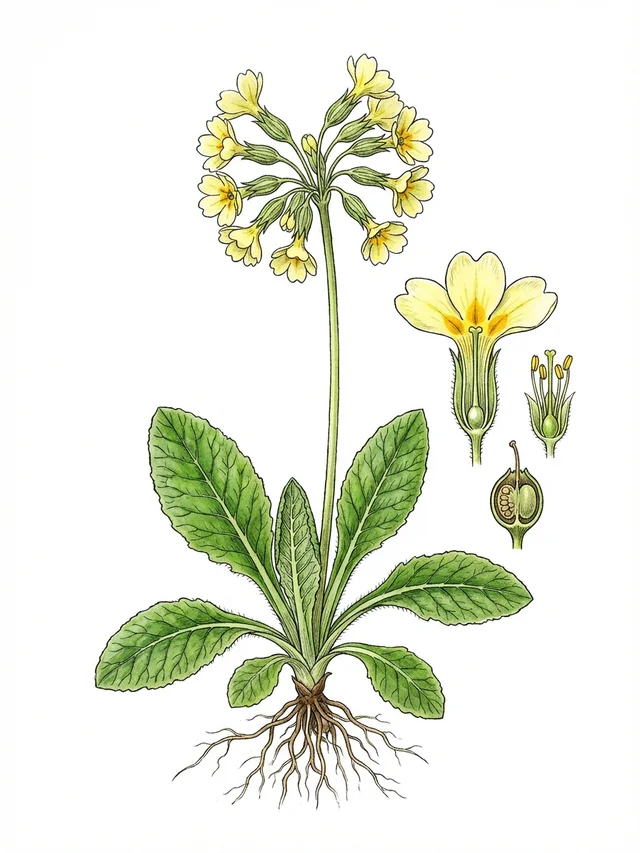
 Image to followAI-generated illustration
Ulmus glabra
Ulmus glabra
FamilyGenus: Ulmusnative in Germany
🌿
76
Species
interact
🔗
90
Interactions
documented
🐛
61
Host relationships
Species
About this species
Ulmus glabra is a large deciduous tree native in Great Britain. It flowers from March to April and favours shaded, moist, nutrient-rich conditions.
Ecological network
Click to highlight connections · Click again to open the species page
Loading network...
PollinationLarval hostFlower visit
Ecological significance
As a native tree, it supports local wildlife; specific ecological interactions are not detailed in the available evidence.
Annual cycle
A deciduous tree; leaves emerge in spring and are shed in autumn. The flowering period is March to April.
Safety note
Safety information is not available from the data.
Standort & Merkmale
Light
Schatten
Moisture
Frisch (Mäßig feucht)
Soil
Starkzehrer (Nährstoffreicher/Fetter Boden)
Flowering period
Mär – Apr
Soil reaction
Mäßig sauer bis neutral
Bioregion
Continental
Growth form
Baum
Woodiness
Verholzt
Leaf type
Breitblättrig
Leaf phenology
Laubabwerfend
Plant height
31.747 m
Morphological traits: TRY ID3 (CC BY 3.0) & TRY ID81 (CC BY)
Pflege & Anbau
Prefers shaded sites with fresh, moderately moist, nutrient-rich soil, including calcareous ground. Best in low-disturbance settings.
Scientific profile
Ulmus glabra is a large, deciduous broad-leaved tree in the elm family (Ulmaceae). It is native in Great Britain. Mature specimens can reach heights of around 32 metres. The leaves are deciduous, with an average leaf area of about 3824 mm². Flowering takes place from March to April. The species grows in shaded or half-shaded sites on fresh, moderately moist, nutrient-rich and often calcareous soils. It is associated with low-disturbance habitats and is classified as of least concern (Red List *). The dispersal units are light, with an average diaspore mass of 12 mg.
Pollinators & visitors
3 Arten interagieren mit dieser Pflanze
Host relationships
61 species use this plant as a host
Cossus cossusSaturnia pavoniaEpirrita christyiEnnomos quercinariaEnnomos alniariaSelenia lunulariaOurapteryx sambucariaApocheima hispidariaAgriopis aurantiariaLomographa temerataCampaea margaritariaEuproctis similisCalliteara pudibundaOrgyia recensCallimorpha dominulaAcronicta psiAmphipyra berbera svenssoniAsteroscopus sphinxAgrochola helvolaConistra ligulaCosmia affinisSalpingus ruficollisAnorthoa mundaCeramica pisiNoctua jantheGraphiphora augurLacanobia oleraceaOpisthograptis luteolataOrthosia cerasiHerminia grisealisCosmia trapezinaPhalera bucephalaAgrochola circellarisMimas tiliaeEupsilia transversaEpirrita dilutataCosmia pyralinaAgriopis marginariaColotois pennariaPoecilocampa populiMormo mauraXanthia togataConistra vacciniiBiston stratariaZeuzera pyrinaEuplagia quadripunctariaErannis defoliariaOrgyia antiquaAbraxas grossulariataMalacosoma neustria
Other flower visitors
12 other species visit the flowers
Grammoptera ruficornisDorcus parallelipipedusAlosterna tabacicolorStenurella nigraPrionus coriariusPyrochroa coccineaMyotis nattereriPlecotus auritusPipistrellus pipistrellusXyleborinus saxeseniiMicrorhagus pygmaeusSinodendron cylindricum
Sources & data origin
•Cook et al. (2025) UK Butterfly & Moth Traits (DOI: 10.5285/dbc7cc17-cbbd-49dd-bab4-8e8855768d66)
•Interaktionsdaten via GloBI (CC-BY 4.0)
•FloraWeb / BfN
•EIVE 1.0 — Dengler et al. (2023), DOI: 10.3897/VCS.98324 (CC BY 4.0)
•GBIF Backbone Taxonomy — GBIF Secretariat (2024), DOI: 10.15468/39omei (CC BY 4.0)
•TRY Categorical Traits (ID3) — Kattge et al. (2012), DOI: 10.17871/TRY.3 (CC BY 3.0)
•TRY Global Spectrum (ID81) — Díaz et al. (2016/2021), DOI: 10.17871/TRY.81 (CC BY)
•Govaerts R et al. (2025) — World Checklist of Vascular Plants (WCVP) v14. Royal Botanic Gardens, Kew. DOI: 10.34885/xs7h-ze42 (CC BY 4.0)
All data is licensed under CC BY 4.0, CC0, or compatible terms. Attribution according to license conditions. Full source overview →