 Bild folgtKI-generierte Illustration
Jacobaea aquatica
Jacobaea aquatica
FamilyGenus: Jacobaeanicht heimisch in Deutschland
🌿
45
Species
interact
🔗
47
Interactions
documented
🐛
2
Host relationships
Species
About this species
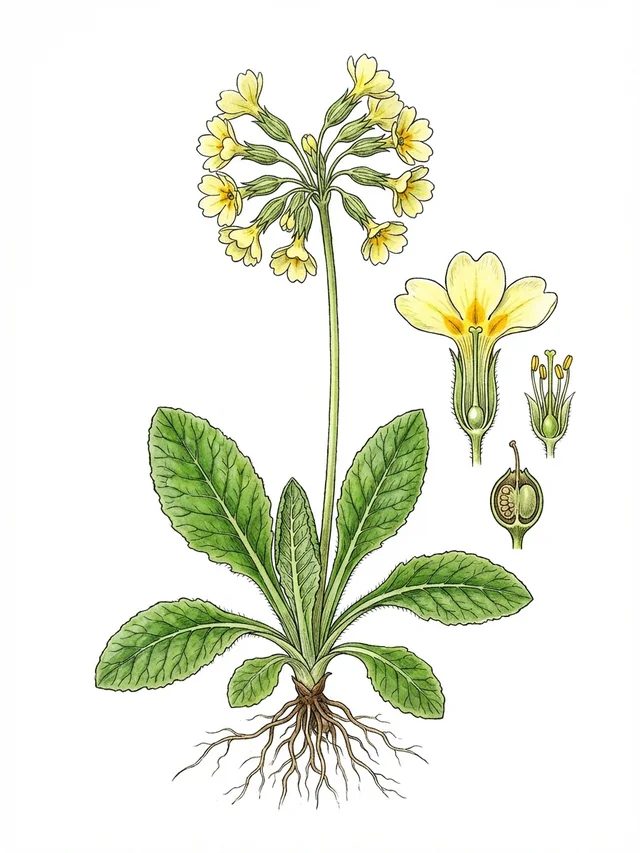
Jacobaea aquatica is a native herbaceous perennial of Great Britain, found in damp, sunny habitats. It bears bright yellow daisy-like flowers in July and August, and has broad, non-woody leaves. A plant of low-disturbance, moderately fertile soils, it reaches about 35 cm in height.
Ecological network
Click to highlight connections · Click again to open species page
Netzwerk wird geladen...
PollinationLarval hostFlower visit
Ecological significance
This species is characteristic of wet meadows and marshy grassland, where it contributes to the structure of low-disturbance, damp plant communities. It is an integral component of species-rich swards on moist, moderately fertile soils.
Annual cycle
Flowering occurs in mid- to late summer, with blooms present from July until August.
Standort & Merkmale
Light
Sonne
Moisture
Frisch (Mäßig feucht)
Soil
Mittelzehrer (Normaler Boden)
Bloom time
Jul – Aug
Soil reaction
Mäßig sauer bis neutral
Growth form
Krautige Pflanze
Woodiness
Nicht verholzt
Leaf type
Breitblättrig
Plant height
0.352 m
Morphological traits: TRY ID3 (CC BY 3.0) & TRY ID81 (CC BY)
Pflege & Anbau
Jacobaea aquatica thrives in full sun and consistently moist soil of average fertility. It is a wild plant not generally cultivated, but if grown, provide a damp, sunny spot and allow it to self-seed naturally.
Scientific profile
Native in Great Britain, Jacobaea aquatica is a herbaceous, broad-leaved member of the daisy family (Asteraceae). It typically grows to around 35 centimetres tall and is associated with sunny, moist sites on neutral to slightly acid soils of moderate fertility. The plant experiences low disturbance in its preferred habitats. Its small wind- and water-dispersed diaspores weigh approximately 0.34 milligrams. Flowering occurs over July and August.
Bestäuber & Besucher
42 Arten interagieren mit dieser Pflanze
Lycaena phlaeasNomada flavopictaTyria jacobaeaePieris rapaePyronia tithonusSatyrium w-albumOsmia leaianaAphantopus hyperantusLasioglossum calceatumOsmia spinulosaMegachile versicolorAglais urticaeHalictus rubicundusepeolus variegatusHalictus tumulorumLasioglossum parvulumLasioglossum leucozoniumAnthophora bimaculataBombus lapidariusAndrena denticulataAndrena minutulaBombus pratorumApis melliferaLasioglossum zonulumPararge aegeriaLasioglossum villosulumNomada fulvicornisLasioglossum fratellumLasioglossum lativentreEpeolus crucigerAndrena dorsataColletes daviesanusLasioglossum puncticolleBombus bohemicusAndrena bicolorBombus terrestrisBombus hypnorumDasypoda hirtipesLasioglossum morioColletes similisAnthophora furcataAndrena flavipes
Sources & data origin
•TraitCH — CC BY 4.0TraitCH 2.0 contributors; imported as source-preserving NaturKompass taxon evidence.
•TRY v6.0 / BiolFlor flowering phenology (Request 47350) — CC BY 4.0TRY request 47350 (Public, Data Released, TRY v6.0; 2026-02-15). Cite TRY: Kattge et al. (2020), doi:10.1111/gcb.14904; original source: Trefflich, A., Klotz, S. & Kühn, I. (2002). Blühphänologie. BIOLFLOR, Schriftenreihe für Vegetationskunde 38:127–131.
•Interaktionsdaten via GloBI (CC-BY 4.0)
•Cook et al. (2025) UK Butterfly & Moth Traits (DOI: 10.5285/dbc7cc17-cbbd-49dd-bab4-8e8855768d66)
•EIVE 1.0 — Dengler et al. (2023), DOI: 10.3897/VCS.98324 (CC BY 4.0)
•GBIF Backbone Taxonomy — GBIF Secretariat (2024), DOI: 10.15468/39omei (CC BY 4.0)
•TRY Categorical Traits (ID3) — Kattge et al. (2012), DOI: 10.17871/TRY.3 (CC BY 3.0)
•TRY Global Spectrum (ID81) — Díaz et al. (2016/2021), DOI: 10.17871/TRY.81 (CC BY)
•Govaerts R et al. (2025) — World Checklist of Vascular Plants (WCVP) v14. Royal Botanic Gardens, Kew. DOI: 10.34885/xs7h-ze42 (CC BY 4.0)
All data is licensed under CC BY 4.0, CC0, or compatible. Attribution according to license terms. Full source overview →