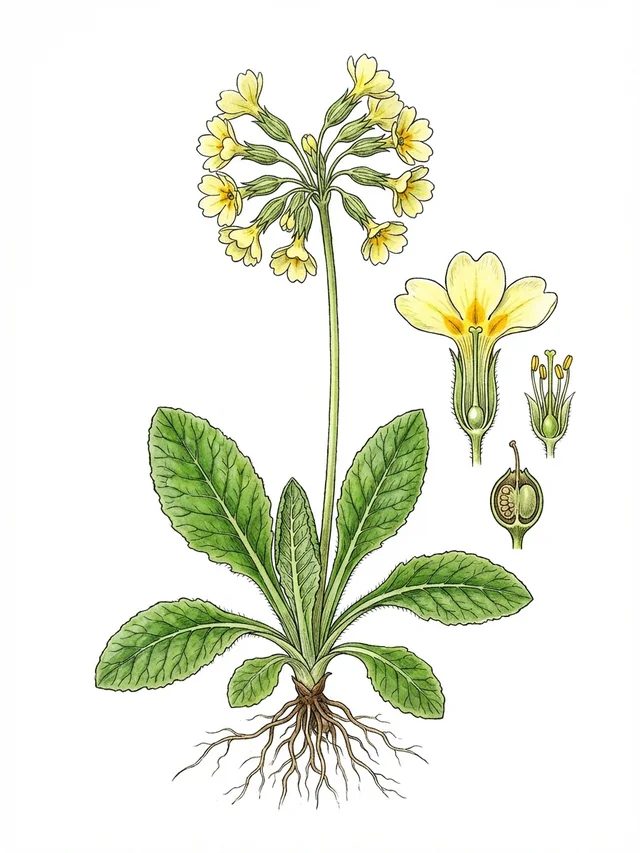
 Bild folgtKI-generierte Illustration
Jacobaea erucifolia
Jacobaea erucifolia
FamilyGenus: Jacobaeanicht heimisch in Deutschland
🌿
60
Species
interact
🔗
68
Interactions
documented
🐛
1
Host relationships
Species
About this species
A native wildflower of calcareous grassland, producing broad leaves and flowerheads between July and September.
Ecological network
Click to highlight connections · Click again to open species page
Netzwerk wird geladen...
PollinationLarval hostFlower visit
Ecological significance
Jacobaea erucifolia is a native component of species-rich calcareous grasslands, contributing to the botanical diversity of these low-disturbance habitats.
Annual cycle
Flowerheads appear from July to September.
Standort & Merkmale
Light
Sonne
Moisture
Frisch (Mäßig feucht)
Soil
Mittelzehrer (Normaler Boden)
Bloom time
Jul – Sep
Soil reaction
Basisch / Kalkhold
Leaf type
Breitblättrig
Morphological traits: TRY ID3 (CC BY 3.0) & TRY ID81 (CC BY)
Pflege & Anbau
Grow in a sunny position on calcareous, moderately fertile soil that is kept evenly moist but free-draining.
Scientific profile
Jacobaea erucifolia is a native plant of unimproved calcareous grasslands in Great Britain. It bears broad leaves and flowers from July to September. The species requires sunny, moderately moist conditions and is associated with nutrient-poor soils, showing a strong preference for calcareous or basic substrates. It typically occurs in habitats that experience only low levels of disturbance.
Bestäuber & Besucher
56 Arten interagieren mit dieser Pflanze
Lasioglossum villosulumepeolus variegatusSphecodes puncticepsBombus pratorumPieris rapaeOedemera nobilisBombus jonellusLasioglossum malachurumLasioglossum calceatumNomada fucataBombus rupestrisBombus sylvestrisApis melliferaBombus lapidariusBombus lucorumBombus pascuorumTyria jacobaeaePyronia tithonusBombus terrestrisDasypoda hirtipesAglais urticaeNomada fulvicornisColletes daviesanusLasioglossum fratellumColletes similisHalictus rubicundusLasioglossum zonulumLasioglossum morioLasioglossum lativentreLasioglossum parvulumLasioglossum leucozoniumEpeolus crucigerBombus hypnorumAndrena denticulataAndrena bicolorAnthophora bimaculataAndrena flavipesAndrena dorsataOsmia leaianaOsmia spinulosaMegachile versicolorCoenonympha pamphilusNomada flavopictaLycaena phlaeasSatyrium w-albumLasioglossum puncticolleBombus bohemicusAndrena minutulaHalictus tumulorumAnthophora furcata
Host relationships
1 species use this plant as a host
Thalera fimbrialis
Sources & data origin
•TraitCH — CC BY 4.0TraitCH 2.0 contributors; imported as source-preserving NaturKompass taxon evidence.
•TRY v6.0 / BiolFlor flowering phenology (Request 47350) — CC BY 4.0TRY request 47350 (Public, Data Released, TRY v6.0; 2026-02-15). Cite TRY: Kattge et al. (2020), doi:10.1111/gcb.14904; original source: Trefflich, A., Klotz, S. & Kühn, I. (2002). Blühphänologie. BIOLFLOR, Schriftenreihe für Vegetationskunde 38:127–131.
•Interaktionsdaten via GloBI (CC-BY 4.0)
•Cook et al. (2025) UK Butterfly & Moth Traits (DOI: 10.5285/dbc7cc17-cbbd-49dd-bab4-8e8855768d66)
•EIVE 1.0 — Dengler et al. (2023), DOI: 10.3897/VCS.98324 (CC BY 4.0)
•GBIF Backbone Taxonomy — GBIF Secretariat (2024), DOI: 10.15468/39omei (CC BY 4.0)
•TRY Categorical Traits (ID3) — Kattge et al. (2012), DOI: 10.17871/TRY.3 (CC BY 3.0)
•TRY Global Spectrum (ID81) — Díaz et al. (2016/2021), DOI: 10.17871/TRY.81 (CC BY)
•Govaerts R et al. (2025) — World Checklist of Vascular Plants (WCVP) v14. Royal Botanic Gardens, Kew. DOI: 10.34885/xs7h-ze42 (CC BY 4.0)
All data is licensed under CC BY 4.0, CC0, or compatible. Attribution according to license terms. Full source overview →