Rorippa sylvestris
Rorippa sylvestris
FamilyGenus: Rorippaheimisch in Deutschland
🌿
73
Species
interact
🔗
680
Interactions
documented
🐛
1
Host relationships
Species
About this species
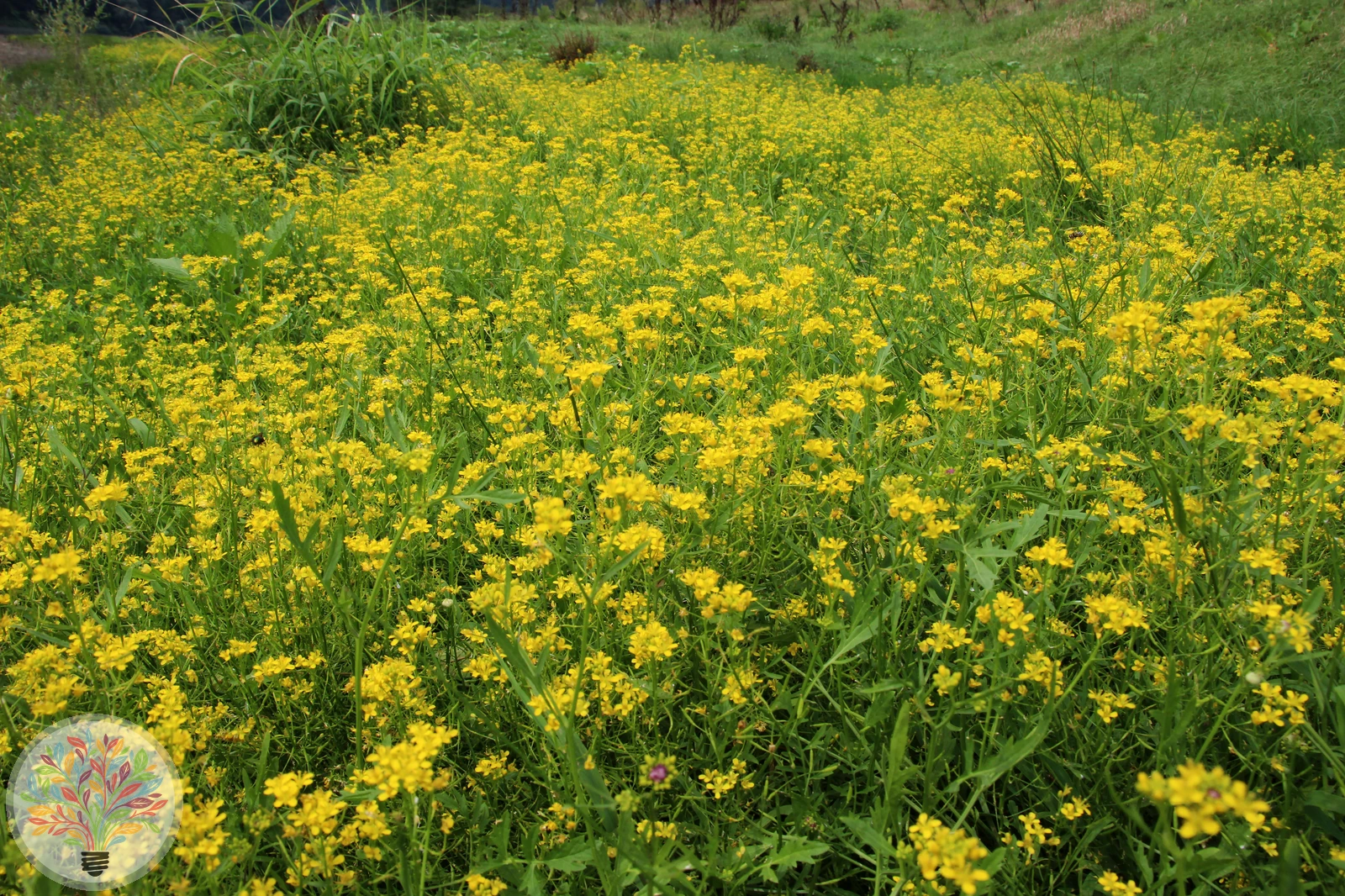
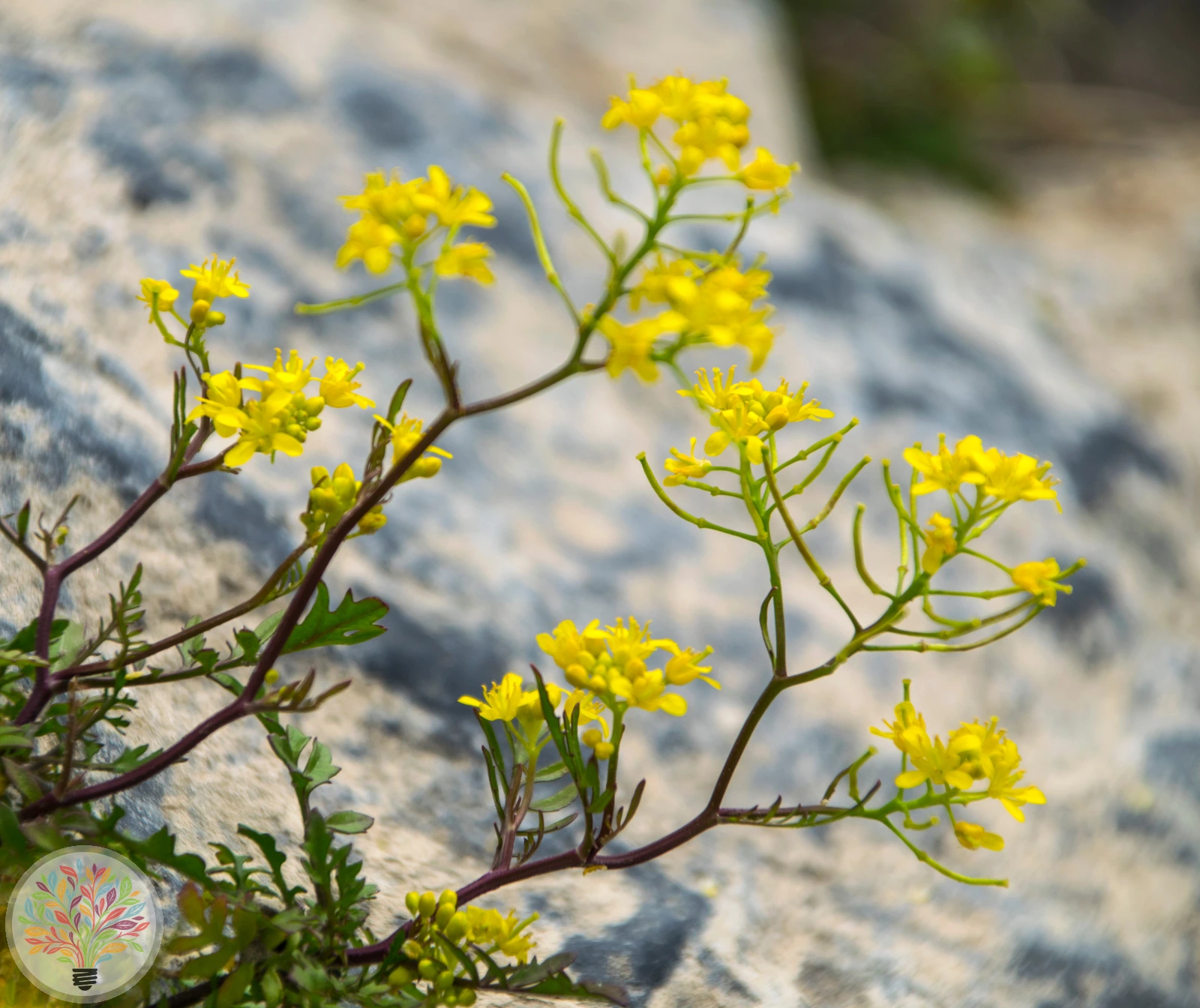
Rorippa sylvestris is a native herbaceous plant in Great Britain. It has broad leaves and produces small yellow flowers from May to September, providing nectar and pollen. It grows in sunny locations on moist, nutrient-rich, calcareous soils and is non-mycorrhizal.
Ecological network
Click to highlight connections · Click again to open species page
Netzwerk wird geladen...
PollinationLarval hostFlower visit
Ecological significance
This native wildflower offers nectar and pollen to insects, supporting local pollinators. It is associated with low-disturbance, sunny, moist, calcareous and nutrient-rich sites, and its non-mycorrhizal habit may influence below-ground interactions.
Annual cycle
Flowers from May to September.
Standort & Merkmale
Light
Sonne
Moisture
Frisch (Mäßig feucht)
Soil
Starkzehrer (Nährstoffreicher/Fetter Boden)
Bloom time
Mai – Sep
Soil reaction
Basisch / Kalkhold
Bioregion
Continental
Nectar value
5
Pollen value
5
Growth form
Krautige Pflanze
Woodiness
Nicht verholzt
Leaf type
Breitblättrig
Plant height
0.364 m
Morphological traits: TRY ID3 (CC BY 3.0) & TRY ID81 (CC BY)
Scientific profile
Rorippa sylvestris is a herbaceous, non-woody plant with broad leaves, typically reaching around 0.36 metres in height. It is native in Great Britain. The species favours sunny sites with fresh to moderately moist, nutrient-rich, calcareous soils and is a heavy feeder. Flowering occurs from May to September; the blossoms supply both nectar and pollen, each rated 5 on the recorded scale. The plant is non-mycorrhizal and occurs in habitats subject to low disturbance. Its seeds are very small (diaspore mass approximately 0.093 mg), and the average leaf area is 815 mm². It shows slight salt tolerance and grows in moderately warm temperatures.
Bestäuber & Besucher
67 Arten interagieren mit dieser Pflanze
Pieris brassicaeLasioglossum glabriusculumSphaerophoria scriptaHylaeus hyalinatusHylaeus sp2Lasioglossum lucidulumCerceris sabulosaAndrena tibialisAndrena alfkenellaEristalis arbustorumEupeodes corollaePieris napiPanurgus banksianusHylaeus confususLasioglossum zonulumMelanostoma mellinumPlatycheirus albimanusSyritta pipiensLasioglossum costulatumHylaeus communisSphecodes ephippiusSphecodes pellucidusLasioglossum laticepsLasioglossum politumAndrena sp1Lasioglossum albipesEristalis tenaxParagus tibialisEpisyrphus balteatusEupeodes latifasciatusLasioglossum aeratumLasioglossum morioHylaeus gredleriLasioglossum calceatumEristalis similisOxybelus trispinosusLasioglossum leucozoniumHylaeus gibbusAndrena minutulaHalictus subauratusAndrena dorsataAndrena cinerariaHylaeus punctatusHalictus maculatusAndrena flavipesMyathropa floreaHylaeus imparilisNomiapis diversipesNomioides facilisSphecodes schenckii
Other flower visitors
5 other species visit the flowers
Cerceris rybiensisEctophasia crassipennisGymnosoma rotundatumVoria ruralisZodion cinereum
Sources & data origin
•TraitCH — CC BY 4.0TraitCH 2.0 contributors; imported as source-preserving NaturKompass taxon evidence.
•TRY v6.0 / BiolFlor flowering phenology (Request 47350) — CC BY 4.0TRY request 47350 (Public, Data Released, TRY v6.0; 2026-02-15). Cite TRY: Kattge et al. (2020), doi:10.1111/gcb.14904; original source: Trefflich, A., Klotz, S. & Kühn, I. (2002). Blühphänologie. BIOLFLOR, Schriftenreihe für Vegetationskunde 38:127–131.
•Interaktionsdaten via GloBI (CC-BY 4.0)
•pollinator_interactions
•FloraWeb / BfN
•EIVE 1.0 — Dengler et al. (2023), DOI: 10.3897/VCS.98324 (CC BY 4.0)
•EuPPollNet — Kuppler et al. (2025), DOI: 10.1111/geb.70000 (CC BY 4.0)
•Database of Pollinator Interactions (DoPI) — Pocock et al. (2022), DOI: 10.1002/ecy.3801 (CC BY)
•GBIF Backbone Taxonomy — GBIF Secretariat (2024), DOI: 10.15468/39omei (CC BY 4.0)
•TRY Categorical Traits (ID3) — Kattge et al. (2012), DOI: 10.17871/TRY.3 (CC BY 3.0)
•TRY Global Spectrum (ID81) — Díaz et al. (2016/2021), DOI: 10.17871/TRY.81 (CC BY)
•Govaerts R et al. (2025) — World Checklist of Vascular Plants (WCVP) v14. Royal Botanic Gardens, Kew. DOI: 10.34885/xs7h-ze42 (CC BY 4.0)
•Foto: © Orest Lyzhechka / Adobe Stock / AdobeStock_739454249
All data is licensed under CC BY 4.0, CC0, or compatible. Attribution according to license terms. Full source overview →