Salix caprea
Salix caprea
FamilyGenus: Salixheimisch in Deutschland
🌿
166
Species
interact
🔗
222
Interactions
documented
🐛
73
Host relationships
Species
About this species
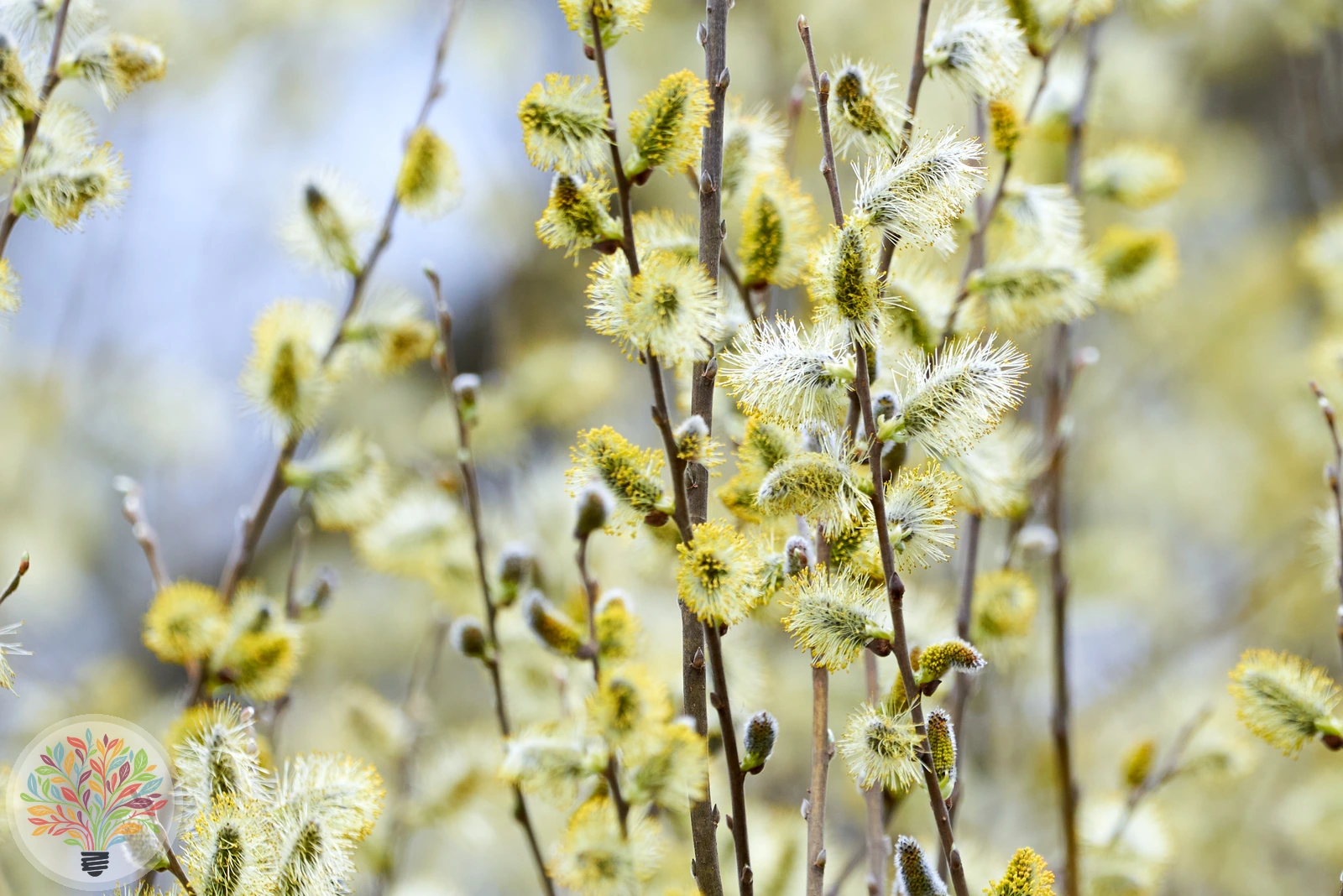
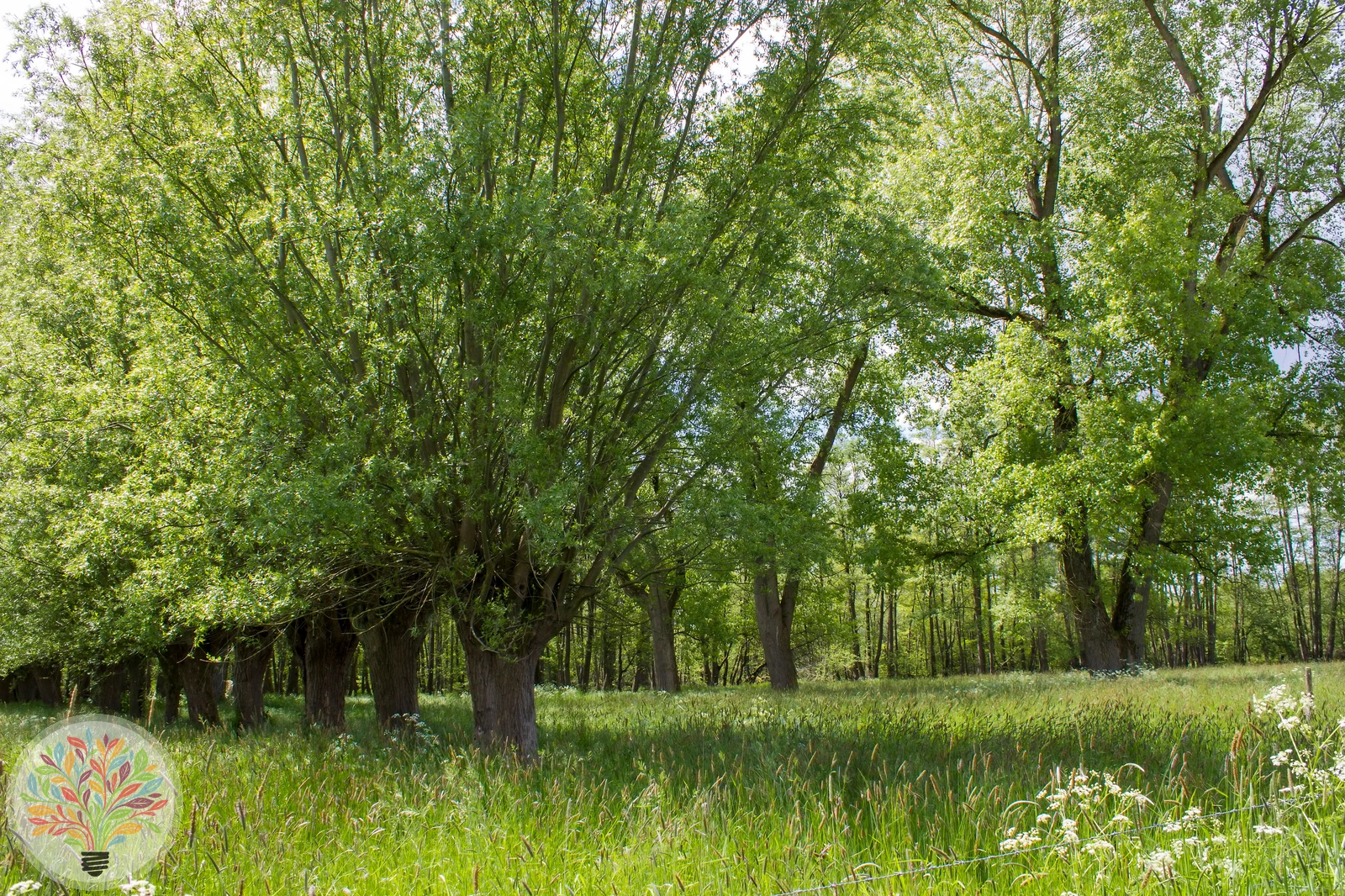
Salix caprea is a native, deciduous shrub or small tree reaching about 6.2 m. It favours sunny, fresh, moderately fertile neutral to slightly acid soils and is associated with fertile meadows, field margins, and woodland edges. Catkins appear very early, from February to April.
Ecological network
Click to highlight connections · Click again to open species page
Netzwerk wird geladen...
PollinationLarval hostFlower visit
Ecological significance
Salix caprea is typically found in fertile meadows, arable margins, and woodland edge habitats. The early catkins, from February to April, are a prominent feature.
Annual cycle
Catkins appear on bare stems from February to April. Leaves open later in spring and are shed in autumn, as the plant is wholly deciduous.
Standort & Merkmale
Light
Sonne
Moisture
Frisch (Mäßig feucht)
Soil
Mittelzehrer (Normaler Boden)
Bloom time
Feb – Apr
Soil reaction
Mäßig sauer bis neutral
Bioregion
Continental
Growth form
Strauch/Baum
Woodiness
Verholzt
Leaf type
Breitblättrig
Leaf phenology
Laubabwerfend
Plant height
6.156 m
Morphological traits: TRY ID3 (CC BY 3.0) & TRY ID81 (CC BY)
Pflege & Anbau
Plant in a sunny position. The soil should be fresh, moderately moist and of average fertility, with a neutral to slightly acid pH. Disturbance should be minimal, as the species naturally occurs in low-disturbance habitats. Once established, it requires little intervention beyond occasional shaping if desired.
Scientific profile
Salix caprea belongs to the willow family Salicaceae and is a broad-leaved, woody shrub or small tree. It is deciduous, with leaves emerging in spring and falling in autumn. The typical height is around 6.2 m, and the leaf area averages 2,580 mm². Seeds are extremely light, with a diaspore mass of only 0.087 mg. It requires full sun and a fresh, moderately moist soil of average fertility. The soil reaction is neutral to slightly acid, and only low levels of disturbance are tolerated. Its ecological preferences place it in fertile meadows, arable weed communities, and woodland fringes, under a moderately warm climate. Mycorrhizal associations are of the ectomycorrhizal type. Salix caprea is native in Great Britain, where it is classed as indigenous or an archaeophyte. It is not threatened, carrying a Red List designation of *. The species flowers early in the year, with catkins produced from February to April, often before the foliage appears.
Bestäuber & Besucher
66 Arten interagieren mit dieser Pflanze
Apatura irisClytus arietisLasioglossum morioNomada goodenianaLasioglossum calceatumSphecodes pellucidusAglais urticaeNomada marshamellaSphecodes ephippiusLasioglossum leucozoniumMelecta albifronsNomada ruficornisNomada fabricianaAndrena carantonicaAnthophora plumipesAndrena cinerariaAndrena nigroaeneaAndrena nitidaAndrena apicataAndrena minutulaAndrena tibialisAndrena chrysoscelesBombus muscorumBombus lapidariusAndrena praecoxApis melliferaAndrena haemorrhoaAndrena helvolaBombus jonellusAndrena flavipesBombus pratorumBombus monticolaBombus bohemicusAndrena trimmeranaAndrena fulvaBombus hortorumAndrena bicolorAndrena dorsataGonepteryx rhamniBombus pascuorumBombus sylvestrisBombus hypnorumBombus vestalisBombus terrestrisAndrena clarkellaLasioglossum albipesPhlogophora meticulosaPolygonia c-albumNymphalis polychlorosApatura ilia (Denis & Schiffermüller), 1775
Host relationships
73 species use this plant as a host
Laothoe populiCyclophora pendulariaEulithis populataDysstroma truncataEupithecia tenuiataPterapherapteryx sexalataMacaria notataEnnomos alniariaOurapteryx sambucariaCleora cinctariaCabera exanthemataHerminia tarsipennalisAcronicta alniCaradrina morpheusNematus pavidusBombus lucorumMycetophagus quadripustulatusIpimorpha retusaEarias cloranaBrachylomia viminalisDicallomera fascelinaFurcula furculaAntitype chiEulithis testataColletes cuniculariusAcronicta tridensAmphipyra tragopoginisLeucoma salicisVespa crabroPterostoma palpinaAglia tauPtilodon capucinaStauropus fagiClostera curtulaPolia nebulosaConistra vacciniiAcronicta rumicisOrgyia antiquaCossus cossusMacrothylacia rubiPoecilocampa populiHemithea aestivariaOperophtera brumataPlagodis pulverariaEctropis crepusculariaNymphalis antiopaMuscicapa striataNotodonta ziczacDicranopalpus ramosusPhyllopertha horticola
Other flower visitors
27 other species visit the flowers
Plagiodera versicoloraAgrilus viridisSinodendron cylindricumMicrorhagus pygmaeusPlatyrhinus resinosusLochmaea capreaCrepidodera aurataPhalera bucephalaClytra laeviusculaTrachys minutusChrysomela populiCalvia quatuordecimguttataHarmonia axyridisAgriphila inquinatellaDinoptera collarisGonioctena viminalisChrysomela vigintipunctataTenthredo lividaMyotis nattereriMyotis bechsteiniiPlecotus auritusAlosterna tabacicolorPlagionotus arcuatusAromia moschataEmpis borealisEmpis lucidaSepsis cynipsea
Sources & data origin
•Cook et al. (2025) UK Butterfly & Moth Traits (DOI: 10.5285/dbc7cc17-cbbd-49dd-bab4-8e8855768d66)
•Interaktionsdaten via GloBI (CC-BY 4.0)
•pollinator_interactions
•Baden-Böhm F, App M, Thiele J (2022) — The FloRes Database: A floral resources trait database for pollinator habitat-assessment generated by a multistep workflow. Johann Heinrich von Thünen-Institut, Dryad, DOI: 10.5061/dryad.djh9w0w29 (CC0)
•FloraWeb / BfN
•EIVE 1.0 — Dengler et al. (2023), DOI: 10.3897/VCS.98324 (CC BY 4.0)
•GBIF Backbone Taxonomy — GBIF Secretariat (2024), DOI: 10.15468/39omei (CC BY 4.0)
•TRY Categorical Traits (ID3) — Kattge et al. (2012), DOI: 10.17871/TRY.3 (CC BY 3.0)
•TRY Global Spectrum (ID81) — Díaz et al. (2016/2021), DOI: 10.17871/TRY.81 (CC BY)
•Govaerts R et al. (2025) — World Checklist of Vascular Plants (WCVP) v14. Royal Botanic Gardens, Kew. DOI: 10.34885/xs7h-ze42 (CC BY 4.0)
•Foto: © Adobe Stock / AdobeStock_559856187
All data is licensed under CC BY 4.0, CC0, or compatible. Attribution according to license terms. Full source overview →