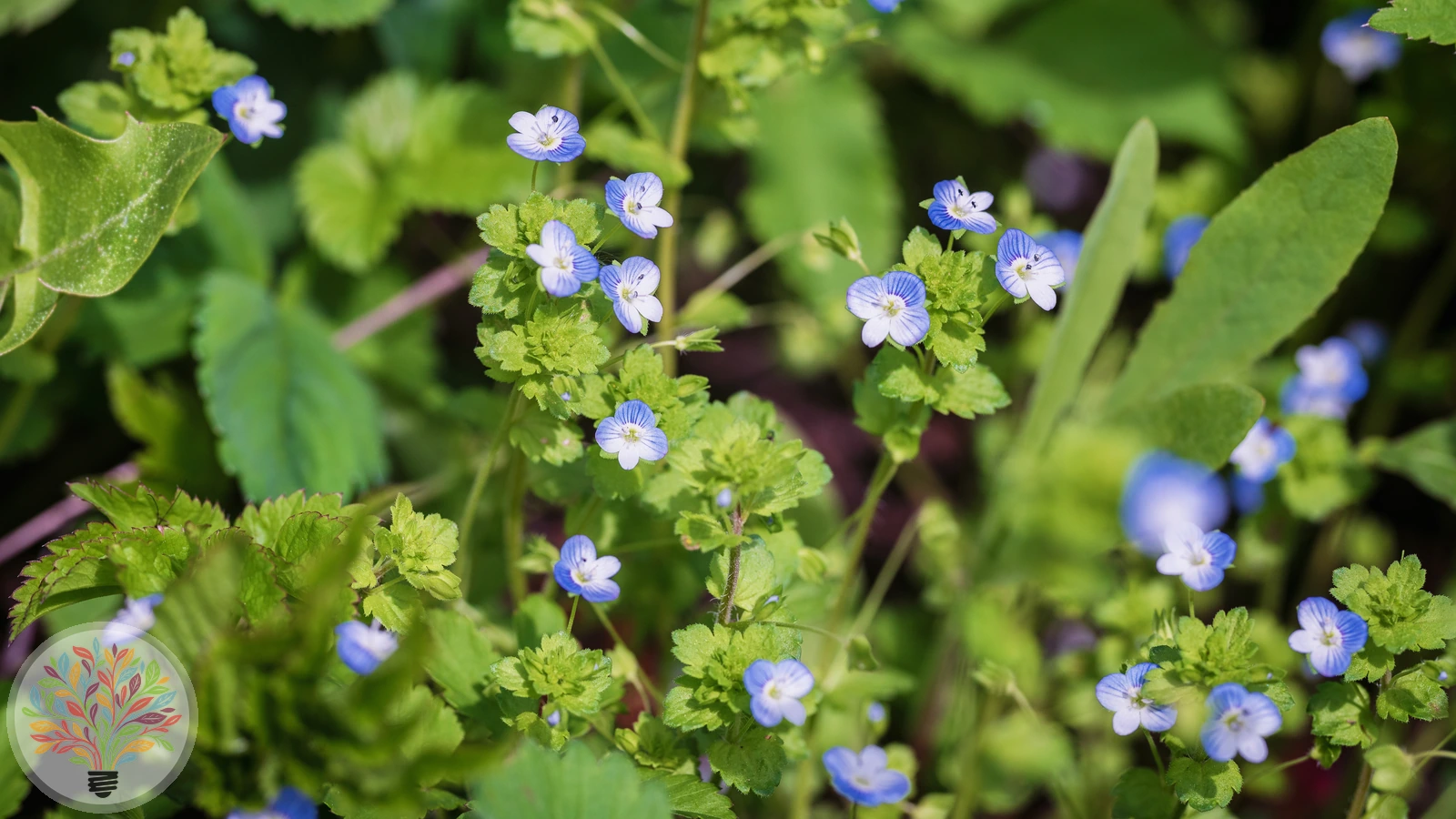
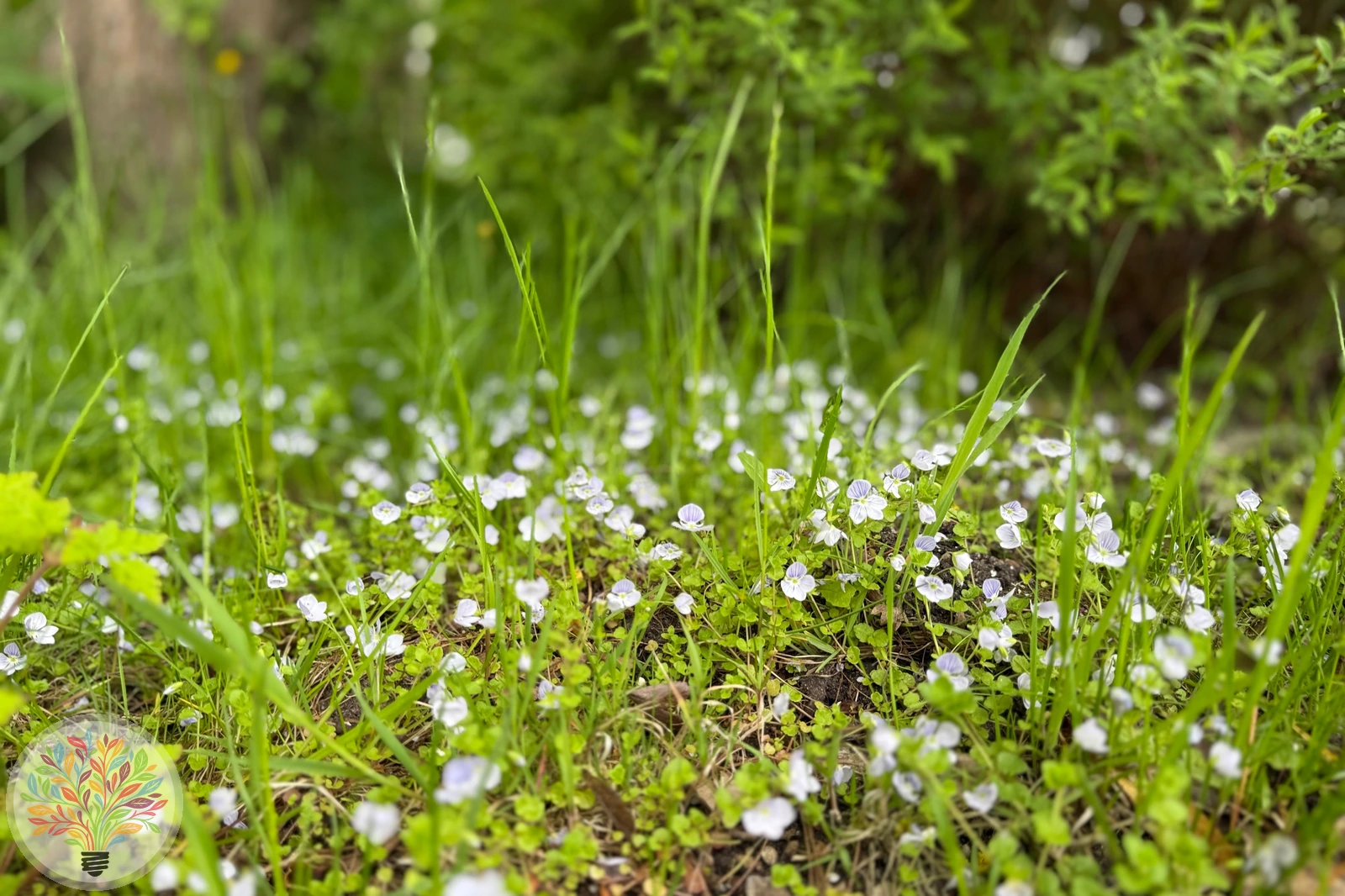
Veronica persica
Veronica persica
FamilyGenus: Veronicaheimisch in Deutschland
🌿
92
Species
interact
🔗
140
Interactions
documented
🐛
1
Host relationships
Species
About this species
A low-growing herbaceous plant that flowers in every month of the year. Introduced and well established in Great Britain, it thrives in sunny, fertile, moderately moist soils, providing nectar and pollen for pollinating insects.
Ecological network
Click to highlight connections · Click again to open species page
Netzwerk wird geladen...
PollinationLarval hostFlower visit
Ecological significance
As an introduced plant, it readily colonises disturbed, nutrient-enriched habitats. Its year-round flowering provides a reliable nectar and pollen resource, benefitting local pollinating insects.
Annual cycle
Flowers and sets seed throughout the year under suitable conditions, with the most vigorous growth typically occurring in spring and autumn.
Standort & Merkmale
Light
Sonne
Moisture
Frisch (Mäßig feucht)
Soil
Starkzehrer (Nährstoffreicher/Fetter Boden)
Bloom time
Jan – Dez
Soil reaction
Basisch / Kalkhold
Bioregion
Continental
Nectar value
4
Pollen value
4
Growth form
Krautige Pflanze
Woodiness
Nicht verholzt
Leaf type
Breitblättrig
Plant height
0.164 m
Morphological traits: TRY ID3 (CC BY 3.0) & TRY ID81 (CC BY)
Pollen
0.0346 mg/Blüte
Pflege & Anbau
This species naturally appears in open, sunny positions on fertile, moist but well-drained soil. It is a common coloniser of gardens and cultivated ground and does not require deliberate care.
Scientific profile
Veronica persica is an introduced herbaceous plant in the Plantaginaceae family, now widespread on nutrient-rich, disturbed ground. It typically reaches about 16 cm in height, with broad, non-woody leaves and creeping stems. The plant shows a strong preference for sunny sites with fresh to moderately moist soil and a calcareous tendency. Flowering can occur in any month, making it a consistent source of nectar and pollen for insects. It forms arbuscular mycorrhizal associations and is associated with habitats that experience only low levels of disturbance.
Bestäuber & Besucher
74 Arten interagieren mit dieser Pflanze
Xanthorhoe montanataLasioglossum malachurumPieris rapaePieris brassicaeNomada goodenianaLasioglossum calceatumNomada panzeriLasioglossum zonulumLasioglossum morioNomada flavoguttataMegachile willughbiellaSphecodes ephippiusNomada flavaAndrena minutulaAndrena wilkellaAndrena nigroaeneaAndrena flavipesAndrena haemorrhoaAndrena labiataHylaeus communisOsmia bicornisLasiommata megeraAndrena subopacaBombus pascuorumAndrena fucataVanessa atalantaMelitta leporinaPyronia tithonusPolygonia c-albumHalictus confususHalictus tumulorumBombus lucorumBombus terrestrisSpilarctia luteaAndrena clarkellaBombus sylvestrisLasioglossum pauxillumApis melliferaMellicta athaliaPolyommatus icarusCelastrina argiolusAnthocharis cardaminesOsmia cornutaAglais urticaeCeratina cucurbitinaPolistes dominulaCoenonympha pamphilusBombus lapidariusAndrena bicolorChrysocharis orbicularis
Other flower visitors
17 other species visit the flowers
Linaria cannabinaColumba palumbusBrassicogethes aeneusPyrausta despicataTenthredo koehleriFormica fuscaHarpalus affinisHarpalus rufipesCephus pygmaeusEmpis nuntiaBibio johannisAnthomyiidae sp. 1Chorebus amasisPegoplata aestivaKorscheltellus lupulinaPhaedrotoma exiguaMeligethes aeneus
Sources & data origin
•TraitCH — CC BY 4.0TraitCH 2.0 contributors; imported as source-preserving NaturKompass taxon evidence.
•Interaktionsdaten via GloBI (CC-BY 4.0)
•pollinator_interactions
•Baden-Böhm F, App M, Thiele J (2022) — The FloRes Database: A floral resources trait database for pollinator habitat-assessment generated by a multistep workflow. Johann Heinrich von Thünen-Institut, Dryad, DOI: 10.5061/dryad.djh9w0w29 (CC0)
•FloraWeb / BfN
•EIVE 1.0 — Dengler et al. (2023), DOI: 10.3897/VCS.98324 (CC BY 4.0)
•EuPPollNet — Kuppler et al. (2025), DOI: 10.1111/geb.70000 (CC BY 4.0)
•Database of Pollinator Interactions (DoPI) — Pocock et al. (2022), DOI: 10.1002/ecy.3801 (CC BY)
•GBIF Backbone Taxonomy — GBIF Secretariat (2024), DOI: 10.15468/39omei (CC BY 4.0)
•TRY Categorical Traits (ID3) — Kattge et al. (2012), DOI: 10.17871/TRY.3 (CC BY 3.0)
•TRY Global Spectrum (ID81) — Díaz et al. (2016/2021), DOI: 10.17871/TRY.81 (CC BY)
•Checklist Alien Plants Belgium — Verloove F (2023), Botanic Garden Meise (CC BY 4.0)
•Govaerts R et al. (2025) — World Checklist of Vascular Plants (WCVP) v14. Royal Botanic Gardens, Kew. DOI: 10.34885/xs7h-ze42 (CC BY 4.0)
•Foto: © Adobe Stock / AdobeStock_1765014739
All data is licensed under CC BY 4.0, CC0, or compatible. Attribution according to license terms. Full source overview →