Main article
Why you shouldn't plant every free spot in the border
Created with AI and translated(learn more)
This article was generated automatically based on the stated sources and translated into this language. The underlying video descriptions were editorially reviewed; this article itself was not individually reviewed by a subject-matter editor.
More about our AI transparencyWhy you shouldn't plant every gap in the border: check light, soil and competition, preserve open soil as habitat and decide according to the site.
Why you shouldn't plant every free spot in the border
In brief
A free spot in the border is not automatically a mistake. Before you replant, it is worth checking the site: light, soil moisture, root competition, compaction and the dynamics of neighbouring plants. In dense borders, closing every gap immediately can mean that you change light, temperature and the soil surface. At the same time, open, sunny and little-disturbed patches of soil can provide habitat for ground-nesting wild bees and other specialised organisms. Not every bare patch is a nesting site, but open soil is not inherently worthless. The crucial question is: why is the spot free, and what function might it already fulfil?
Introduction: The gap is often information
You know the feeling: in the perennial border a plant has disappeared, leaving a space free. The reflex is to plant something new straight away. But a gap is not automatically a mistake. It can tell you something about light, soil moisture, competition and possible habitats. So before you put the next perennial in, another question is worth asking: why did this spot become free in the first place?
If a plant disappears from your border, the cause is not automatically the plant itself. Perhaps it now receives less light. Perhaps the soil there dries out more quickly. Perhaps the neighbouring plants are now more densely packed than they used to be. Or roots now compete more strongly for water and nutrients. A garden is not a static system. Plants grow, shade one another, root systems spread, and soil moisture changes. And a site that worked well three years ago may have become a completely different one today.
Check light first, then plant
Especially in established borders, the amount of light often changes more than we perceive. A perennial grows taller. A woody plant grows wider. A hedge suddenly casts shade for several hours longer. That is why, before every replanting, it is worth asking: how many hours of direct light does this spot actually receive?
It is not enough to look once at midday. Note when the sun reaches the spot and when it disappears again. In high summer the sun is in a different position from spring or autumn. The leaf development of neighbouring plants also changes the light reaching the spot over the course of the year. If a sun-loving species repeatedly disappears in the same spot, there is little point in simply putting the next sun-loving plant there. Perhaps the spot has now become too shady. In that case, shade-tolerant species are a better fit – or you deliberately leave the spot open if it fulfils another function.
Then look at the soil
Even a few metres apart within a garden, conditions can be completely different. One spot dries out within a day after rain. Another stays moist for a long time. Under woody plants, strong root competition can develop at the same time. On heavy soils, by contrast, water can stand temporarily. Soil moisture, soil type and compaction are therefore central site factors.
Check the soil by simple means: carefully dig out a small sample with a hand trowel. Does the soil feel sandy, silty or clayey? Does water stand in a hollow? Does the surface dry out quickly? Do you see many fine roots from neighbouring plants? Observations like these tell you more than a general description such as 'semi-shady' or 'normal garden soil'. The plant should suit the site – not the site somehow adjusted to the plant.
Too dense is not automatically better
Especially in a naturalistic garden, the thought quickly arises: the more plants, the more nature. But it is not that simple. With very dense planting, plants compete more strongly for light, water and space. Competition means that several plants use the same limited resources. That is part of plant communities – that is, communities of plants growing in the same place. But if you close every free spot immediately, you simultaneously change light, temperature and the soil surface.
A completely closed border is therefore not automatically more ecologically valuable than a more structurally rich border with different areas. Structurally rich means: there are dense, semi-open and open zones. Such differences can offer habitat to more organisms than an evenly dense plant cover. That does not mean that you should plant nothing at all. It means that, before replanting, you check whether the spot really needs a plant – or whether it already has a function.
Some open soil patches are themselves habitat
This becomes especially important with ground-nesting wild bees. Wild bees are not a single species but a collective term for many bee species. Taxonomically they belong to the bees (Anthophila) within the superfamily Apoidea. A large proportion of our wild bee species nest in the ground. For this, many species need open or only sparsely vegetated patches of soil that they can actually reach. Sunny, dry and, as far as possible, undisturbed areas can be especially interesting.
A small open spot between plants can therefore fulfil a completely different ecological function from another perennial. That does not mean: every bare spot is automatically a wild bee nesting site. But it does mean: open soil is not inherently worthless. If you notice ground nests – such as small mounds of earth, entrance holes or bees flying singly – you are best leaving these areas undisturbed. You do not need to identify the species in order to protect it. What matters is not to harm or remove protected animals.
The crucial question: what is happening there?
This is precisely where garden planning changes. Not: 'There is space – what shall I plant in it?' But rather: why is there space? What are the site conditions? What function might this area already fulfil? Is a plant actually missing? Or is it perhaps only the observation that is missing?
Natural gardens change constantly
Even if a spot is open today, it does not have to stay open. Seeds germinate. Runners spread in. Neighbouring plants grow into it. That is why deliberately keeping a spot open can also be a form of care if that is exactly the structure desired. In another place, by contrast, replanting can be very sensible. What matters is not the rule 'close the gap' or 'leave the gap'. What matters is the site.
If you want to preserve an open spot permanently, you may need to intervene regularly: remove emerging seedlings, restrain runners or clear the area of leaves. That is work. It is therefore worth deciding in advance which areas you want to keep open and which you will let develop. A structurally rich garden does not consist of a rigid plan but of a balance between observing, allowing and steering.
Matching products
Available at Gartenexpedition.de
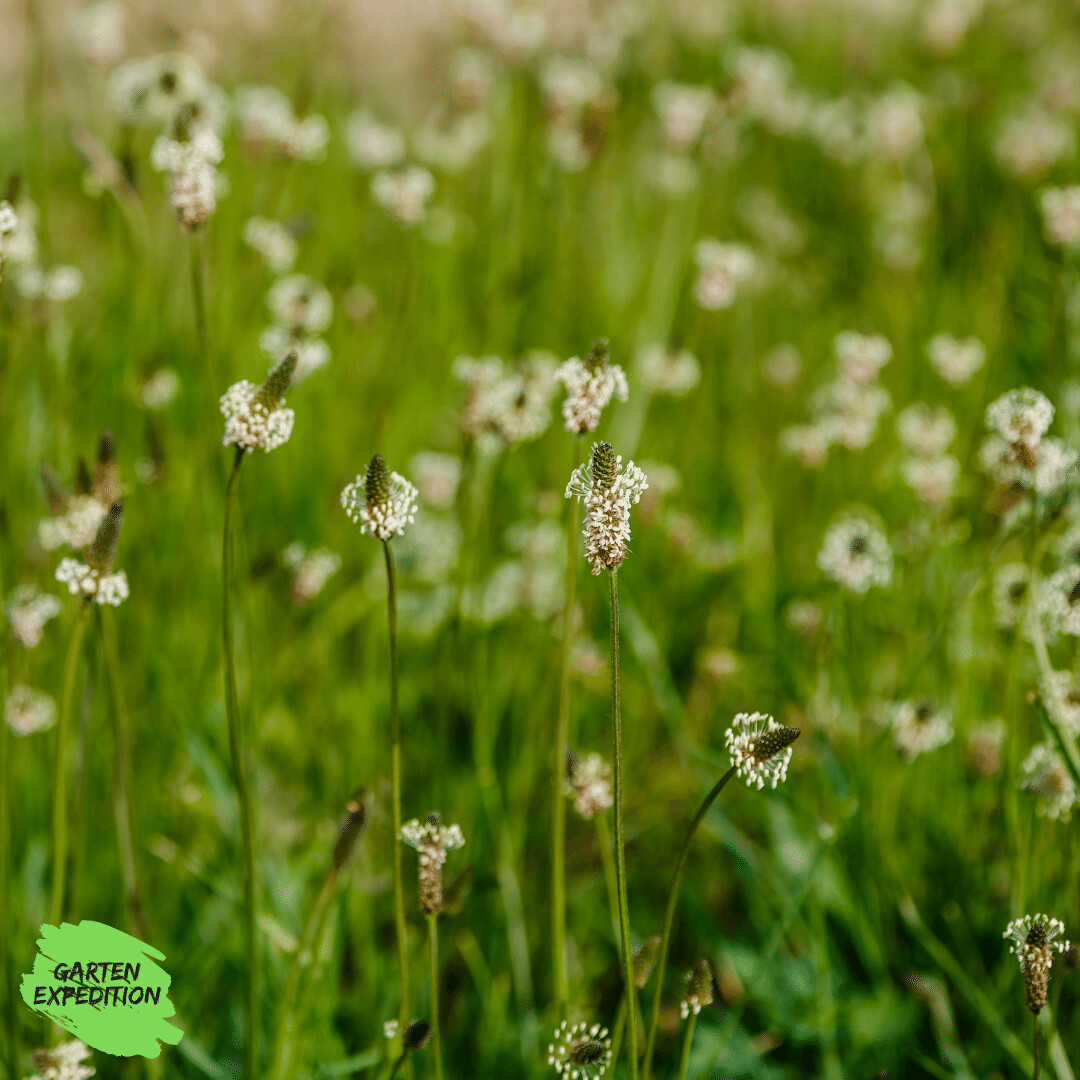
Spitzwegerich (Plantago lanceolata)
2,00 €
incl. VAT, plus shipping costs
To shop →
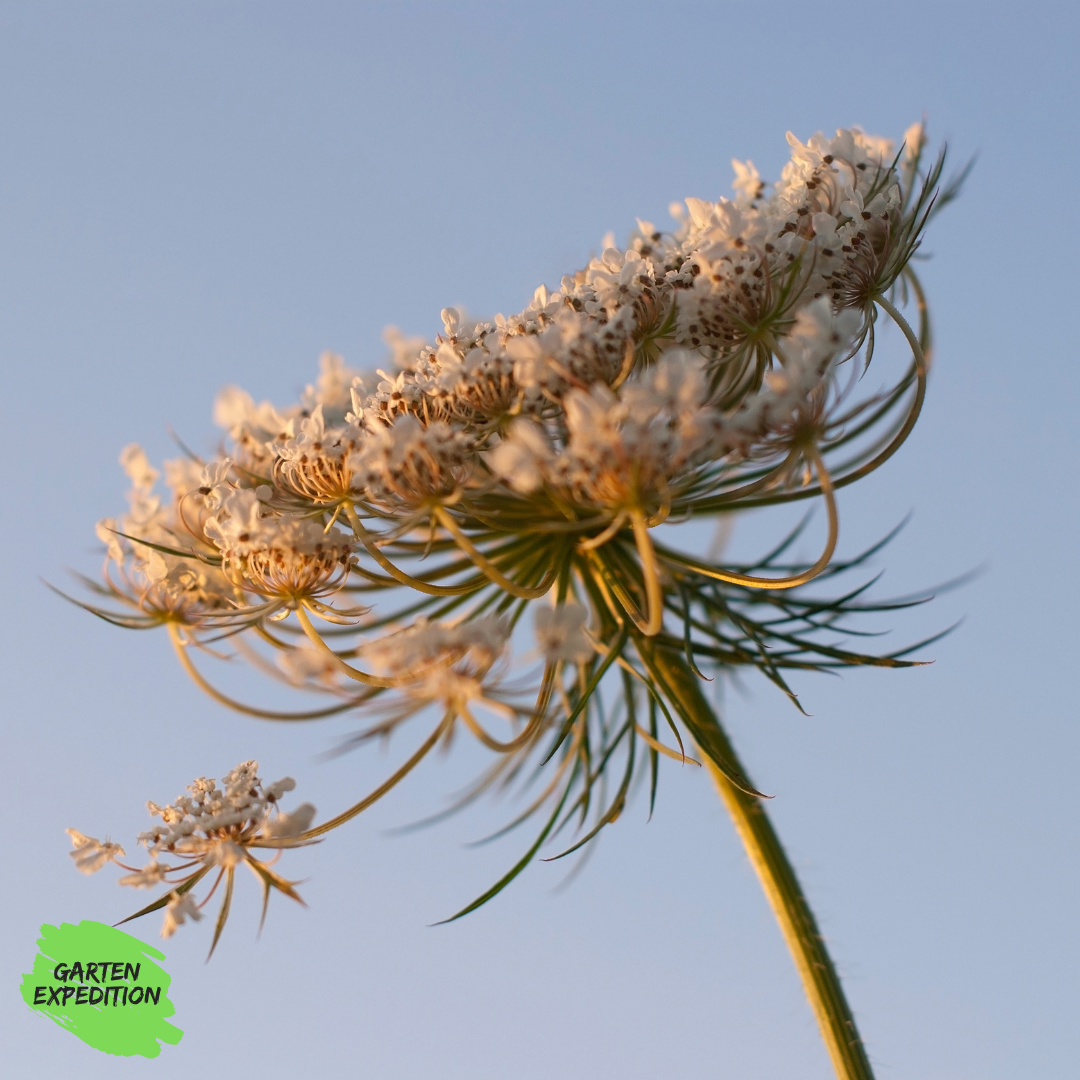
Wilde Möhre (Daucus carota)
2,50 €
incl. VAT, plus shipping costs
To shop →
Partner note: The linked products are from Gartenexpedition.de. By purchasing, you support our work.
Practical guide: how to decide when you have a free spot
- Mark the spot. Push a small wooden stick or a label into the soil so that you can find it again.
- Observe the light. Note on several days when direct sun falls on the spot and for how long. Repeat this in early summer and high summer.
- Check the soil. Take a handful of soil. Is it dry, moist, sticky, loose? Does the spot dry out quickly after rain? Does water stand there?
- Pay attention to roots and competition. Dig carefully. Are there many fine roots from woody plants or perennials nearby? Are the neighbouring plants very densely packed?
- Check the function. Is the spot sunny, dry and little disturbed? Then it could be interesting for ground-nesting wild bees. In that case: do not cover it, do not dig it over, do not plant it up.
- Decide according to the site. If a plant is missing, choose a species that copes with the actual light and soil conditions. Do not place it too close to the neighbouring plants.
- Plant with care. Ensure sufficient root space and water during the establishment phase. Avoid covering large areas of adjacent open soil if you want to preserve it as habitat.
- Document your observation. A photo and a short note will help you understand the development better next year.
Comparison table: observation, cause and possible decision
| Observation at the free spot | Possible cause | Useful check | Possible decision |
|---|---|---|---|
| Plant disappears although it previously thrived | More shade from a woody plant or perennial | Note light hours over the course of the day and year | Choose a shade-tolerant species or leave the gap open |
| Soil dries out very quickly after rain | Sandy soil, root competition, full sun | Check soil sample, moisture after rain, roots | Choose a drought-tolerant species or accept open soil |
| Water stands for longer after rain | Compaction, heavy soil, hollow | Check soil profile, drainage, compaction | Adjust the site or choose a moisture-loving species |
| Neighbouring plants grow in strongly | Competition for light, water, space | Check spacing and root space | Do not replant, regulate spacing or allow dynamic development |
| Sunny, open, barely vegetated spot | Possible nesting site for ground-nesting wild bees | Observe sun, disturbance, soil type, nests | Leave open and undisturbed |
| No clear cause identifiable | Garden is dynamic, several factors | Observe for several weeks, compare photos | Wait, then decide according to the site |
Limits and frequently asked questions
Is every bare spot automatically a wild bee nesting site?
No. Many factors must come together: suitable soil, sun, little disturbance and accessibility. A bare spot is initially just an open patch of soil. It can be a nesting site, but it does not have to be.
Do I have to leave every gap in the border open?
No. This is not about the rule 'leave the gap'. At some sites, replanting is sensible. What matters are the actual site conditions.
How do I recognise ground-nesting wild bees?
You can look out for small mounds of earth, entrance holes or bees flying just above the ground. Certain identification is often not necessary. More important is not to disturb or dig over the area.
May I mulch open soil?
That depends on the aim. If you want to preserve an open, sunny patch of soil as a possible nesting area, you should not cover it over the whole area. For other parts of the border, mulching can be sensible in order to reduce evaporation and suppress weeds. Peat-containing substrates are not necessary for this.
What should I do if I am unsure?
Observe for longer. Mark the spot, note light and soil moisture, take photos. The decision often becomes clearer when you know the site over several weeks and in different weather conditions.
How certain are the statements about ground-nesting wild bees?
Many statements are based on specialist information and general sources such as the Royal Horticultural Society (RHS) and the Bundesamt für Naturschutz (BfN). Specific percentages or species lists are not given because they are not sufficiently supported.
Sources and further information
- YouTube description – thematic basis of this article; not a scientific primary source.
- Royal Horticultural Society (RHS): Planting perennials – cited as a source in the video description; not retrievable here and not checked in the original.
- Bundesamt für Naturschutz (BfN): importance of open and patchy vegetation structures and open soil patches as microhabitats – cited as a source in the video description; not retrievable here and not checked in the original.
- Specialist information on ground-nesting wild bees: mentioned in the video description, without a specific retrievable URL; not checked in the original here.
- Note: shop and advertising links are not scientific evidence and were not evaluated for this article.
Keywords
All species data comes from scientific sources (CC BY 4.0 / CC0). Attribution according to licence terms. Complete source overview →
Last updated: 17/09/2026. Corrections can be reported via the feedback form.