Main article
Oregano in the Wildlife Garden: Why Summer Flowering Becomes an Insect Magnet
Created with AI and translated(learn more)
This article was generated automatically based on the stated sources and translated into this language. The underlying video descriptions were editorially reviewed; this article itself was not individually reviewed by a subject-matter editor.
More about our AI transparencyDiscover why flowering oregano (Origanum vulgare) is an essential midsummer magnet for butterflies, wild bees, and hoverflies. Includes planting and care tips.
Summary
- Plant in focus: Oregano or wild marjoram (Origanum vulgare), a perennial herb from the mint family (Lamiaceae).
- Key ecological timing: Whilst many spring and early-summer flowers fade from July onwards, oregano opens countless individual florets from July and often well into September.
- Target groups: Thanks to easily accessible floral morphology, generalists such as butterflies, bumblebees, honeybees, solitary bees, and hoverflies benefit equally from nectar and pollen.
- Gardening practice: Fully sunny position; lean to moderately nutrient-rich, free-draining peat-free soil; avoidance of synthetic plant protection products; and, above all, leaving the flower heads intact until they have finished blooming.
Introduction: From Kitchen Herb to Ecological Hotspot
Almost everyone knows oregano (Origanum vulgare) as a dried culinary herb synonymous with Mediterranean cooking—indispensable on pizzas or in tomato sauces. Consequently, many gardeners regularly cut the plant back close to the ground to harvest tender leaves before any buds emerge. However, allowing oregano to grow and burst into flower reveals a remarkable midsummer transformation: this unassuming kitchen herb turns into one of the most heavily frequented insect hotspots in the entire garden.
From mid-July onwards, many wildlife-friendly gardens enter a phase often described in beekeeping and ecology as the midsummer forage gap (or "nectar dearth"). Many wild perennials and ornamental plants have already passed their flowering peak and have set seed. It is precisely during this transitional phase that Origanum vulgare hits full stride. Understanding this dynamic will help you use simple measures to shape your garden so that it reliably supports pollinators through the hottest months of the year.
Botanical Foundations: What Distinguishes Origanum vulgare?
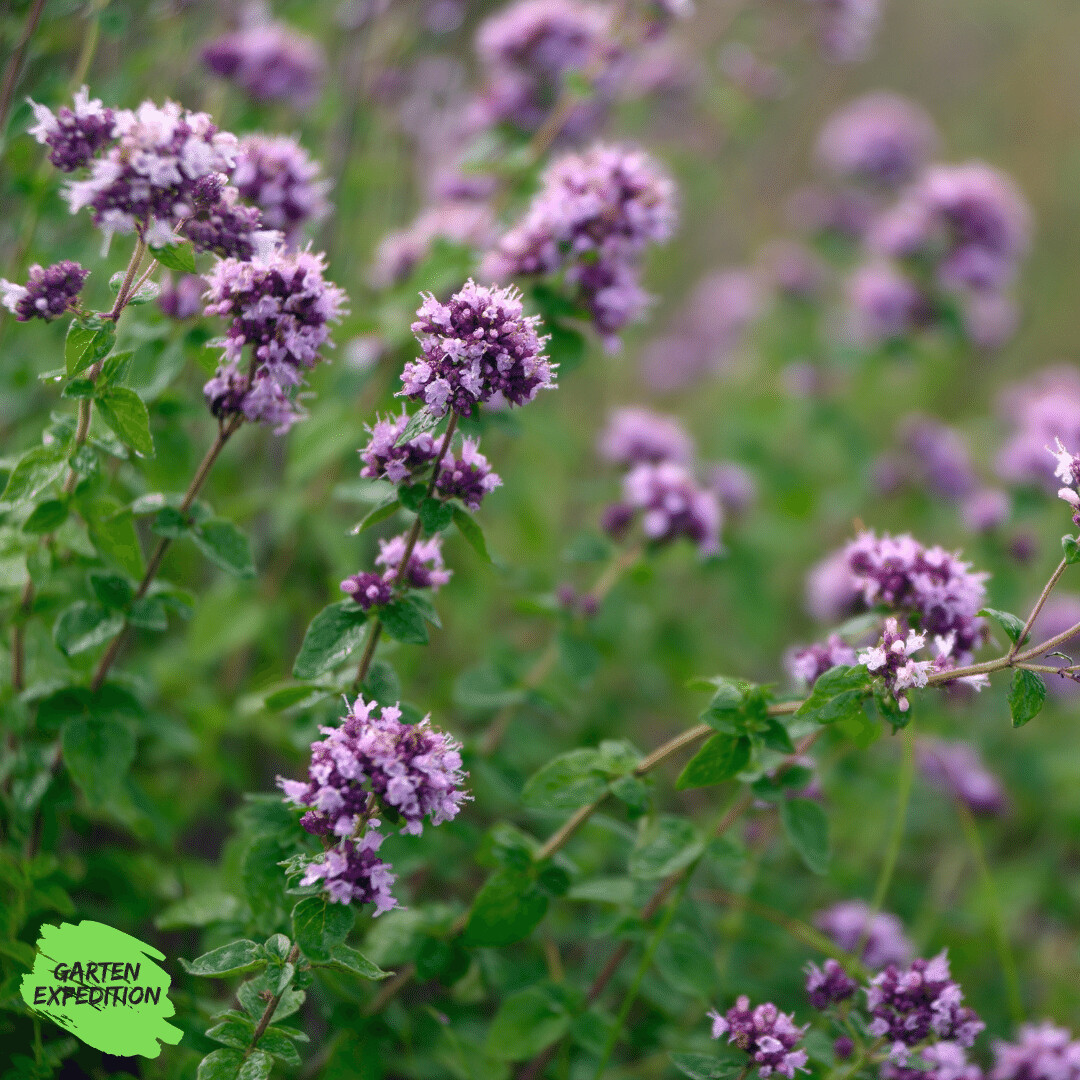
Wild marjoram or common oregano belongs to the mint family (Lamiaceae). The plant is a hardy, perennial herbaceous species that reaches heights between 20 and 60 centimetres, depending on its growing conditions. Typical features of the species include square stems, opposite and aromatically scented leaves, and richly branched, dense inflorescences.
Floral Architecture and Accessibility
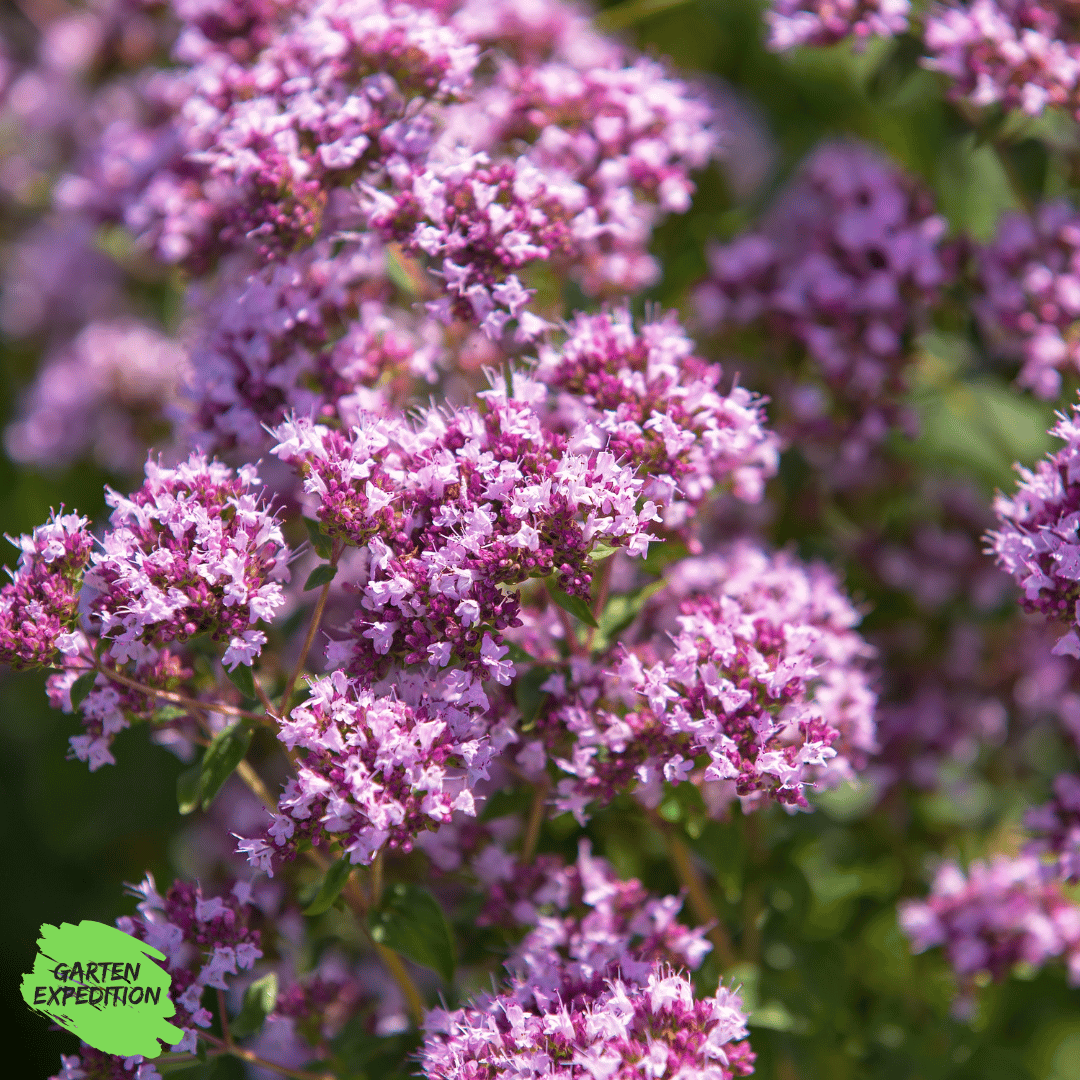
The individual florets of Origanum vulgare are comparatively small (often measuring only 4 to 7 millimetres in length), yet they possess the classic labiate structure: an upright upper lip and a three-lobed lower lip that acts as an ideal landing platform for visiting insects. Colouration ranges from pale pink and purple to whitish tones.
Unlike plants with deep, narrow corolla tubes—such as certain legumes or long-tubed labiates, which can only be tapped by creatures with exceptionally long proboscises—the tube in Origanum vulgare is relatively short. As a result, the nectar is situated at a depth accessible to a wide variety of mouthpart types. Furthermore, the flowers are not borne singly but in dense thyrsoid clusters (cymes). This considerably reduces the energetic cost for pollinators: an insect does not need to fly far to move from one nectar source to the next; instead, it can walk across the inflorescence and inspect many individual florets in rapid succession.
Why Insects Swarm Blooming Oregano in Midsummer
The popularity of oregano in the summer garden rests on two decisive factors: its phenological window and its reliable nectar yield under drought stress.
- Compensating for the summer dearth: From late July, the abundance of blooms in many Central European managed landscapes and gardens drops noticeably. Early-summer shrubs and perennials have finished flowering. During this phase, however, flower-visiting insects continue to require a steady supply of carbohydrates to power their flight metabolism, as well as pollen to rear the season's final brood generations. Oregano reliably plugs this gap from July right through into September.
- Tolerance to heat and drought: As a plant native to Central European calcareous dry grasslands as well as the Mediterranean basin, Origanum vulgare features adaptations to dry spells. Whilst moisture-loving summer bedding plants quickly wilt or cease nectar production when temperatures soar and water is scarce, oregano frequently continues to secrete nectar reliably—even on scorching midsummer days—thanks to its extensive root system and xeromorphic adaptations.
Visitors to the Flower Head: Who Benefits?
Because of its open floral architecture and generous supply of nectar and pollen, oregano attracts a broad spectrum of pollinator groups. The source material from the YouTube description highlights that on warm days, several distinct taxonomic groups can be observed foraging simultaneously on the very same plant:
- Butterflies (Lepidoptera): Non-migratory and migratory butterflies such as the peacock (Aglais io), small tortoiseshell (Aglais urticae), brimstone (Gonepteryx rhamni), and various skippers visit the dense flower heads extensively. Because butterflies can settle on the clusters and probe the florets one after another with their proboscis, they frequently linger on individual plants for exceptionally long periods.
- Wild bees and bumblebees (Apiformes): Alongside the Western honeybee (Apis mellifera), various polylectic solitary bee species as well as bumblebee queens and workers (genus Bombus) visit oregano to collect pollen for their brood cells and to refuel on nectar.
- Hoverflies (Syrphidae): These dipterans, often masquerading as bees or wasps, are valuable garden allies, as the larvae of many species consume vast numbers of aphids. Adult hoverflies possess relatively short mouthparts and depend on readily accessible nectaries and exposed pollen, which they find in optimal abundance across oregano's flat flower heads.
Integration into the Wildlife Garden Ecosystem
Forage sources represent only half of the ecological equation in a garden. The educational platform naturkompass.gartenexpedition.de points out that roughly 75% of Central European wild bee species nest in the ground (mining bees requiring bare soil patches or sandy banks), whilst over 1,500 beetle species depend on deadwood habitats.
In practical terms, this means that even the most profusely flowering oregano patch can only deliver its full ecological value when paired with appropriate nesting structures. By maintaining open, un-vegetated patches of earth, sand features, or deadwood piles near your herb border, you minimise the commuting distance between nests and foraging plants. This structural diversity transforms standalone ornamental or edible plants into functioning habitats.
Practical Guide: Planting, Caring for, and Managing Oregano for Nature
Successfully establishing oregano as an insect magnet in your garden or on a balcony requires neither expensive equipment nor specialist horticultural expertise. The following steps will guide you through the process:
1. Selecting the Location and Soil
- Light: Choose the sunniest, warmest position available in your garden or on your balcony. The more sunshine the plant receives, the higher its concentration of essential oils and the more bountiful its nectar production.
- Soil structure: Origanum vulgare favours free-draining, rather lean to moderately nutrient-rich soils. Heavy, compacted clay soils are prone to waterlogging in winter, which can lead to root rot. Work generous amounts of coarse sand, fine grit, or crushed lava into heavy soils.
- Container culture: On a balcony or patio, a terracotta pot with drainage holes is ideal. Always use a peat-free potting compost blended with sand or mineral substrate (pumice, expanded clay) to safeguard peatlands actively.
2. Planting and Watering
- Timing: The ideal planting window is spring (April to May) or early autumn (September to October).
- Spacing: Space individual plants roughly 25 to 30 centimetres apart. Over time, oregano forms loose mats and rhizomatous clumps.
- Watering: Keep the soil moderately moist for the first two weeks following planting. Once established, plants in open ground only require supplementary watering during exceptionally prolonged droughts.
3. Pruning Management for Gardeners and Insects
- Dual-purpose management: If you value oregano in the kitchen, there is no need to forgo harvesting entirely. In early summer, trim only a portion of the shoots for culinary use and leave at least half undisturbed so that flower buds can fully mature.
- Leave blooms in place: As soon as the flower buds open, all pruning should cease. Allow the flower heads to stand until they have finished blooming in late summer.
- Autumn and winter shelter: Do not cut back the dry, withered stems to ground level in autumn. The hollow stems and dense tussocks provide overwintering shelter for small insects and arachnids. Cut back only in early spring (February/March), just before new growth commences.
4. Companion Plants
Combine oregano with other perennial, insect-friendly herbs to extend the succession of blooms across the entire season:
- Thyme (Thymus vulgaris / Thymus serpyllum) for spring and early summer
- Common sage (Salvia officinalis) for early summer
- Winter savory (Satureja montana) for late summer
Comparative Table: Popular Mediterranean Herbs as Forage Plants for Insects
The following overview compares Origanum vulgare with two other labiates frequently grown in gardens, focusing on their ecological characteristics:
| Plant | Main Flowering Period | Floral Architecture | Primary Insect Visitors | Drought Tolerance |
|---|---|---|---|---|
| Wild Marjoram / Oregano (Origanum vulgare) | July to September | Abundant, tiny, open labiate florets in dense clusters | Butterflies, hoverflies, solitary bees, bumblebees, honeybees | Very high; ideal for hot, dry spells |
| Common Thyme (Thymus vulgaris) | May to July | Small individual florets in dense false whorls | Solitary bees, honeybees, wool carder bees, small butterflies | Very high; requires extremely free-draining, lean soil |
| Common Sage (Salvia officinalis) | May to July | Larger labiate flowers with a lever mechanism | Primarily bumblebees and larger solitary bees with sturdy proboscises | High; intolerant of waterlogging |
Limitations, Risks, and Frequently Asked Questions (FAQ)
Does oregano also attract pest insects?
In the garden, specialised leaf beetles (such as the green tortoise beetle, Cassida viridis) or leafhoppers occasionally appear on oregano, leaving small stippled feeding marks on the foliage. In a natural garden setting, however, these insects pose no threat to the survival of the plant; instead, they serve as a food source for predatory insects and garden birds. Treating them with plant protection products is neither necessary nor ecologically justifiable.
What is the difference between wild marjoram and culinary oregano?
Botanically, both belong to the species Origanum vulgare. Many culinary varieties sold in garden centres (some being distinct subspecies or selections such as Origanum vulgare subsp. hirtum) have been selected primarily for high concentrations of essential oils (carvacrol, thymol). The wild form native to Central Europe (Origanum vulgare subsp. vulgare) is particularly hardy and adapted to regional winters. For insects, both forms provide ample forage when allowed to flower freely, provided they bear single, non-doubled flowers.
Does harvesting shoots harm pollinators?
So long as you do not cut the entire plant back hard right before it blooms, moderate harvesting causes no harm. If you maintain a dense herb border or multiple plants, you can easily pinch shoot tips from a few specimens whilst leaving the remainder to flower.
Does oregano benefit specialised solitary bees?
Oregano is primarily an outstanding nectar and pollen source for polylectic species (generalists). Strictly oligolectic solitary bees specialised in the pollen of specific botanical families (such as Brassicaceae, Asteraceae, or Campanulaceae) will use oregano mainly as a nectar source to refuel their own energy reserves, but they cannot collect larval provisions from it. Oregano does not replace a biodiverse wildflower meadow; rather, it complements it as a highly productive refuelling station.
Sources and Further Notes
- Thematic basis: YouTube description: Why all insects suddenly love your oregano (Gartenexpedition; video description serving as the primary source detailing late-summer flowering dynamics and insect attraction).
- Portal & database context: Naturkompass – Scientifically Grounded Gardening Knowledge (Publisher: Alexander Göcke; references the necessity of structured habitats, such as ground-nesting sites for approximately 75% of wild bee species and deadwood habitats for over 1,500 beetle species).
- Note on additional channels: Social media and messaging channels linked in the video description (WhatsApp channel, newsletter, Pinterest, as well as the main domain gartenexpedition.de) were technically inaccessible or blocked during research and therefore remain unverified. The linked online shop (gartenexpedition.de/shop) is a commercial offering and does not serve as scientific evidence.
Matching products
Available at Gartenexpedition.de
Oregano - Echter Dost (Origanum vulgare)
3,27 €
incl. VAT, plus shipping costs
To shop →
Oregano /Echter Dost (Origanum vulgare)
2,00 €
incl. VAT, plus shipping costs
To shop →
Partner note: The linked products are from Gartenexpedition.de. By purchasing, you support our work.
Keywords
All species data comes from scientific sources (CC BY 4.0 / CC0). Attribution according to licence terms. Complete source overview →
Last updated: 09/09/2026. Corrections can be reported via the feedback form.