In-depth
Supporting wild bees in the garden: targeted habitat creation for biodiversity
Discover how to support wild bees in your garden with targeted nesting sites and native plants. A practical guide for June.
The essentials in brief
- Wild bees depend on specific pollen sources from native plants, as they are highly specialised—unlike the honeybee.
- Creating nesting sites must incorporate a mosaic of clay soil, deadwood and pithy stems.
- June is a critical month for sustaining the summer generations of wild bees through an uninterrupted succession of flowers.
Habitat design in June
Many wild bee species are on the wing in June. If you aim to encourage them in your garden, a simple wildflower strip is not enough. Many species show a strong fidelity to particular plant families—a phenomenon biologists call oligolecty (specialisation on a narrow range of pollen sources).
Building a stable food web depends on combining nesting provision with a staggered sequence of forage plants. The Red Mason Bee (Osmia bicornis), for example, requires nesting sites from early spring, while the Wool Carder Bee (Anthidium manicatum) now relies on visiting Lamiaceae (the mint family) in June.
Specialisation of native wild bees
| Wild bee species | Preferred plant genus | Nesting site requirements |
|---|---|---|
| Wool Carder Bee (Anthidium manicatum) | Woundwort (Stachys), Dead-nettle (Lamium) | Cavities in wood |
| Masked Bee (Colletes daviesanus) | Tansy (Tanacetum vulgare) | Pithy stems |
| Bellflower Resin Bee (Chelostoma rapunculi) | Bellflower (Campanula) | Dry stems |
Practical tips for a wild bee hotspot
- Create patches of bare ground: Around 75 per cent of wild bee species nest in the ground. Strip away the turf in sunny, sparsely vegetated spots to expose sandy or loamy soil. This allows ground-nesting species such as Mining Bees (Andrena) to excavate brood tunnels.
- Integrate deadwood: Sink upright lengths of hardwood into the soil or drill holes into logs placed horizontally. Important: Always drill across the grain to prevent splitting, and carefully clean away any splinters from the tunnel entrances.
- Select plants by flowering phases: Avoid double-flowered ornamental varieties from garden centres. Use native wild plants instead. A combination of Viper’s Bugloss (Echium vulgare) for early-season bees and Bellflowers (Campanula) for specialist Resin Bees covers a broad spectrum of species.
- Cut back stems in late summer: Delay cutting back dried stems of perennials such as Mullein (Verbascum) and thistles until the following spring. Their pithy interiors provide protected overwintering sites and nesting tubes for many wild bees.
Focusing on nature-friendly maintenance
Refrain from using fertilisers and pesticides altogether. Synthetic herbicides are especially damaging to soil fauna and wipe out essential supplies of wild herbs. A structurally diverse garden—with transition zones ranging from nutrient-poor meadows to scrub—offers the greatest density of nesting opportunities. Ensure that invasive species, such as Canadian Horseweed (Erigeron canadensis), do not displace native forage plants. Native wild plants should always be the cornerstone of your planting, because they have co-evolved with native wild bees.
Frequently asked questions
Why are honeybee-friendly plants not always ideal?
Many wild bees are highly specialised and require the pollen of particular plant families. Garden cultivars frequently produce little or no accessible nectar.
When is the best time for nesting aids?
Nesting aids should be available year round. June is an ideal moment to add to your supply of pithy stems and expand areas of bare soil.
Do wild bees need a water source?
Yes, a shallow dish with stones to act as a landing platform provides a vital drinking spot for many insect species on hot June days.
Main article: Nature gardens in allotments: step-by-step to biodiversity
Matching products
Available at Gartenexpedition.de
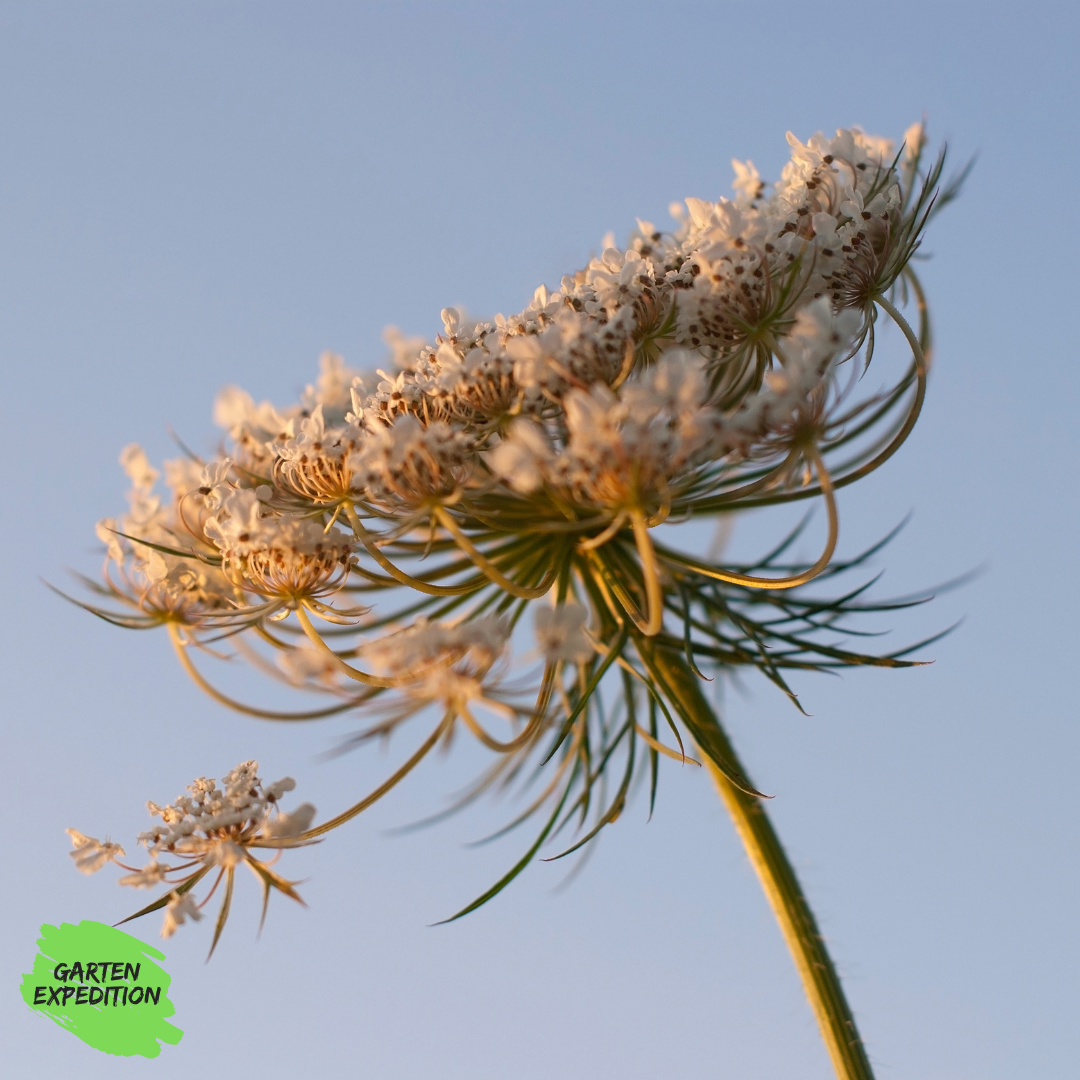
Wilde Möhre (Daucus carota)
2,50 €
incl. VAT, plus shipping costs
To shop →
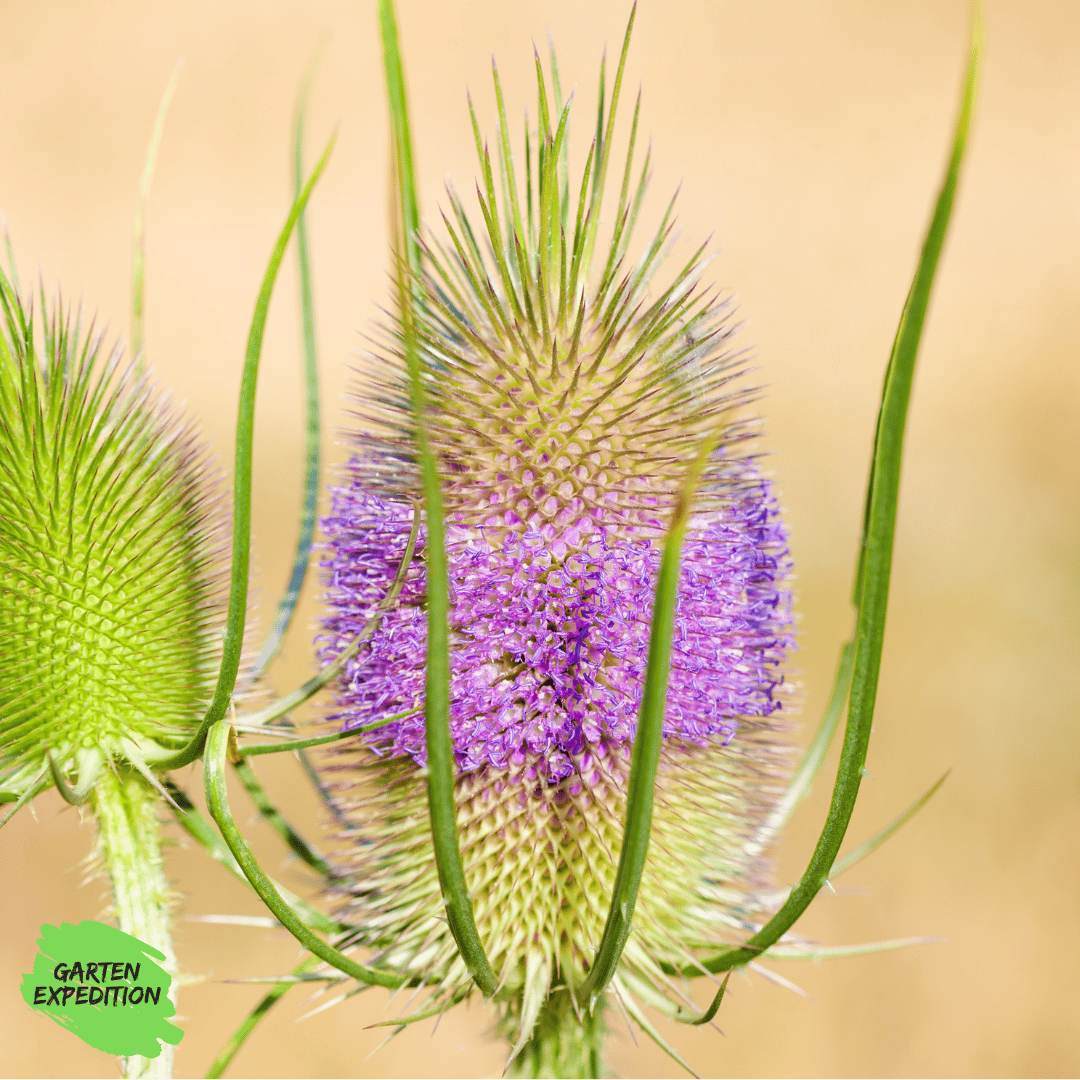
Wilde Karde (Dipsacus fullonum)
3,27 €
incl. VAT, plus shipping costs
To shop →
Partner note: The linked products are from Gartenexpedition.de. By purchasing, you support our work.
Matching videos on the topic
Gartenvlog 25 - Bei der Wildnisschule Ruhrgebiet mit Martin Maschka - Gartenexpedition #naturgarten
Wilde Ecke anlegen: In 30 Minuten zum perfekten Mini-Biotop
Sandarium bauen: In 3 Schritten zum echten Wildbienen-Magneten
Glockenblumen-Schmalbiene: Dein Praxis-Guide zur Wildbiene des Jahres 2026
Keywords
All species data comes from scientific sources (CC BY 4.0 / CC0). Attribution according to licence terms. Complete source overview →