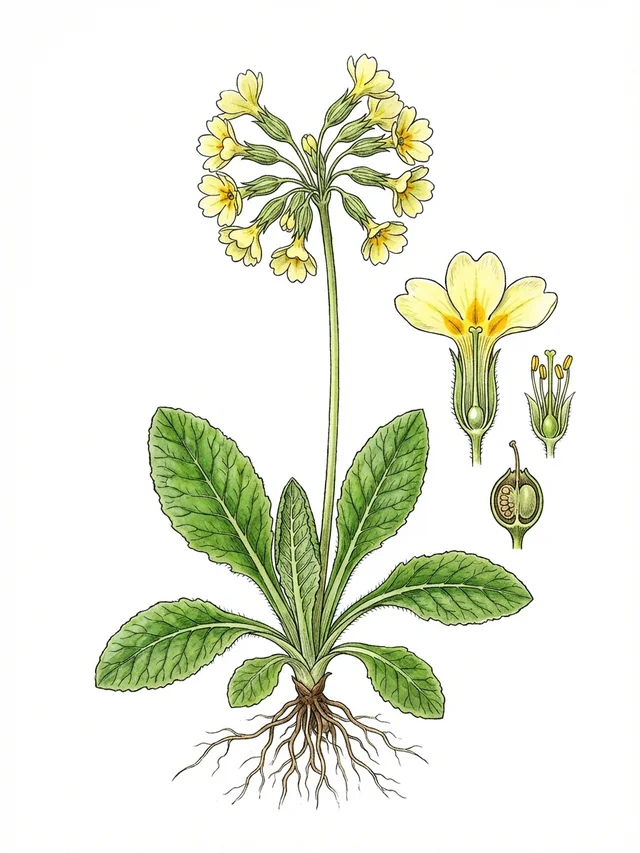
 Image to followAI-generated illustration
Castanea sativa
Castanea sativa
FamilyGenus: Castaneanative in Germany
🌿
81
Species
interact
🔗
105
Interactions
documented
🐛
37
Host relationships
Species
About this species
Castanea sativa is a broad-leaved deciduous tree long-established in Britain as an archaeophyte. It reaches about 27 metres in height, flowers in June and July, and grows best in partial shade on fresh, neutral to slightly acid soils.
Ecological network
Click to highlight connections · Click again to open the species page
Loading network...
PollinationLarval hostFlower visit
Ecological significance
Forms ectomycorrhizal associations with soil fungi.
Annual cycle
The tree is dormant through winter. Leaves emerge in spring and remain throughout summer; they colour and fall in autumn. Flowering occurs in June and July.
Standort & Merkmale
Light
Halbschatten
Moisture
Frisch (Mäßig feucht)
Soil
Mittelzehrer (Normaler Boden)
Flowering period
Jun – Jul
Soil reaction
Mäßig sauer bis neutral
Bioregion
Continental
Growth form
Baum
Woodiness
Verholzt
Leaf type
Breitblättrig
Leaf phenology
Laubabwerfend
Plant height
27.117 m
Morphological traits: TRY ID3 (CC BY 3.0) & TRY ID81 (CC BY)
Nectar
0.0685 µl/Blüte
Pflege & Anbau
Prefers a position in partial shade. Grows best in fresh, moderately moist, neutral to slightly acid soils of moderate fertility.
Scientific profile
Castanea sativa is a broad-leaved deciduous tree belonging to the beech family (Fagaceae). It is not native to Great Britain but is a well-established archaeophyte, introduced before 1500 and now widely naturalised. Mature specimens can reach around 27 metres in height. The leaves are broad and are shed each autumn. Flowering takes place in June and July, when yellowish catkins are produced. The species forms ectomycorrhizal associations with soil fungi. On the national Red List it is assessed as Least Concern.
Pollinators & visitors
18 Arten interagieren mit dieser Pflanze
Operophtera brumataApis melliferaBombus lucorumAndrena trimmeranaApatura irisBombus terrestrisEctropis crepusculariaAndrena dorsataChloroclysta siterataMimas tiliaeOrgyia antiquaCantharis rufa (Linnaeus)Vespa velutina nigrithoraxAndrena argentataAndrena bimaculataAndrena scoticaAndrena nigricepsAndrena thoracica
Host relationships
37 species use this plant as a host
Electrophaes corylataHydrelia sylvataPlagodis dolabrariaSelenia tetralunariaParectropis similariaHypomecis punctinalisCampaea margaritariaEuproctis similisTrisateles emortualis (Denis & Schiffermüller), 1775Moma alpiumAcronicta psiAnorthoa mundaPseudoips prasinanaOpisthograptis luteolataCabera pusariaCyclophora lineariaColocasia coryliOrthosia cerasiCosmia trapezinaPhalera bucephalaSelenia dentariaEupsilia transversaAgriopis marginariaOrthosia crudaPyrrhia umbraConistra vacciniiPtilodon capucinaChloroclystis v-ataErannis defoliariaJodis lacteariaApocheima hispidariaBiston betulariaLacanobia thalassinaOrthosia incertaAcronicta alniPlodia interpunctellaMisumena vatia
Other flower visitors
26 other species visit the flowers
Cossus cossusDendrocopos majorDryobates minorPicus viridisCallosciurus erythraeusFringilla coelebsSinodendron cylindricumXyleborus disparScolytus intricatusPlatypus cylindrusThaumetopoea processioneaPachytodes cerambyciformisCteniopus sulphureusPsittacula krameriAgrilus viridisAgrilus angustulusXyleborus dryographusXyleborinus saxeseniiPipistrellus pipistrellusPipistrellus nathusiiBarbastella barbastellusNyctalus leisleriMyotis nattereriPipistrellus pygmaeusPlecotus auritusCamponotus ligniperdus
Sources & data origin
•Cook et al. (2025) UK Butterfly & Moth Traits (DOI: 10.5285/dbc7cc17-cbbd-49dd-bab4-8e8855768d66)
•Interaktionsdaten via GloBI (CC-BY 4.0)
•pollinator_interactions
•Baden-Böhm F, App M, Thiele J (2022) — The FloRes Database: A floral resources trait database for pollinator habitat-assessment generated by a multistep workflow. Johann Heinrich von Thünen-Institut, Dryad, DOI: 10.5061/dryad.djh9w0w29 (CC0)
•FloraWeb / BfN
•EIVE 1.0 — Dengler et al. (2023), DOI: 10.3897/VCS.98324 (CC BY 4.0)
•GBIF Backbone Taxonomy — GBIF Secretariat (2024), DOI: 10.15468/39omei (CC BY 4.0)
•TRY Categorical Traits (ID3) — Kattge et al. (2012), DOI: 10.17871/TRY.3 (CC BY 3.0)
•TRY Global Spectrum (ID81) — Díaz et al. (2016/2021), DOI: 10.17871/TRY.81 (CC BY)
•Checklist Alien Plants Belgium — Verloove F (2023), Botanic Garden Meise (CC BY 4.0)
•Govaerts R et al. (2025) — World Checklist of Vascular Plants (WCVP) v14. Royal Botanic Gardens, Kew. DOI: 10.34885/xs7h-ze42 (CC BY 4.0)
All data is licensed under CC BY 4.0, CC0, or compatible terms. Attribution according to license conditions. Full source overview →