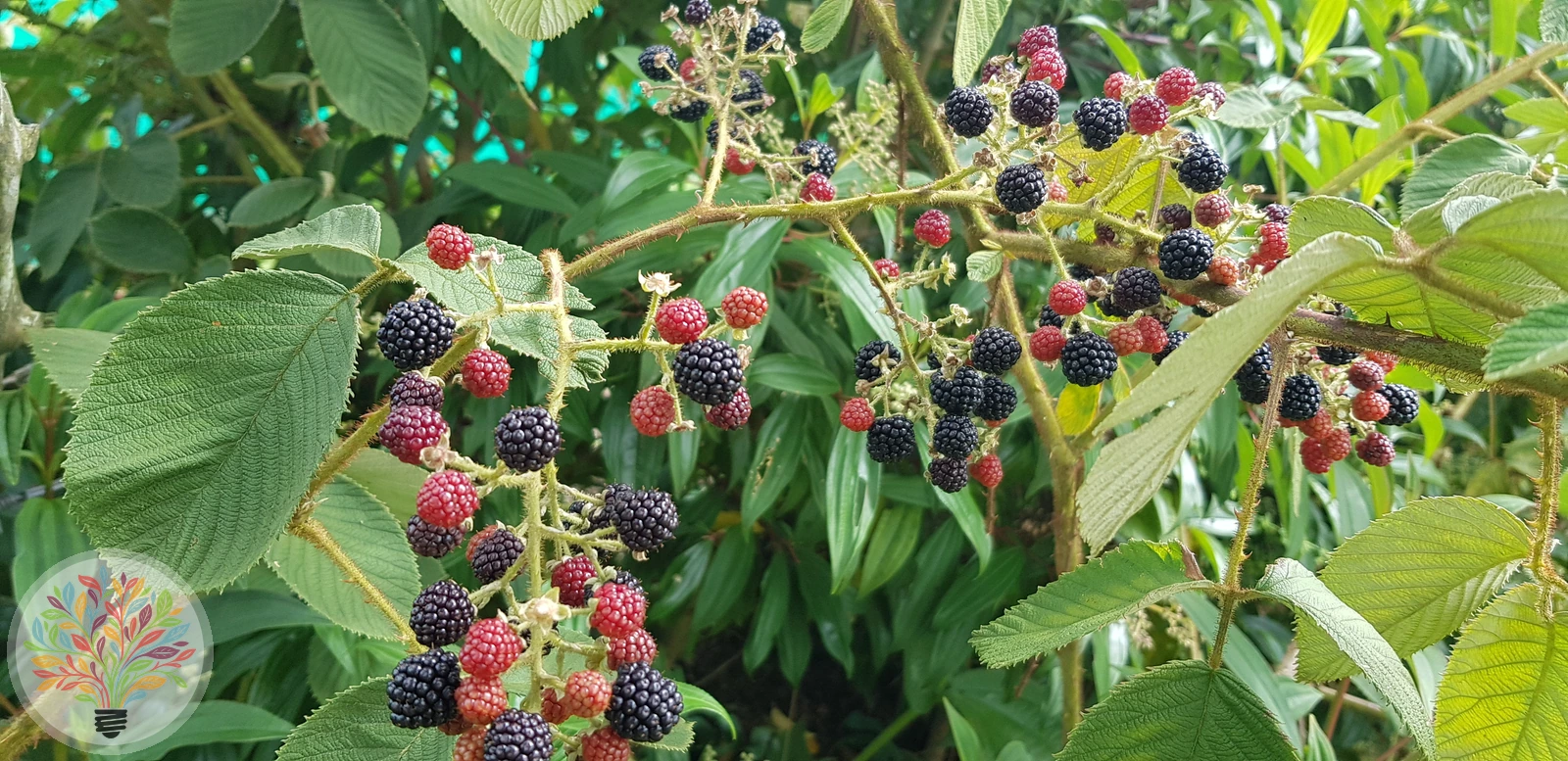
Rubus fruticosus
Rubus fruticosus
FamilyGenus: Rubusnative in Germany
🌿
229
Species
interact
🔗
1626
Interactions
documented
🐛
64
Host relationships
Species
About this species
A native woody climber bearing broad leaves, Rubus fruticosus blooms in mid‑summer with nectar‑ and pollen‑rich flowers that attract pollinators. It typically reaches about 1.5 m in height and shows a low tolerance to disturbance.
Ecological network
Click to highlight connections · Click again to open the species page
Loading network...
PollinationLarval hostFlower visit
Ecological significance
The flowers offer high nectar and pollen values, which may support a range of pollinating insects. The plant’s low disturbance tolerance suggests it is best suited to relatively undisturbed sites.
Annual cycle
Flowering occurs from July to August.
Safety note
The plant is considered safe for children and poses no known toxicity risk.
Standort & Merkmale
Light
—
Moisture
—
Soil
—
Flowering period
Jul – Aug
Bioregion
Continental
Nectar value
5
Pollen value
5
Growth form
Kletterpflanze
Woodiness
Verholzt
Leaf type
Breitblättrig
Plant height
1.491 m
Morphological traits: TRY ID3 (CC BY 3.0) & TRY ID81 (CC BY)
0
Nectar
6.8238 µl/Blüte
Pollen
0.5647 mg/Blüte
Pflege & Anbau
No specific care data is available.
Scientific profile
Rubus fruticosus is a woody, broad‑leaved climbing plant native in Great Britain. It commonly grows 0.5 – 2.0 m tall, with a recorded mean height of around 1.5 m. The leaf area averages approximately 1,900 mm² and diaspore mass is light. Flowering takes place in July and August, the blossoms providing abundant nectar and pollen (both maximum values). The plant is terrestrial and tolerates only light disturbance.
Pollinators & visitors
146 Arten interagieren mit dieser Pflanze
Osmia leaianaCelastrina argiolusTurdus philomelosTurdus merulaCyanistes caeruleusErithacus rubeculaSylvia currucaSylvia borinSturnus vulgarisGallinula chloropusVanessa atalantaThymelicus sylvestrisSatyrium w-albumPyronia tithonusPlebejus argusNomada striataManiola jurtinaFabriciana adippeLasioglossum zonulumHipparchia semeleNomada fulvicornisLycaena phlaeasMelitaea athaliaHylaeus communisHylaeus brevicornisNomada goodenianaMegachile centuncularisLasioglossum fulvicorneMegachile lignisecaLasioglossum morioGonepteryx rhamniAnthocharis cardaminesOsmia bicornisOsmia bicolorLysandra coridonHylaeus pictipesErebia aethiopsAphantopus hyperantusMegachile versicolorBombus ruderariusOsmia caerulescensNomada flavaCarterocephalus palaemonAricia agestisHalictus tumulorumMegachile maritimaBombus sylvestrisArgynnis paphiaAglais urticaeNomada fabriciana
Host relationships
64 species use this plant as a host
Pyrgus malvaeCallophrys rubiCilix glaucataThyatira batisTrichiura crataegiSaturnia pavoniaDysstroma truncataCepphis advenariaOurapteryx sambucariaEuproctis similisOrgyia recensCallimorpha dominulaCybosia mesomellaHerminia tarsipennalisElaphria venustulaRusina ferrugineaHyppa rectilineaAgrochola lituraOrthosia miniosaLacanobia w-latinumCeramica pisiDiarsia dahliiNoctua fimbriataNoctua jantheXestia sexstrigataXestia ditrapezium (Denis & Schiffermüller), 1775Meganola albulaLasiocampa quercusHabrosyne pyritoidesXestia bajaPhragmatobia fuliginosaOpisthograptis luteolataDiaphora mendicaMesoleuca albicillataEurois occultaHerminia grisealisDiarsia brunneaDiarsia mendicaAlcis repandataNoctua comes HübnerSelenia dentariaAnaplectoides prasinaAmphipyra pyramideaDicallomera fascelinaXestia triangulumOrthosia gracilisEupithecia vulgataMacrothylacia rubiPolia nebulosaChloroclystis v-ata
Other flower visitors
19 other species visit the flowers
Sylvia communisSylvia atricapillaPyrrhula pyrrhulaEmberiza citrinellaCorvus frugilegusRhagonycha fulvaFringilla coelebsLinaria cannabinaColumba palumbusOedemera nobilisColoeus monedulaMyodes glareolusApodemus flavicollisMicromys minutusByturus tomentosusHylobius abietisCoccinella septempunctataApodemus sylvaticusCarduelis carduelis
Sources & data origin
•Interaktionsdaten via GloBI (CC-BY 4.0)
•Cook et al. (2025) UK Butterfly & Moth Traits (DOI: 10.5285/dbc7cc17-cbbd-49dd-bab4-8e8855768d66)
•pollinator_interactions
•Baden-Böhm F, App M, Thiele J (2022) — The FloRes Database: A floral resources trait database for pollinator habitat-assessment generated by a multistep workflow. Johann Heinrich von Thünen-Institut, Dryad, DOI: 10.5061/dryad.djh9w0w29 (CC0)
•FloraWeb / BfN
•EuPPollNet — Kuppler et al. (2025), DOI: 10.1111/geb.70000 (CC BY 4.0)
•Database of Pollinator Interactions (DoPI) — Pocock et al. (2022), DOI: 10.1002/ecy.3801 (CC BY)
•GBIF Backbone Taxonomy — GBIF Secretariat (2024), DOI: 10.15468/39omei (CC BY 4.0)
•TRY Categorical Traits (ID3) — Kattge et al. (2012), DOI: 10.17871/TRY.3 (CC BY 3.0)
•TRY Global Spectrum (ID81) — Díaz et al. (2016/2021), DOI: 10.17871/TRY.81 (CC BY)
•Govaerts R et al. (2025) — World Checklist of Vascular Plants (WCVP) v14. Royal Botanic Gardens, Kew. DOI: 10.34885/xs7h-ze42 (CC BY 4.0)
•Foto: © Adobe Stock / AdobeStock_455401523
All data is licensed under CC BY 4.0, CC0, or compatible terms. Attribution according to license conditions. Full source overview →