In-depth
Chicory in July: A Key Source for the Insect World
Discover why Common Chicory (*Cichorium intybus*) is essential in July for solitary bees like the pantaloon bee and how you can best support it in your garden.
Key points at a glance
- Common Chicory (Cichorium intybus) is an essential source of food, providing pollen and nectar in the height of summer when many other species have finished flowering.
- Its ecological specialisation makes it a habitat for highly specialised solitary bee species that depend on members of the daisy family.
- By intentionally including it in your garden, you encourage rare pollinators to settle and strengthen the local food web.
The ecological role of Common Chicory (Cichorium intybus)
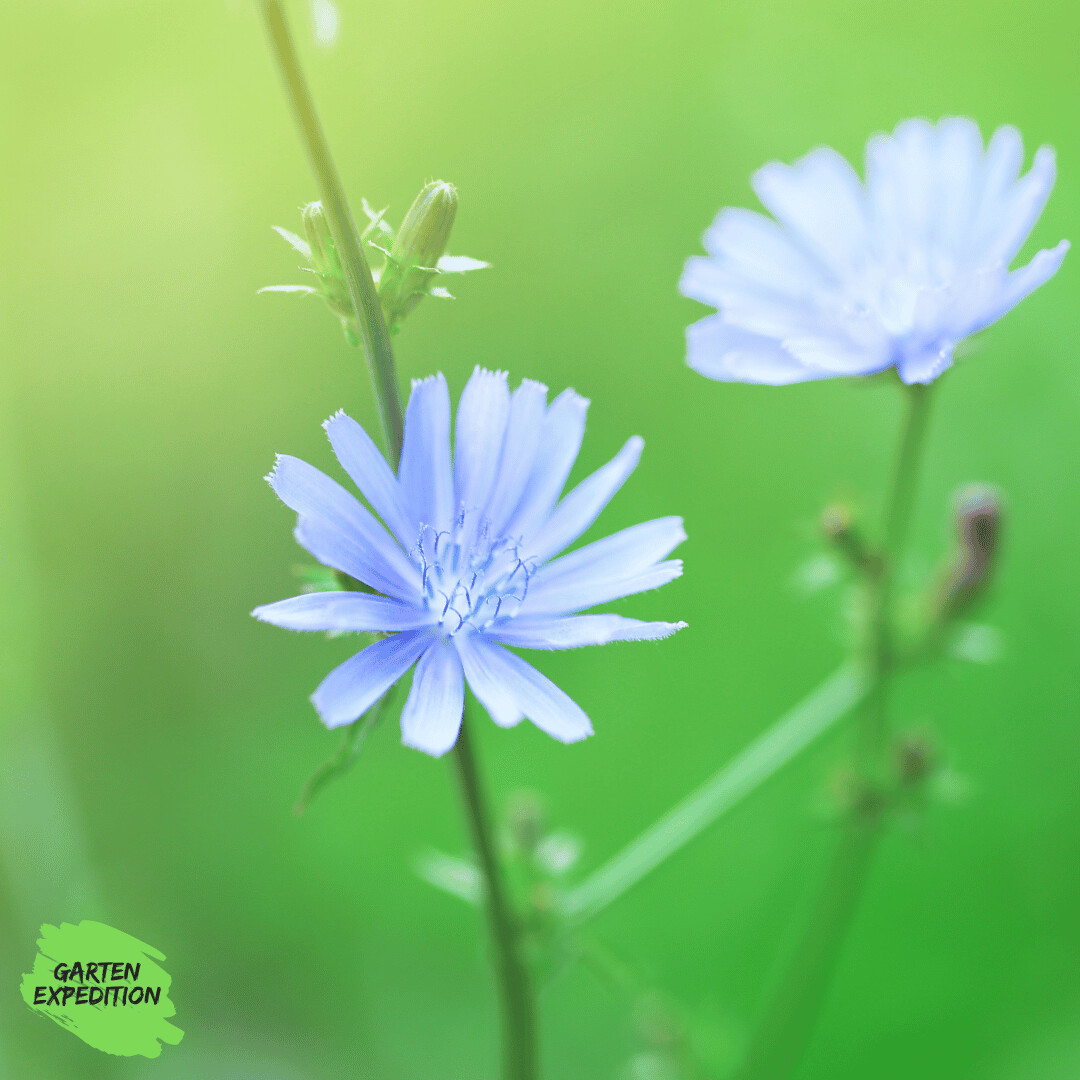
In July, when the midsummer heat dries out the soil and the supply of flowers in many gardens dries up, Common Chicory (Cichorium intybus) unfurls its bright blue blossoms. It is not just a visual highlight, but acts as an ecological lifeline. As a member of the daisy family (Asteraceae), it offers a complex architecture that is particularly accessible to insects with specific mouthparts.
Of particular note is its importance for oligolectic solitary bees, which are bees specialised in visiting only a few plant species. One of these beneficiaries is the pantaloon bee (Dasypoda hirtipes), whose females specifically collect chicory pollen to provision their brood. The structure of the flower allows these insects to forage efficiently, while the plant also serves as a landing pad for butterflies and hoverflies.
Insects specialised in Common Chicory
| Insect species | Ecological function | Relevance to the plant |
|---|---|---|
| Pantaloon bee (Dasypoda hirtipes) | Specialised pollinator | Main source of pollen for brood |
| Painted lady (Vanessa cardui) | Nectar feeding | Pollination through flight movement |
| Common drone fly (Eristalis tenax) | Pollination | Transfer of pollen between flowers |
The availability of pollen in July is crucial for the survival of subsequent generations of these insects. While common species such as the honey bee (Apis mellifera) use a wide range of plants, specialised species rely on the continuous presence of such key plants. In addition to Common Chicory, the yellow scabious (Scabiosa ochroleuca) is an ideal addition to your planting plan to fill the late-summer gap.
Practical tips for your own garden
- Choosing the site: Common Chicory (Cichorium intybus) prefers nutrient-poor, sunny, and rather dry locations. Avoid fertilisers, as while nutrient-rich soil encourages plant growth, it reduces the floral quality for insects.
- Companion planting: Plant chicory in groups of at least three. This increases visibility for insects and improves the chances of successful, long-term colonisation by specialised solitary bee species.
- Avoid deadheading: Do not cut back faded stems until late winter. In late summer and autumn, the seeds of the chicory serve as a valuable food source for seed-eating birds such as the goldfinch (Carduelis carduelis).
- Soil stability: Since chicory forms a taproot, it is ideal for dry areas of the garden. Support its establishment by keeping the ground clear and avoiding a thick layer of mulch, as many solitary bee species nest in patches of bare earth.
Frequently Asked Questions
Why is Common Chicory so important in July?
It provides pollen and nectar in the heat of summer when many other plants have already finished flowering, thereby securing the survival of specialised solitary bees.
Which insects use Common Chicory most?
The specialised pantaloon bee (Dasypoda hirtipes) depends on chicory pollen to provide for its brood.
Does Common Chicory need to be fertilised in summer?
No, chicory thrives best in nutrient-poor locations. Fertiliser often harms the ecological quality of the flowers.
Main article: Wildflowers in July: 5 species for a biodiverse insect paradise
Matching products
Available at Gartenexpedition.de
Partner note: The linked products are from Gartenexpedition.de. By purchasing, you support our work.
Keywords
More articles on this topic
Main article
Wild plants in July: 5 species for a species-rich insect paradise
Discover which 5 native wild plants provide essential food for solitary bees and butterflies in July and how to establish them successfully in your garden.
In-depthEcological balance in the garden: The power of wildflowers
Discover how you can promote a stable ecological balance in your garden and support natural food webs through the use of native wildflowers.
In-depthDrought-Resistant Wildflowers: Climate Adaptation in the July Garden
Learn how to prepare your garden for climate change with drought-resistant wildflowers. Tips for heat-tolerant species in July.
In-depthPlanting Wildflowers on Your Balcony: A Habitat in the Smallest of Spaces
Learn how to create an ecologically valuable stepping-stone habitat for insects on your balcony using native wild plants. Step-by-step guide.
In-depthInsect-friendly pruning: Why you should leave faded perennials standing
Find out why insect-friendly pruning in July is crucial: faded perennials serve as vital nesting and overwintering sites.
All species data comes from scientific sources (CC BY 4.0 / CC0). Attribution according to licence terms. Complete source overview →