Main article
Wild plants in July: 5 species for a species-rich insect paradise
Discover which 5 native wild plants provide essential food for solitary bees and butterflies in July and how to establish them successfully in your garden.
In a nutshell
- High summer requires a specific range of flowers to bridge the food gap following the spring bloom.
- Native wild plants such as purple-loosestrife (Lythrum salicaria) provide essential resources for specialised insects.
- High structural diversity, achieved through a variety of plant families, encourages different pollinator groups to settle.
- Targeted avoidance of fertilisers and pesticides ensures the long-term establishment of these species in the garden.
Matching videos on the topic
Diese 5 Wildpflanzen machen deinen Garten zum Insektenparadies - Gartenexpedition #naturgarten
2 Naturgärten im Check: Von englischer Struktur zur alpinen Wildnis
Die perfekte Vogelhecke: So planst du Weißdorn, Schlehe und Wildrose richtig
Winteraussaat von Wildblumen: 3 Profi-Methoden für Kaltkeimer
Why high summer is critical for insects
In July, the food supply for insects in the cultural landscape changes dramatically. Many early-flowering species have already formed seeds, while summer droughts lead to a decline in nectar availability. For specialised solitary bee species that need to provision their nests with pollen in mid-summer, the presence of late-flowering wild plants is an existential necessity.
Native wild plants such as the cream pincushion (Scabiosa ochroleuca) are particularly valuable due to their ecological adaptation to our region. They cope well with fluctuating water conditions and offer insects such as hoverflies (Syrphidae) or butterflies a reliable pit stop when other flower supplies stagnate.
Profiles of summer bloomers
the following overview shows plants that stabilise the ecological balance in your garden in July:
| Plant species (Latin) | Preferred location | Ecological benefit |
|---|---|---|
| Lythrum salicaria | Damp, sunny | High nectar production |
| Vicia cracca | Sunny, nutrient-rich | Nitrogen fixation, caterpillar food |
| Scabiosa ochroleuca | Dry, poor soil | Late bloomer, attractive to butterflies |
| Ononis spinosa | Dry, warm | Food for specialised solitary bees |
| Pastinaca sativa | Sunny, nutrient-rich | Umbellifer specialists |
Matching products
Available at Gartenexpedition.de
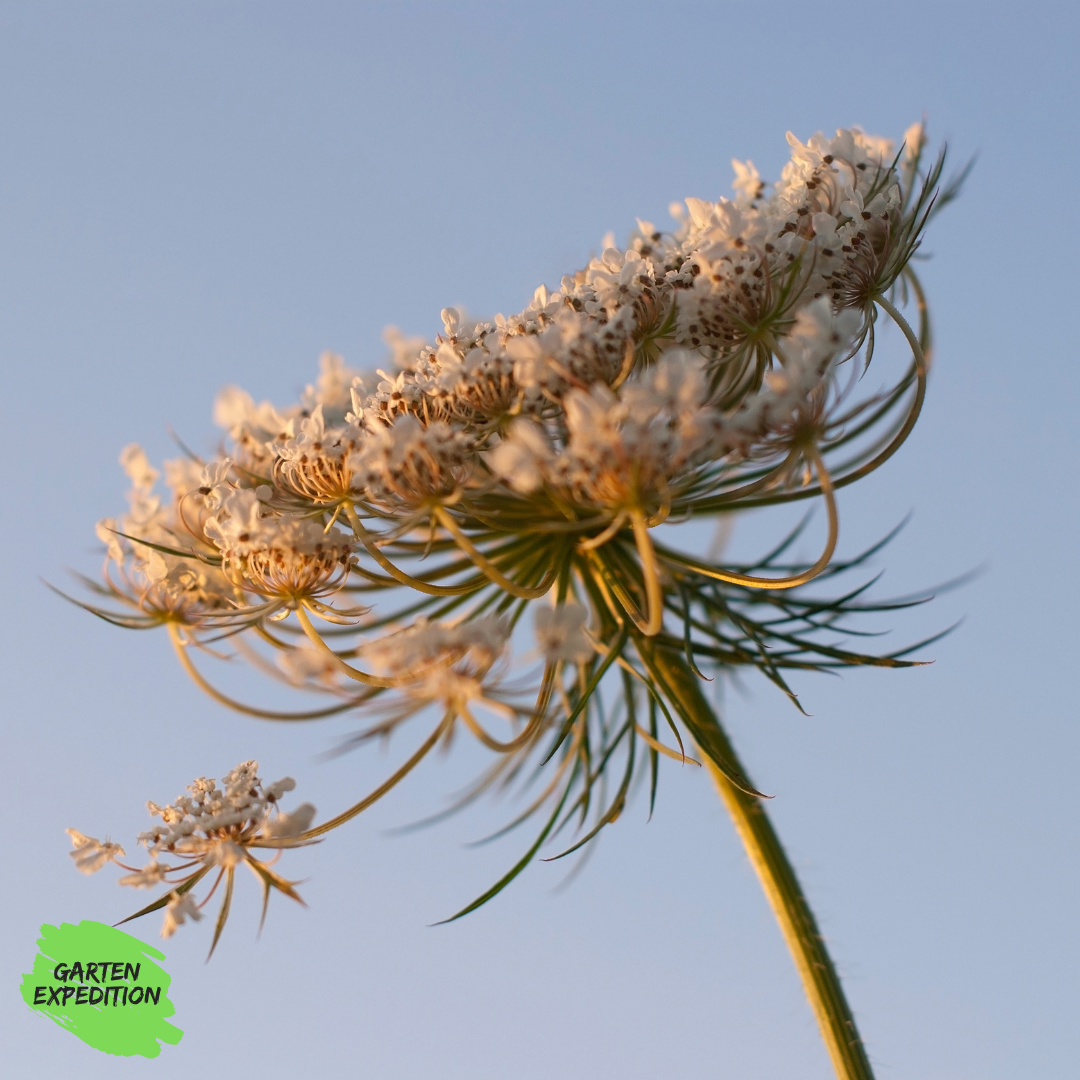
Wilde Möhre (Daucus carota)
2,50 €
incl. VAT, plus shipping costs
To shop →
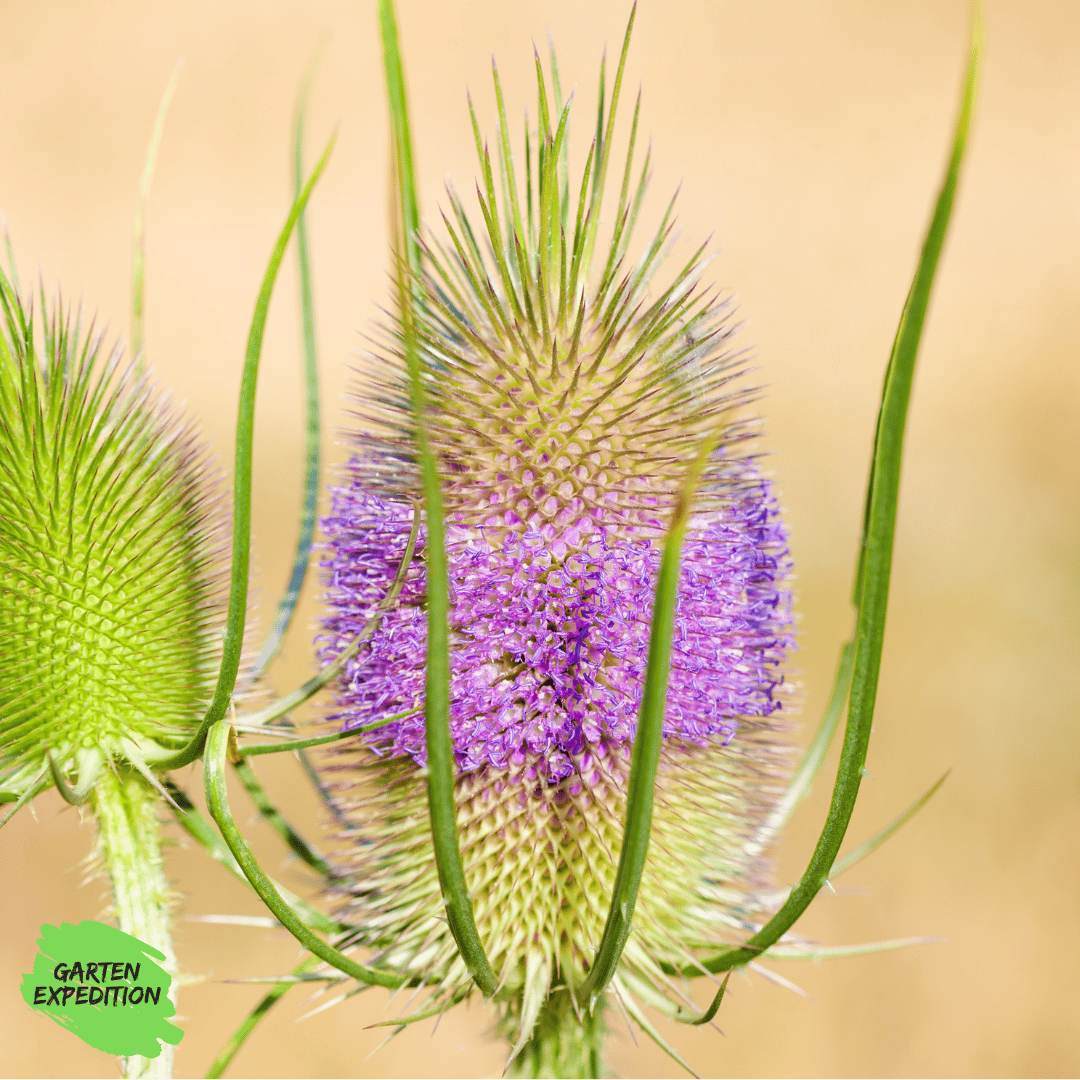
Wilde Karde (Dipsacus fullonum)
3,27 €
incl. VAT, plus shipping costs
To shop →
Partner note: The linked products are from Gartenexpedition.de. By purchasing, you support our work.
Instructions for your wildlife garden
- Consider location: Plant spiny restharrow (Ononis spinosa) preferably in sunny, dry spots. It is an important plant for xerothermic grassland habitats (dry, warm nutrient-poor meadows), which can survive even heatwaves thanks to its deep roots.
- Maintain structures: Only remove field bindweed (Convolvulus arvensis) where it is directly choking valuable perennials. As a nectar source for moths, it has high ecological value and reflects the dynamics of a near-natural area.
- Soil management: Consistently avoid synthetic fertilisers. Tufted vetch (Vicia cracca) in particular forms a symbiosis with nitrogen-fixing bacteria, which capture nitrogen from the air and thus improve the soil naturally.
- Allow for growth: Let the wild parsnip (Pastinaca sativa) mature fully. The umbel flowers act as important landing pads for a variety of insects, including beetles (Coleoptera) and various hymenopterans (Hymenoptera).
- Promote succession: Design your meadow areas to create a mosaic of mown sections and areas of long grass to provide both nesting sites and food.
Frequently asked questions
Why is the wild parsnip valuable in the garden?
Its umbel flowers provide pollen and nectar for a multitude of insects, including hoverflies, solitary bees and beetles, thanks to their open structure.
Should I control field bindweed?
Only if it is severely affecting valuable perennials. Since it provides important nectar sources for moths, it should be accepted in wildlife gardens as an ecological component.
label_deepening_articles
- Drought-resistant wild plants: Climate adaptation in the July garden
- Chicory in July: A key resource for the insect world
- Ecological balance in the garden: The power of wild plants
- Insect-friendly pruning: Why to leave faded perennials standing
- Planting balcony wildflowers: A habitat in the smallest space
More articles on this topic
In-depth
Chicory in July: A Key Source for the Insect World
Discover why Common Chicory (*Cichorium intybus*) is essential in July for solitary bees like the pantaloon bee and how you can best support it in your garden.
In-depthEcological balance in the garden: The power of wildflowers
Discover how you can promote a stable ecological balance in your garden and support natural food webs through the use of native wildflowers.
In-depthDrought-Resistant Wildflowers: Climate Adaptation in the July Garden
Learn how to prepare your garden for climate change with drought-resistant wildflowers. Tips for heat-tolerant species in July.
In-depthPlanting Wildflowers on Your Balcony: A Habitat in the Smallest of Spaces
Learn how to create an ecologically valuable stepping-stone habitat for insects on your balcony using native wild plants. Step-by-step guide.
In-depthInsect-friendly pruning: Why you should leave faded perennials standing
Find out why insect-friendly pruning in July is crucial: faded perennials serve as vital nesting and overwintering sites.
All species data comes from scientific sources (CC BY 4.0 / CC0). Attribution according to licence terms. Complete source overview →