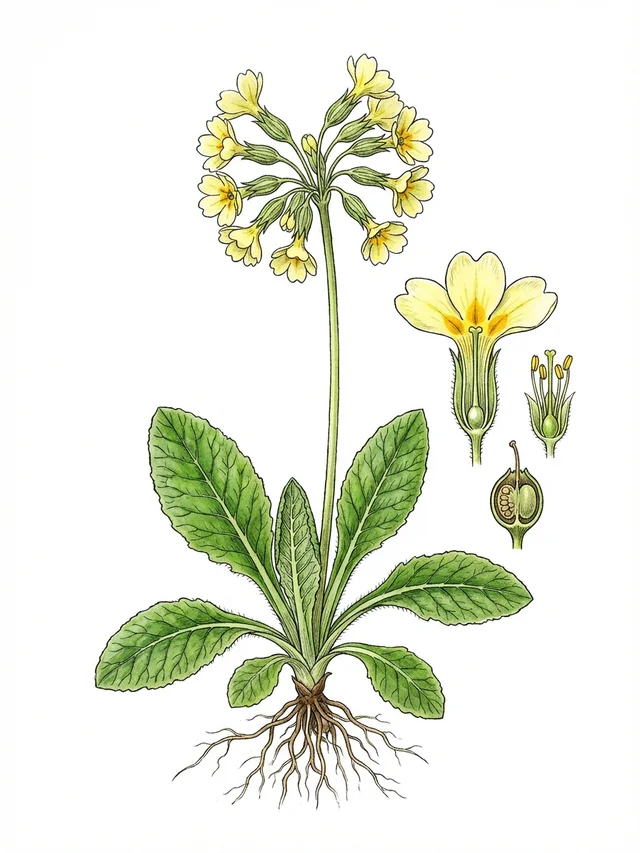
 Image to followAI-generated illustration
Salix cinerea
Salix cinerea
FamilyGenus: Salixnon-native in Germany
🌿
87
Species
interact
🔗
142
Interactions
documented
🐛
20
Host relationships
Species
About this species
A native deciduous shrub of moist, shady places, Salix cinerea typically reaches 1 to 5 metres in height, with broad leaves and a preference for neutral to slightly acid soil.
Ecological network
Click to highlight connections · Click again to open the species page
Loading network...
PollinationLarval hostFlower visit
Ecological significance
As a native shrub, Salix cinerea is an integral part of Britain’s wetland and woodland‑edge communities, providing cover and sustenance for wildlife. Its ectomycorrhizal partnerships contribute to healthy soil structure.
Annual cycle
This deciduous shrub sheds its leaves in autumn and remains leafless through winter, with fresh foliage emerging in spring.
Standort & Merkmale
Light
Schatten
Moisture
Feucht
Soil
Mittelzehrer (Normaler Boden)
Flowering period
—
Soil reaction
Mäßig sauer bis neutral
Growth form
Strauch
Woodiness
Verholzt
Leaf type
Breitblättrig
Leaf phenology
Laubabwerfend
Plant height
3.456 m
Morphological traits: TRY ID3 (CC BY 3.0) & TRY ID81 (CC BY)
Pflege & Anbau
## Care
•
Light: Thrives in shade.
•
Soil: Moist, moderately fertile, neutral to slightly acidic soil.
•
Water: Keep soil consistently moist, particularly during dry spells.
•
Mycorrhizae: Ectomycorrhizal; benefits from undisturbed soil rich in organic matter.
Scientific profile
Salix cinerea is a woody, deciduous shrub native to Great Britain. It commonly grows 1 to 5 metres tall, with a typical height around 3.5 metres. The leaves are broad, averaging 846 square millimetres in area. The species is adapted to shaded conditions and moist soils; it favours a neutral to slightly acid reaction and has a moderate nutrient requirement. It forms ectomycorrhizal associations and produces very light seeds, the diaspores weighing about 0.07 milligrams. The plant is terrestrial and suited to moderately warm climates.
Pollinators & visitors
62 Arten interagieren mit dieser Pflanze
Nomada fabricianaNomada ruficornisBombus pascuorumLasioglossum albipesColletes cuniculariusGonepteryx rhamniSphecodes pellucidusMelecta albifronsNomada goodenianaCallophrys rubiLasioglossum calceatumNomada fucataSphecodes ephippiusLasioglossum leucozoniumAglais urticaeAndrena fulvaBombus lapidariusBombus hypnorumAndrena nigroaeneaBombus pratorumAndrena minutulaAndrena helvolaAndrena cinerariaBombus monticolaAndrena nitidaAndrena haemorrhoaAndrena chrysoscelesAndrena praecoxAndrena tibialisAndrena dorsataAndrena trimmeranaBombus bohemicusAndrena flavipesBombus hortorumAndrena carantonicaAndrena apicataLasioglossum morioBombus terrestrisBombus sylvestrisBombus muscorumBombus lucorumNomada marshamellaAndrena clarkellaBombus vestalisBombus jonellusAndrena bicolorApis melliferaLithophane ornitopusAgriopis marginariaOrthosia cerasi
Host relationships
20 species use this plant as a host
Valgus hemipterusPolygonia c-albumTrachys minutusClostera pigraMelanchra persicariaeConistra vacciniiBrachylomia viminalisPoecilocampa populiCabera exanthemataAlcis repandataLasius fuliginosusNotodonta ziczacAcronicta psiEctropis crepusculariaPhyllobius pyriScoliopteryx libatrixOrgyia antiquaPtilodon capucinaClostera curtulaArctia caja
Other flower visitors
5 other species visit the flowers
Sources & data origin
•Interaktionsdaten via GloBI (CC-BY 4.0)
•pollinator_interactions
•EIVE 1.0 — Dengler et al. (2023), DOI: 10.3897/VCS.98324 (CC BY 4.0)
•GBIF Backbone Taxonomy — GBIF Secretariat (2024), DOI: 10.15468/39omei (CC BY 4.0)
•TRY Categorical Traits (ID3) — Kattge et al. (2012), DOI: 10.17871/TRY.3 (CC BY 3.0)
•TRY Global Spectrum (ID81) — Díaz et al. (2016/2021), DOI: 10.17871/TRY.81 (CC BY)
•Govaerts R et al. (2025) — World Checklist of Vascular Plants (WCVP) v14. Royal Botanic Gardens, Kew. DOI: 10.34885/xs7h-ze42 (CC BY 4.0)
All data is licensed under CC BY 4.0, CC0, or compatible terms. Attribution according to license conditions. Full source overview →