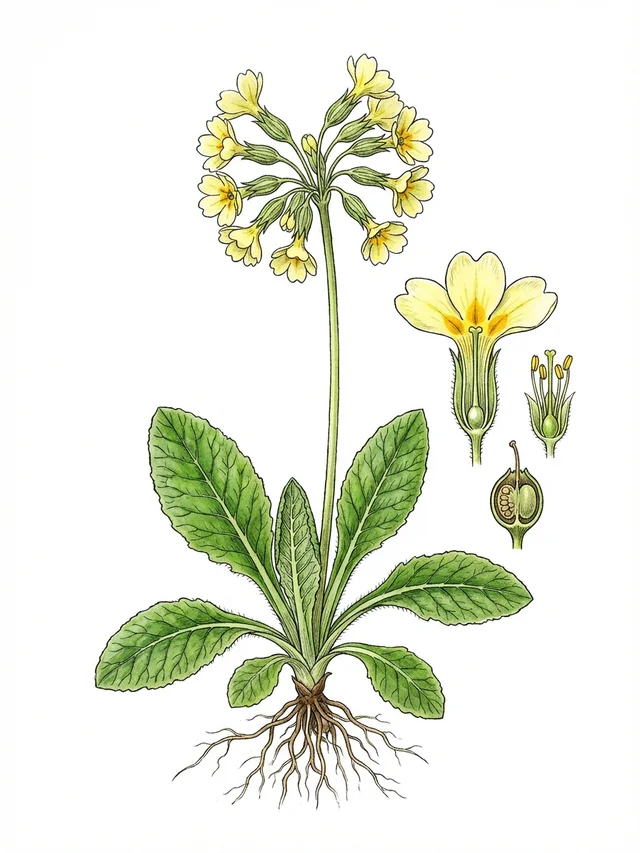
 Image to followAI-generated illustration
Urtica dioica
Urtica dioica subsp. dioica
FamilyGenus: Urticanative in Germany
🌿
80
Species
interact
🔗
124
Interactions
documented
🐛
7
Host relationships
Species
About this species
Urtica dioica is a native herbaceous plant found across Great Britain. It thrives in semi-shaded spots with fresh, moderately moist soil and is a strong feeder, favouring nutrient-rich ground with a neutral to slightly acid pH. The plant bears broad leaves on non-woody stems and typically reaches around 0.9 metres in height. Its inconspicuous flowers appear from May through September, and it is considered safe for children.
Ecological network
Click to highlight connections · Click again to open the species page
Loading network...
PollinationLarval hostFlower visit
Ecological significance
This native plant contributes to local biodiversity. It forms arbuscular mycorrhizal relationships, which can enhance soil structure and nutrient cycling.
Annual cycle
The flowering period extends from May to September.
Safety note
This plant is considered safe for children.
Standort & Merkmale
Light
Halbschatten
Moisture
Frisch (Mäßig feucht)
Soil
—
Flowering period
Mai – Sep
Soil reaction
Mäßig sauer bis neutral
Bioregion
Continental
Growth form
Krautige Pflanze
Woodiness
Nicht verholzt
Leaf type
Breitblättrig
Plant height
0.883 m
Morphological traits: TRY ID3 (CC BY 3.0) & TRY ID81 (CC BY)
Pflege & Anbau
•
Light: Semi-shade.
•
Soil: Fresh to moderately moist, nutrient-rich, neutral to slightly acid.
•
Feeding: As a strong feeder, it benefits from a fertile substrate.
•
Mycorrhiza: The plant naturally forms arbuscular mycorrhizal partnerships; these may be present in healthy soil.
Scientific profile
Urtica dioica is a native wild plant in Great Britain. It grows as a non-woody, broad-leaved herbaceous plant, typically reaching a height of approximately 0.9 metres. The species prefers semi-shaded conditions and fresh to moderately moist soil. It is a strong nutrient utilizer, thriving in nutrient-rich substrates with a neutral to slightly acid reaction. Blooming occurs from May to September. The plant forms arbuscular mycorrhizal associations.
Pollinators & visitors
44 Arten interagieren mit dieser Pflanze
Pararge aegeriaBombus lucorumBombus lapidariusBombus pascuorumAnelosimus vittatusLiophloeus tessulatusHypena proboscidalisOrthosia crudaLeiobunum rotundumLinyphia triangularisNemophora degeerellaAglais ioCosmia trapezinaPieris rapaeEnallagma cyathigerumTadorna ferrugineaCallimorpha dominulaAraschnia levanaAnthophila fabricianaPaidiscura pallensVanessa atalantaPisaura mirabilisRhagonycha lignosaSyricoris lacunana (Denis & Schiffermüller), 1775Chrysoteuchia culmellaCyclophora lineariaPyrrhosoma nymphulaAthalia rosaePolygonia c-albumAthous subfuscusDenticollis linearisEupsilia transversaAbrostola tripartitaCastor fiberEnoplognatha ovataAgapanthia villosoviridescensAnas platyrhynchosPolia nebulosaPhyllobius glaucusClytus arietisMelanchra persicariaePyrrhula pyrrhulaMitopus morioVanessa cardui
Host relationships
7 species use this plant as a host
Other flower visitors
29 other species visit the flowers
Sylvia atricapillaCassida viridisCoccinella septempunctataHippodamia variegataOenopia conglobataMyodes glareolusAdalia bipunctataPyrochroa coccineaCassida vibexLarinus sturnusAraneus diadematusPhalangium opilioPatania ruralisHalyzia sedecimguttataHarmonia axyridisAgrypnus murinusPhyllobius pomaceusPyrochroa serraticornisProsternon tessellatumNedyus quadrimaculatusAnaspis frontalisNotoxus monocerosStictoleptura rubraAdalia decempunctataAnthaxia nitidulaCantharis fuscaAgelastica alniValgus hemipterusChrysolina fastuosa
Sources & data origin
•Interaktionsdaten via GloBI (CC-BY 4.0)
•EIVE 1.0 — Dengler et al. (2023), DOI: 10.3897/VCS.98324 (CC BY 4.0)
•GBIF Backbone Taxonomy — GBIF Secretariat (2024), DOI: 10.15468/39omei (CC BY 4.0)
•TRY Categorical Traits (ID3) — Kattge et al. (2012), DOI: 10.17871/TRY.3 (CC BY 3.0)
•TRY Global Spectrum (ID81) — Díaz et al. (2016/2021), DOI: 10.17871/TRY.81 (CC BY)
•Govaerts R et al. (2025) — World Checklist of Vascular Plants (WCVP) v14. Royal Botanic Gardens, Kew. DOI: 10.34885/xs7h-ze42 (CC BY 4.0)
All data is licensed under CC BY 4.0, CC0, or compatible terms. Attribution according to license conditions. Full source overview →