Ligustrum vulgare
Ligustrum vulgare
FamilyGenus: Ligustrumnative in Germany
🌿
125
Species
interact
🔗
1458
Interactions
documented
🐛
12
Host relationships
Species
About this species
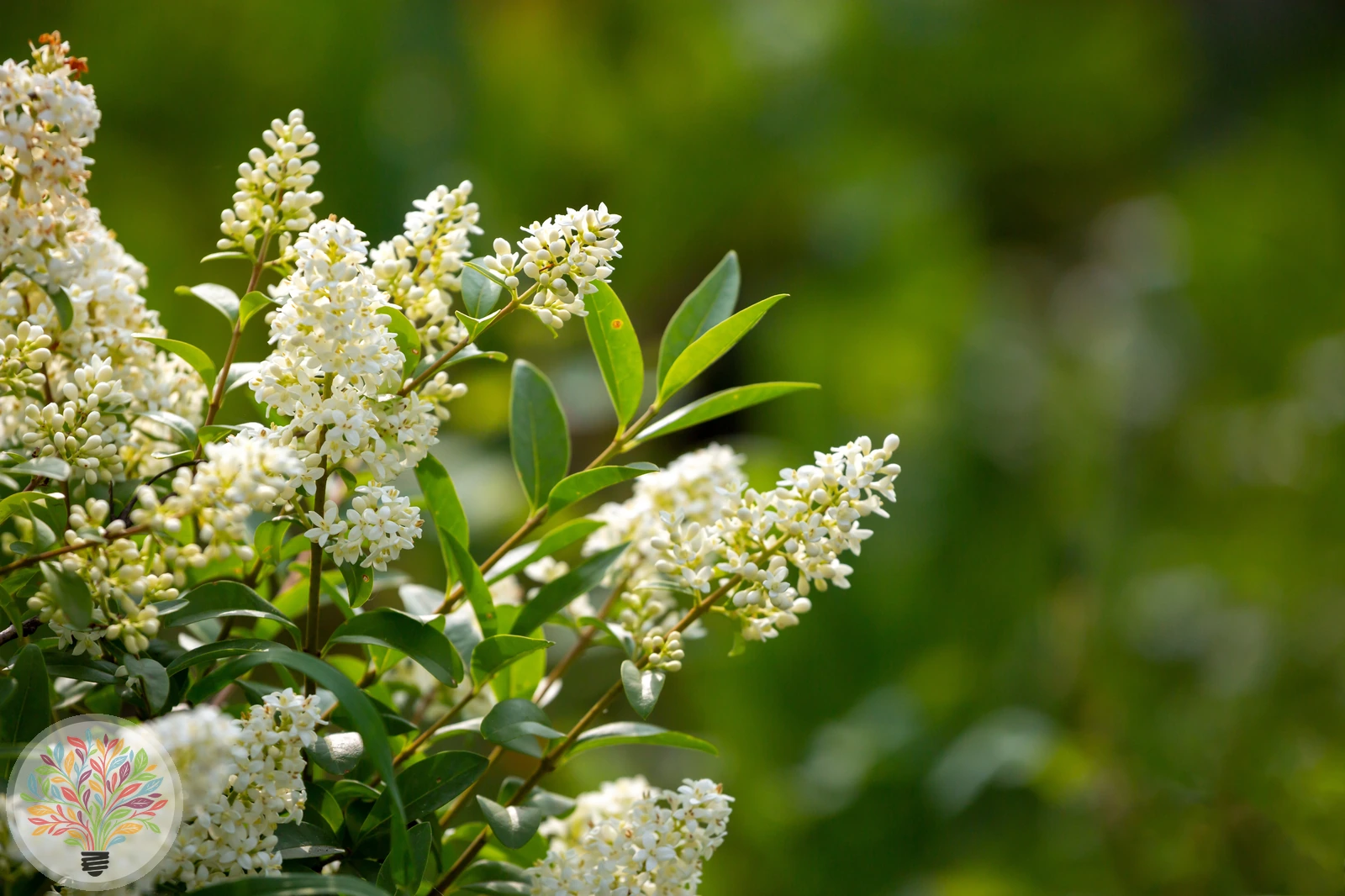
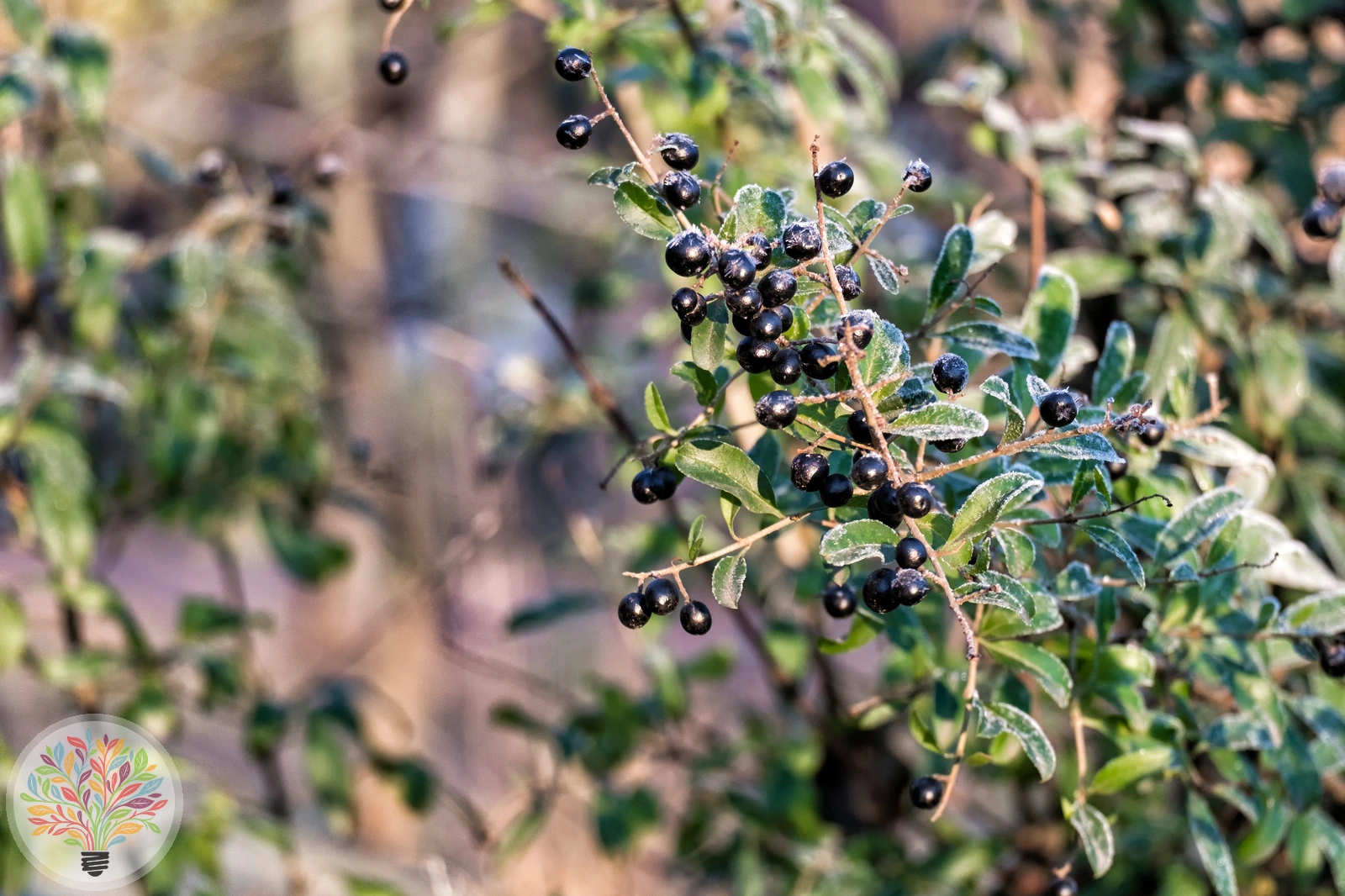
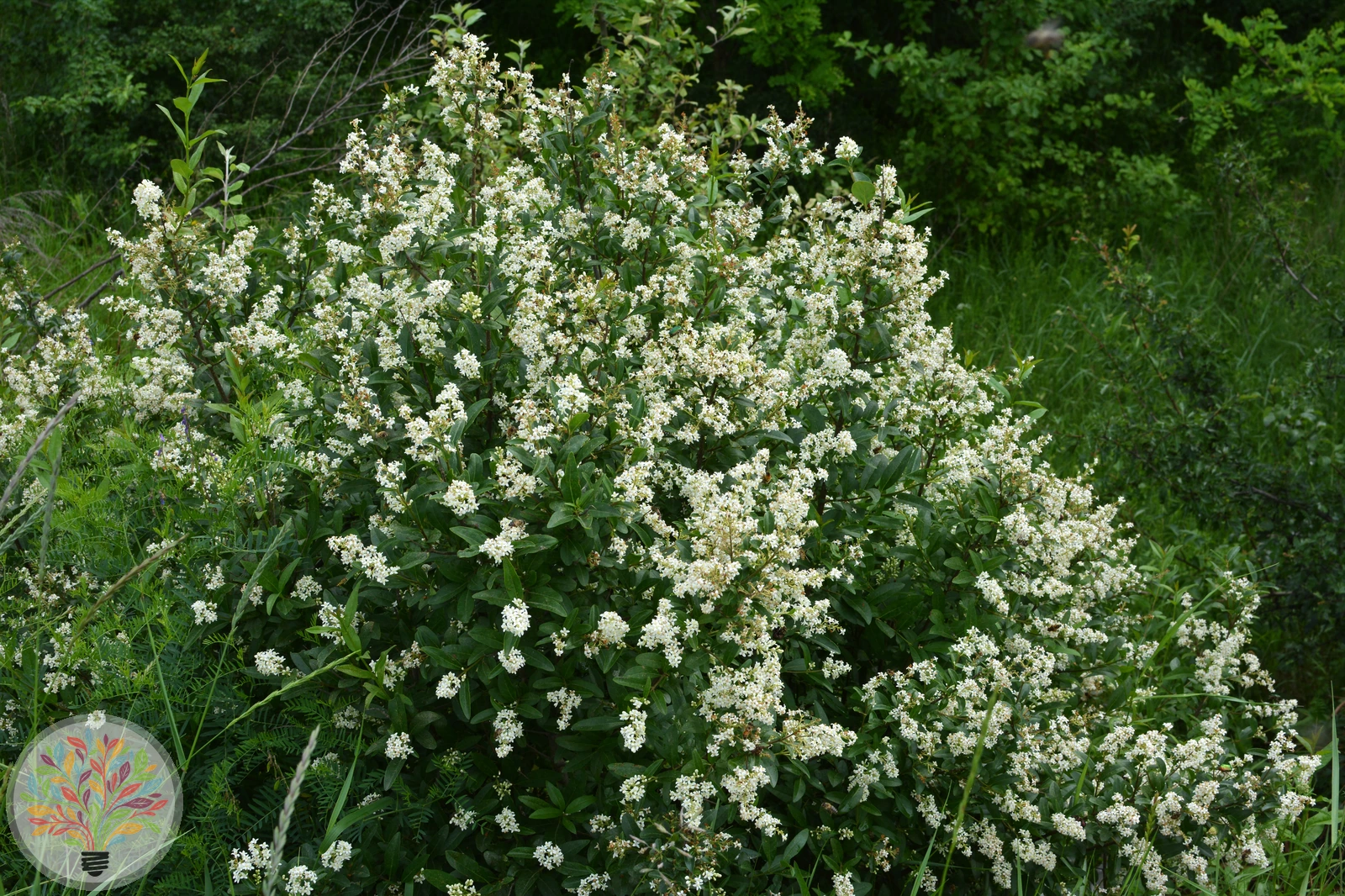
A deciduous native shrub of hedgerows and scrub, bearing small white flowers in early summer and preferring lime-rich, moist soils in partial shade.
Ecological network
Click to highlight connections · Click again to open the species page
Loading network...
PollinationLarval hostFlower visit
Ecological significance
As a native shrub, wild privet contributes to the structure of hedgerows and scrubland, offering cover and supporting local biodiversity.
Annual cycle
Deciduous; new leaves emerge in spring, flowering in June and July, autumn leaf fall, and winter dormancy.
Standort & Merkmale
Light
Halbschatten
Moisture
Frisch (Mäßig feucht)
Soil
Mittelzehrer (Normaler Boden)
Flowering period
Jun – Jul
Soil reaction
Basisch / Kalkhold
Bioregion
Continental
Growth form
Strauch
Woodiness
Verholzt
Leaf type
Breitblättrig
Leaf phenology
Laubabwerfend
Plant height
3.347 m
Morphological traits: TRY ID3 (CC BY 3.0) & TRY ID81 (CC BY)
Corolla tube
3.5 mm
Nectar
13.0076 µl/Blüte
Pflege & Anbau
•
Light: Partial shade, but tolerates full sun.
•
Soil: Alkaline to neutral, moist, well-drained, moderately fertile.
•
Watering: Keep the soil consistently moist, especially during prolonged dry spells.
•
Hardiness: Fully hardy in British conditions.
Scientific profile
Wild privet is a deciduous shrub native to Great Britain, typically reaching heights of around 3.3 metres. It has a woody habit and broad, opposite leaves that are shed in autumn. The flowering period occurs in June and July, when dense panicles of small, creamy-white, four-lobed flowers appear. This species is naturally found in hedgerows, woodland edges and scrub, often on calcareous substrates. It thrives in partial shade and moist, moderately fertile, alkaline soils, though it readily adapts to sunnier positions in the wild. The shrub is widespread and is currently classified as of least concern on the Red List.
Pollinators & visitors
45 Arten interagieren mit dieser Pflanze
Turdus viscivorusTurdus pilarisPyronia tithonusAglais urticaeFixsenia pruniSpeyeria aglajaAphantopus hyperantusBombus sylvestrisSphecodes monilicornisCallophrys rubiBombus hypnorumAndrena trimmeranaBombus lapidariusCupido minimusSphinx ligustriCelastrina argiolusSatyrium w-albumLasioglossum calceatumApis melliferaAndrena flavipesBombus pratorumBombus lucorumBombus soroeensisBombus jonellusMuscardinus avellanariusManiola jurtinaAglais ioPieris brassicaeVanessa atalantaVanessa carduiBombus hortorumHalictus rubicundusBombus terrestrisMeliscaeva cinctellaSyrphus torvusVolucella pellucensEristalis tenaxParagus haemorrhousSphaerophoria interruptaSyrphus ribesiiEpisyrphus balteatusLasioglossum subhirtumSphaerophoria scriptaEristalis similisHalictus simplex
Host relationships
12 species use this plant as a host
Smerinthus ocellataTrichopteryx polycommataApeira syringariaMenophra abruptariaAmphipyra pyramideaLithophane sociaNoctua fimbriataCraniophora ligustriColotois pennariaAcasis viretataAlsophila aesculariaMacrophya punctumalbum
Other flower visitors
68 other species visit the flowers
Turdus philomelosTurdus merulaSylvia atricapillaCorvus coronePoecile palustrisPica picaHippolais icterinaPhoenicurus phoenicurusTroglodytes troglodytesMuscicapa striataSylvia currucaFringilla montifringillaCyanistes caeruleusFringilla coelebsFicedula hypoleucaAegithalos caudatusTurdus torquatusPicus viridisColumba palumbusPoecile montanusPhylloscopus collybitaCoccothraustes coccothraustesPyrrhula pyrrhulaVulpes vulpesMeles melesLuscinia megarhynchosOriolus oriolusSaxicola torquatusErinaceus europaeusErithacus rubeculaTurdus iliacusAnthrenus verbasciOedemera nobilisAnaspis frontalisCteniopus sulphureusMyodes glareolusPsittacula krameriCapreolus capreolusProtaetia cupreaCetonia aurataValgus hemipterusPasser domesticusOxythyrea funestaCoccinella septempunctataParus majorSturnus vulgarisGallinula chloropusDendrocopos majorSylvia borinDendrocoptes medius
Sources & data origin
•Interaktionsdaten via GloBI (CC-BY 4.0)
•Cook et al. (2025) UK Butterfly & Moth Traits (DOI: 10.5285/dbc7cc17-cbbd-49dd-bab4-8e8855768d66)
•pollinator_interactions
•Baden-Böhm F, App M, Thiele J (2022) — The FloRes Database: A floral resources trait database for pollinator habitat-assessment generated by a multistep workflow. Johann Heinrich von Thünen-Institut, Dryad, DOI: 10.5061/dryad.djh9w0w29 (CC0)
•FloraWeb / BfN
•EIVE 1.0 — Dengler et al. (2023), DOI: 10.3897/VCS.98324 (CC BY 4.0)
•GBIF Backbone Taxonomy — GBIF Secretariat (2024), DOI: 10.15468/39omei (CC BY 4.0)
•TRY Categorical Traits (ID3) — Kattge et al. (2012), DOI: 10.17871/TRY.3 (CC BY 3.0)
•TRY Global Spectrum (ID81) — Díaz et al. (2016/2021), DOI: 10.17871/TRY.81 (CC BY)
•Govaerts R et al. (2025) — World Checklist of Vascular Plants (WCVP) v14. Royal Botanic Gardens, Kew. DOI: 10.34885/xs7h-ze42 (CC BY 4.0)
•Foto: © Adobe Stock / AdobeStock_610123887
All data is licensed under CC BY 4.0, CC0, or compatible terms. Attribution according to license conditions. Full source overview →