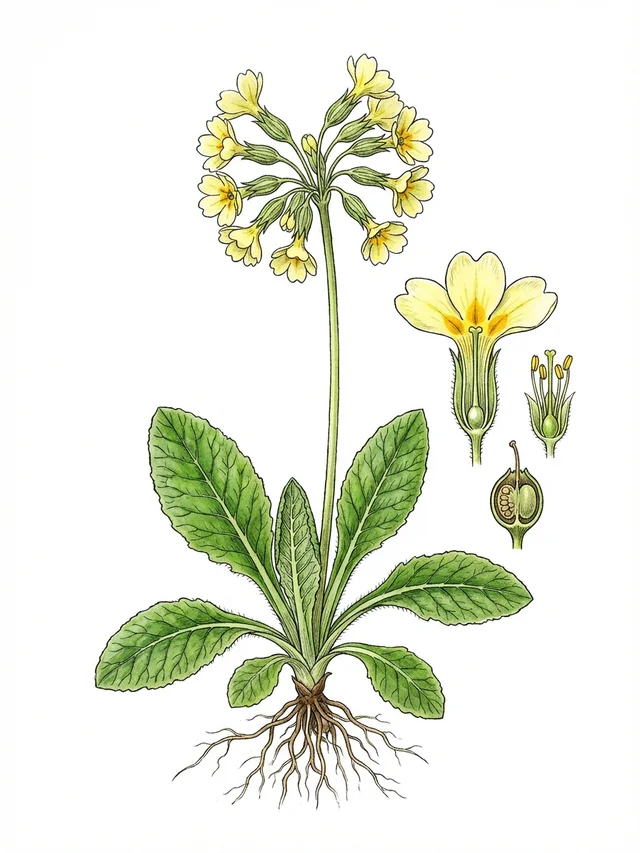
 Image to followAI-generated illustration
Leucanthemum vulgare
Leucanthemum vulgare
FamilyGenus: Leucanthemumnative in Germany
🌿
507
Species
interact
🔗
2511
Interactions
documented
🐛
5
Host relationships
Species
About this species
Leucanthemum vulgare is a native herbaceous plant of Great Britain, bearing familiar white daisy flowers from June to August. It thrives in full sun on moderately moist, normal soil and reaches about 37 cm in height.
Ecological network
Click to highlight connections · Click again to open the species page
Loading network...
PollinationLarval hostFlower visit
Ecological significance
Leucanthemum vulgare is a native herb of meadows and grasslands, contributing to the structure of these habitats.
Annual cycle
Flowering occurs from June to August. After pollination, small achenes (mean mass 0.42 mg) are produced and dispersed.
Safety note
Leucanthemum vulgare is not known to be harmful to children.
Standort & Merkmale
Light
Sonne
Moisture
Frisch (Mäßig feucht)
Soil
Mittelzehrer (Normaler Boden)
Flowering period
Jun – Aug
Soil reaction
Mäßig sauer bis neutral
Bioregion
Continental
Growth form
Krautige Pflanze
Woodiness
Nicht verholzt
Leaf type
Breitblättrig
Plant height
0.365 m
Morphological traits: TRY ID3 (CC BY 3.0) & TRY ID81 (CC BY)
Pollen
3.9174 mg/Blüte
Pflege & Anbau
Grow Leucanthemum vulgare in full sun in well-drained but moderately moist soil. It copes with ordinary garden soil and requires only moderate fertility; avoid over-fertilising. Deadhead spent flowers to encourage further blooming or leave the seedheads for wildlife. Cut back old stems in autumn. The plant is safe for children.
Scientific profile
Leucanthemum vulgare is a herbaceous, non-woody plant with broad leaves. It typically grows to around 37 cm tall, with an average leaf area of 428 mm². The flower heads are daisy-like, comprising white ray florets surrounding a yellow disc, and appear from June to August. The plant prefers full sun and fresh, moderately moist soil of normal fertility. Its small seeds (achenes) have a mean mass of 0.42 mg. Native in Great Britain, it occurs in meadows, grassland and open, sunny places.
Pollinators & visitors
267 Arten interagieren mit dieser Pflanze
Lasioglossum laevigatumZygaena loniceraeAndrena helvolaAndrena dorsataSphecodes ephippiusLasioglossum malachurumAndrena flavipesLasiommata megeraPolygonia c-albumSphecodes hyalinatusLycaena phlaeasHeriades truncorumLasioglossum cupromicansLasioglossum leucopusMelitaea athaliaHylaeus cornutusErynnis tagesManiola jurtinaHalictus tumulorumCoenonympha pamphilusLasioglossum albipesLasioglossum parvulumLasioglossum villosulumAnthocharis cardaminesNomada sheppardanaPararge aegeriaLasioglossum lativentreAglais urticaeLasioglossum pauxillumNomada fabricianaApis melliferaBombus lapidariusAndrena subopacaSatyrium w-albumPieris rapaeBombus rupestrisSphecodes puncticepsCelastrina argiolusSphecodes crassusBoloria selenePyronia tithonusSphecodes monilicornisPieris brassicaePolyommatus icarusThymelicus sylvestrisBombus pascuorumBombus vestalisBombus terrestrisColletes similisColletes daviesanus
Host relationships
5 species use this plant as a host
Other flower visitors
28 other species visit the flowers
Rutpela maculataAnthicus antherinusOphonus ardosiacusMalachius bipustulatusCetonia aurataCoccinella septempunctataAnthrenus pimpinellaeParacorymbia fulvaLasius nigerHoplia argenteaFormica cuniculariaStenurella bifasciataCantharis fuscaoedemera luridaOedemera femorataStenurella melanuraPhyllopertha horticolaParacorymbia maculicornisHarpalus griseusHarpalus distinguendusTrechus quadristriatusCassida rubiginosaOphonus azureusHemicrepidius hirtusAmara communisHemicrepidius nigerCantharis rufa (Linnaeus)Diachromus germanus
Sources & data origin
•Interaktionsdaten via GloBI (CC-BY 4.0)
•pollinator_interactions
•Baden-Böhm F, App M, Thiele J (2022) — The FloRes Database: A floral resources trait database for pollinator habitat-assessment generated by a multistep workflow. Johann Heinrich von Thünen-Institut, Dryad, DOI: 10.5061/dryad.djh9w0w29 (CC0)
•FloraWeb / BfN
•EIVE 1.0 — Dengler et al. (2023), DOI: 10.3897/VCS.98324 (CC BY 4.0)
•GBIF Backbone Taxonomy — GBIF Secretariat (2024), DOI: 10.15468/39omei (CC BY 4.0)
•TRY Categorical Traits (ID3) — Kattge et al. (2012), DOI: 10.17871/TRY.3 (CC BY 3.0)
•TRY Global Spectrum (ID81) — Díaz et al. (2016/2021), DOI: 10.17871/TRY.81 (CC BY)
•Govaerts R et al. (2025) — World Checklist of Vascular Plants (WCVP) v14. Royal Botanic Gardens, Kew. DOI: 10.34885/xs7h-ze42 (CC BY 4.0)
All data is licensed under CC BY 4.0, CC0, or compatible terms. Attribution according to license conditions. Full source overview →