Echtes Seifenkraut
Saponaria officinalis
Mit KI erstellt
Mehr erfahren
Die redaktionellen Texte dieses Profils wurden mithilfe von KI auf Grundlage der unten genannten wissenschaftlichen Daten und Quellen erstellt.
Auch bekannt als: Seifenwurz, Gebräuchliches Seifenkraut, Gewöhnliches Seifenkraut, Wachwurz
Familie: NelkengewächseGattung: SaponariaHeimisch — Deutschland
🌿
37
Arten
interagieren
🔗
81
Interaktionen
dokumentiert
🐛
3
Wirtsbeziehungen
Arten
Über diese Art
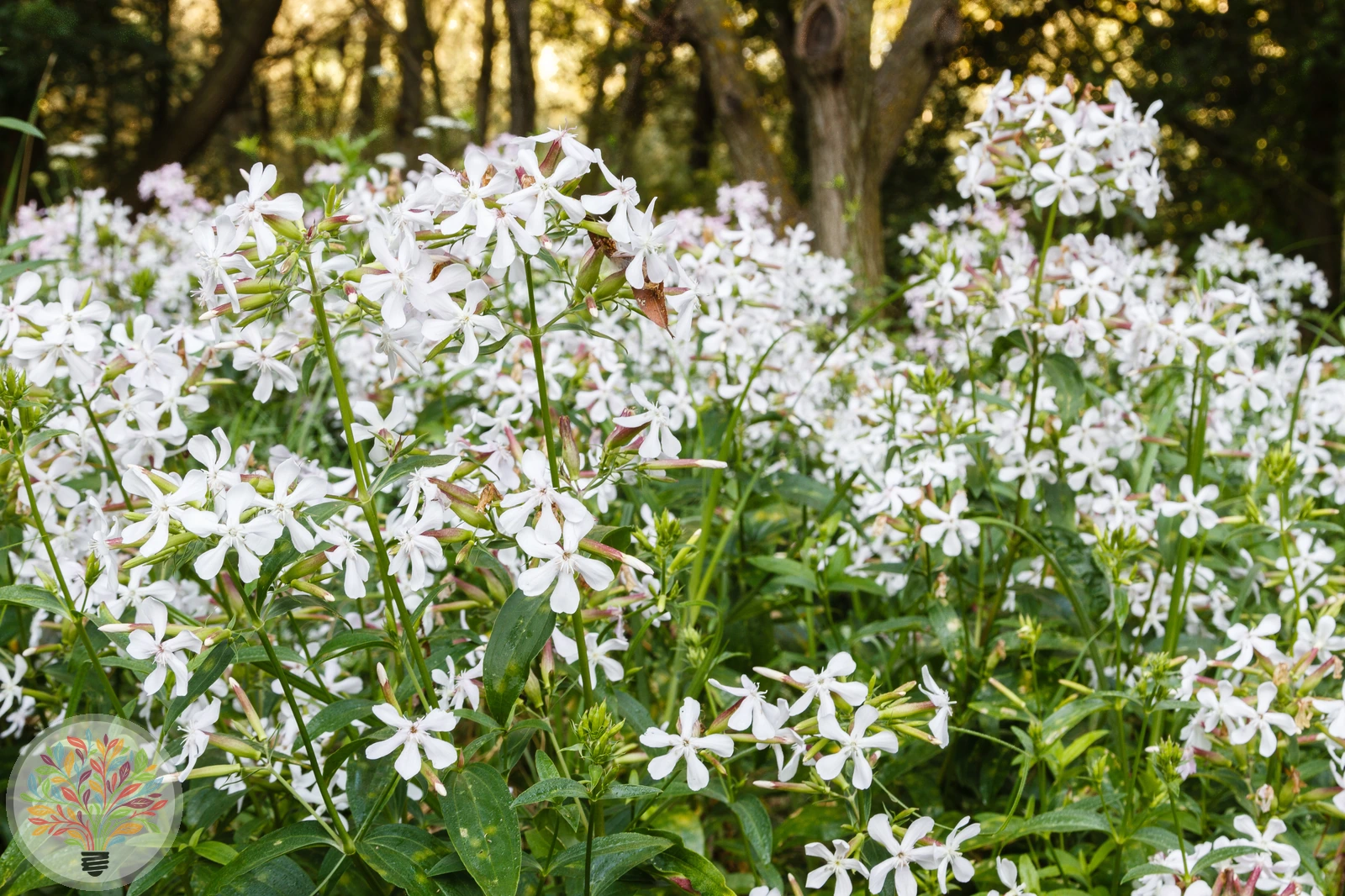
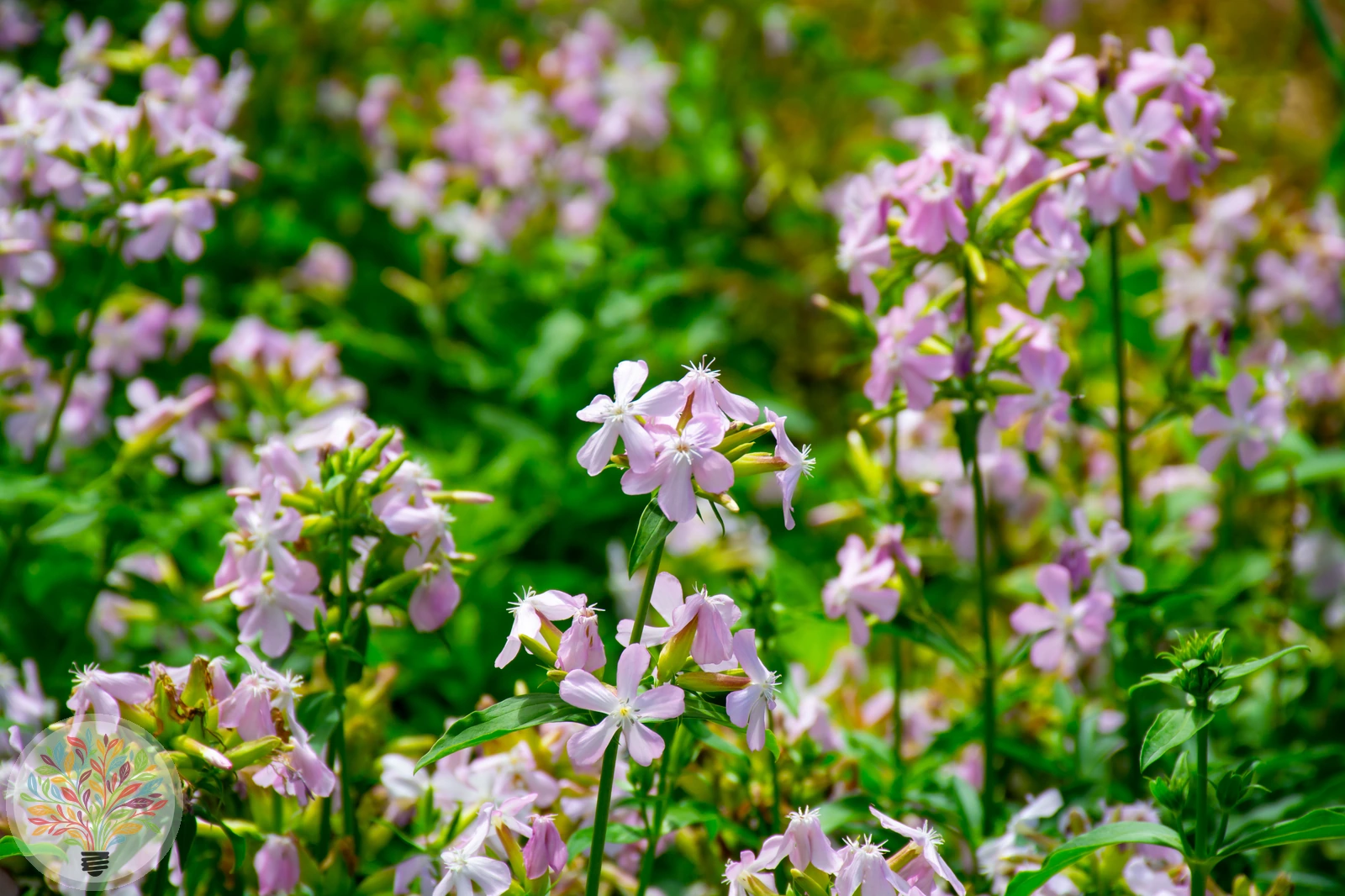
Schon von weitem fällt das Echte Seifenkraut durch seine blassrosa bis weißen Blütenbüschel auf, die besonders in den Abendstunden einen intensiven, süßlichen Duft verströmen. Diese Staude ist ein echter Gewinn für deinen Naturgarten, da sie spezialisierten Nachtfaltern wie dem Windenschwärmer (Agrius convolvuli) lebenswichtigen Nektar bietet. Auch Tagfalter wie der Kleine Fuchs (Aglais urticae) oder der Kleine Feuerfalter (Lycaena phlaeas) besuchen die Blüten im Hochsommer regelmäßig. Mit ihren Wurzeln befestigt die Pflanze zudem lockerere Erdbereiche an Böschungen. Wenn du eine robuste, pflegeleichte Art mit Geschichte suchst, ist das Seifenkraut die richtige Wahl für dich.
Duftender Nacht-Magnet für Windenschwärmer und Taubenschwänzchen.
Ökologisches Netzwerk
Klicken hebt Verbindungen hervor · Nochmals klicken öffnet die Artenseite
Netzwerk wird geladen...
BestäubungLarvalwirtBlütenbesuch
Ökologische Bedeutung
Das Seifenkraut ist eine ökologische Tankstelle für spezialisierte Flieger. Nach aktuellen Bestäubungsdaten profitieren besonders Nachtfalter wie das Taubenschwänzchen (Macroglossum stellatarum) und der Windenschwärmer (Agrius convolvuli) von den tiefen Blütenröhren. Tagsüber bietet die Pflanze eine wichtige Nahrungsquelle für den Kleinen Fuchs (Aglais urticae) und den Kleinen Feuerfalter (Lycaena phlaeas). Da die Blütezeit von Juni bis August reicht, deckt sie die kritische Hochsommerphase ab. In den hohlen Stängeln und verblühten Fruchtständen finden verschiedene Insekten zudem einen geschützten Platz für die kalte Jahreszeit.
Jahreszyklus
Feb-MrzAustrieb der unterirdischen Wurzelstöcke
Apr-MaiIdeale Pflanzzeit im Frühjahr
Jun-AugHauptblütezeit mit intensivem Abendduft
SepSamenreife und langsame Gelbfärbung der Stängel
Okt-NovZweite Pflanzzeit im Herbst bis zum ersten Frost
Dez-JanWinterruhe, vertrocknete Stängel dienen als Insektenquartier.
Sicherheitshinweis
Das Echte Seifenkraut ist nicht kindersicher. Die gesamte Pflanze enthält Saponine (seifenähnliche Inhaltsstoffe), die bei Verzehr zu Übelkeit führen und die Schleimhäute reizen können. Es besteht jedoch kaum Verwechslungsgefahr mit stark giftigen Gartenpflanzen, da die Nelken-typische Blütenform sehr markant ist.
Standort & Merkmale
Licht
Sonne
Feuchtigkeit
Frisch (Mäßig feucht)
Boden
Mittelzehrer (Normaler Boden)
Blütezeit
Jun – Sep
Bodenreaktion
Basisch / Kalkhold
Bioregion
Continental
Wuchsform
Krautige Pflanze
Verholzung
Nicht verholzt
Blatttyp
Breitblättrig
Pflanzenhöhe
0,509 m
Morphologische Merkmale: TRY ID3 (CC BY 3.0) & TRY ID81 (CC BY)
Pflege & Anbau
- Wähle einen vollsonnigen Platz in deinem Garten, damit die Pflanze kräftig blüht.
- Der Boden sollte frisch (mäßig feucht) sein; das Seifenkraut kommt als Mittelzehrer (Pflanze mit durchschnittlichem Nährstoffbedarf) gut mit normaler Gartenerde zurecht.
- Die beste Pflanzzeit ist im Frühjahr von März bis Mai oder im Herbst von September bis Ende November, sofern der Boden nicht gefroren ist.
- Sei dir bewusst, dass die Pflanze über Rhizome (unterirdische Kriechsprosse) Ausläufer bildet und sich so Ausbreitungsraum erobert.
- Ein Rückschnitt der verblühten Stängel im August kann eine schwächere Nachblüte anregen.
- Die Vermehrung gelingt am einfachsten durch Teilung des Wurzelstocks im zeitigen Frühjahr.
- Im Winter zieht die Pflanze komplett ein; die trockenen Stängel kannst du als Winterschutz für Insekten bis zum Frühjahr stehen lassen.
- Gute Partnerin: Die Wiesen-Flockenblume (Centaurea jacea) – beide Arten teilen sich gerne sonnige Standorte und ergänzen sich in ihrer Wuchsform hervorragend.
Wissenschaftliches Profil
Das Echte Seifenkraut (Saponaria officinalis) gehört zur Familie der Nelkengewächse (Caryophyllaceae). In der Region Deutschland, Österreich und Schweiz gilt es als Archäophyt (eine Pflanze, die bereits vor 1492 durch menschlichen Einfluss eingeführt wurde) und ist weit verbreitet. Man findet es bevorzugt an Flussufern, Wegrändern oder auf Schuttplätzen. Charakteristisch sind die lanzettlichen, gegenständigen Blätter (gegenüberliegend angeordnet) mit drei markanten Längsnerven und die fünfzähligen Blüten, deren Kelchblätter zu einer langen Röhre verwachsen sind.
Bestäuber & Besucher
31 Arten interagieren mit dieser Pflanze
Grosser KohlweisslingKleiner Kohl-WeißlingKleiner FuchsKleiner FeuerfalterErdhummelBlaue HolzbieneGammaeuleTaubenschwänzchenHonigbieneLigusterschwärmerWolfsmilchschwärmerZitronenfalterHauhechel-BläulingKiefernschwärmerBlauschwarze HolzbieneFaulbaum-BläulingSandhummelWindenschwärmerGroße BlutbieneDunkelgrüne SchmalbieneMistbieneParagus haemorrhousEristalis similisHainschwebfliegeBombus terrestris/lucorumLasioglossum sp3Weißfleck-WidderchenAckerhummelGemeine LangbauchschwebfliegeKleine KeilfleckschwebfliegeGewöhnliche Schmalbiene
Wirtsbeziehungen
3 Arten nutzen diese Pflanze als Wirt
Weitere Blütenbesucher
3 weitere Arten besuchen die Blüten
Quellen & Datenherkunft
•TRY v6.0 / BiolFlor flowering phenology (Request 47350) — CC BY 4.0TRY request 47350 (Public, Data Released, TRY v6.0; 2026-02-15). Cite TRY: Kattge et al. (2020), doi:10.1111/gcb.14904; original source: Trefflich, A., Klotz, S. & Kühn, I. (2002). Blühphänologie. BIOLFLOR, Schriftenreihe für Vegetationskunde 38:127–131.
•Interaktionsdaten via GloBI (CC-BY 4.0)
•Cook et al. (2025) UK Butterfly & Moth Traits (DOI: 10.5285/dbc7cc17-cbbd-49dd-bab4-8e8855768d66)
•pollinator_interactions
•Baden-Böhm F, App M, Thiele J (2022) — The FloRes Database: A floral resources trait database for pollinator habitat-assessment generated by a multistep workflow. Johann Heinrich von Thünen-Institut, Dryad, DOI: 10.5061/dryad.djh9w0w29 (CC0)
•FloraWeb / BfN
•EIVE 1.0 — Dengler et al. (2023), DOI: 10.3897/VCS.98324 (CC BY 4.0)
•GBIF Backbone Taxonomy — GBIF Secretariat (2024), DOI: 10.15468/39omei (CC BY 4.0)
•TRY Categorical Traits (ID3) — Kattge et al. (2012), DOI: 10.17871/TRY.3 (CC BY 3.0)
•TRY Global Spectrum (ID81) — Díaz et al. (2016/2021), DOI: 10.17871/TRY.81 (CC BY)
•Checklist Alien Plants Belgium — Verloove F (2023), Botanic Garden Meise (CC BY 4.0)
•Govaerts R et al. (2025) — World Checklist of Vascular Plants (WCVP) v14. Royal Botanic Gardens, Kew. DOI: 10.34885/xs7h-ze42 (CC BY 4.0)
•Foto: © 2018 / Adobe Stock / AdobeStock_216273897
Alle Daten sind CC BY 4.0, CC0 oder kompatibel lizenziert. Namensnennung gemäß Lizenzbedingungen. Vollständige Quellenübersicht →
Stand: 18.12.2025. Korrekturen können über das Feedback-Formular gemeldet werden.