Wiesen-Salbei
Salvia pratensis
Mit KI erstellt
Mehr erfahren
Die redaktionellen Texte dieses Profils wurden mithilfe von KI auf Grundlage der unten genannten wissenschaftlichen Daten und Quellen erstellt.
Auch bekannt als: sauge des prés
Familie: LippenblütlerGattung: SalviaHeimisch — DeutschlandRote Liste: V
🌿
79
Arten
interagieren
🔗
773
Interaktionen
dokumentiert
Über diese Art
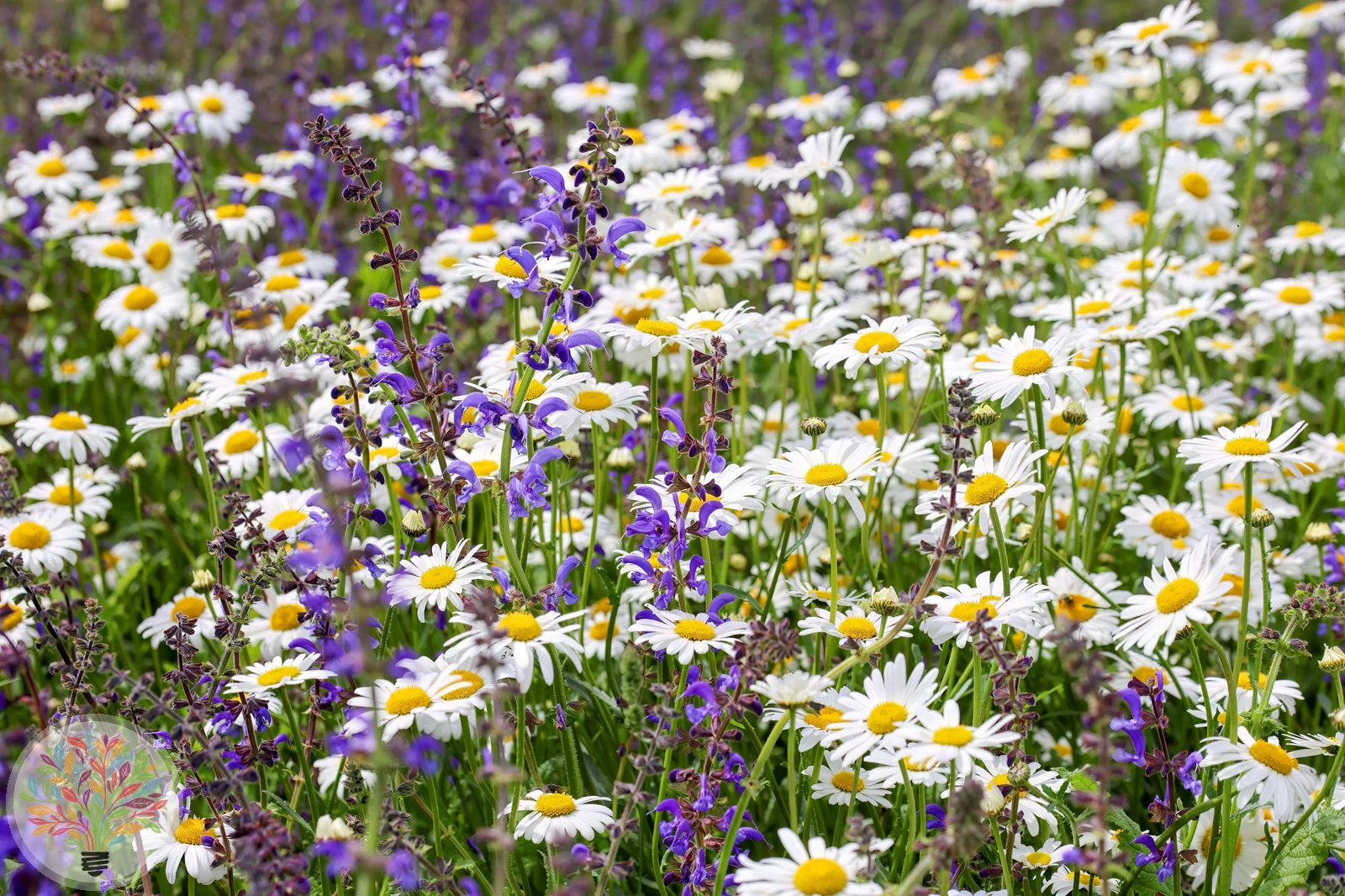
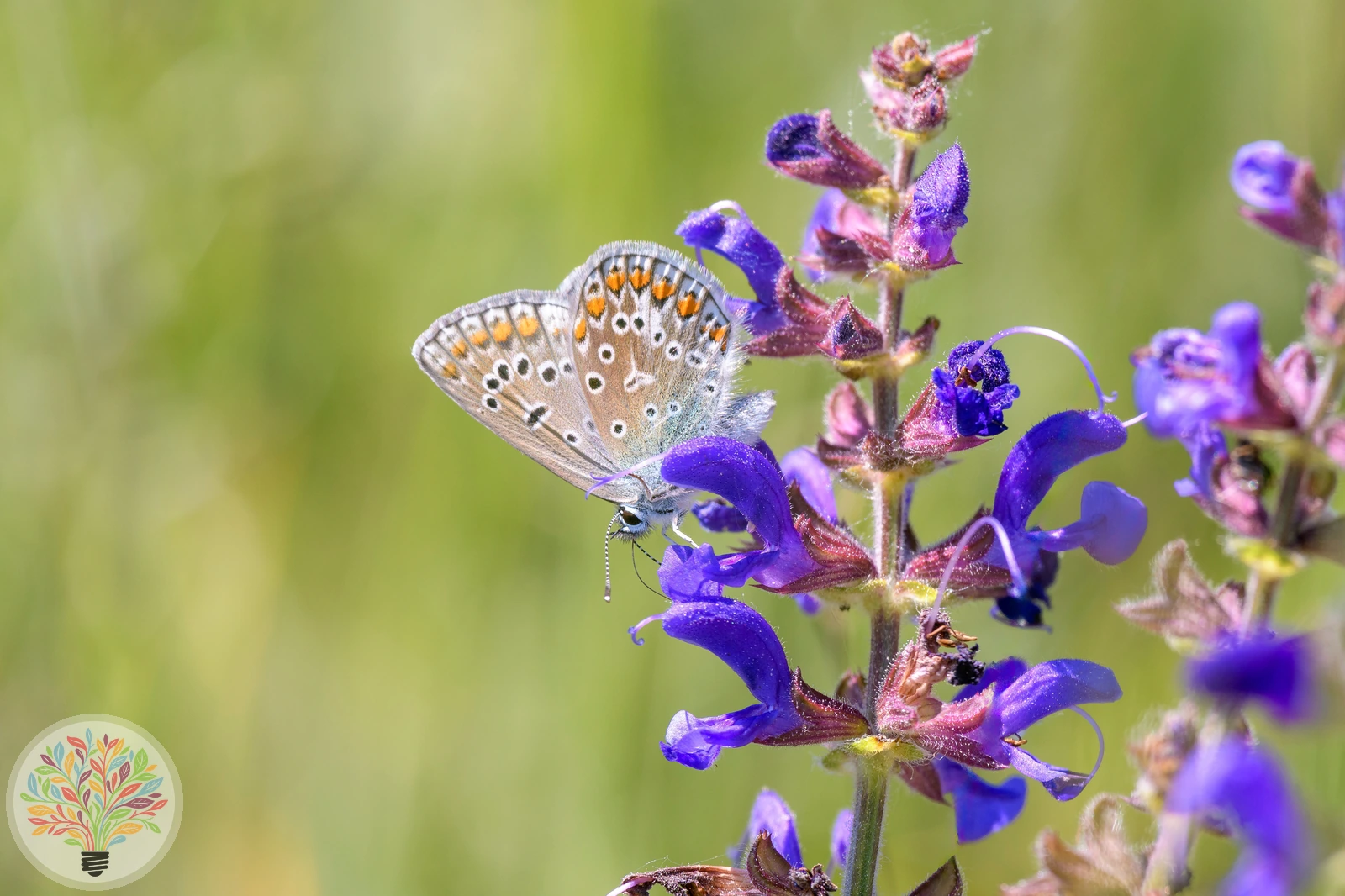
Wer den Wiesen-Salbei (Salvia pratensis) einmal gesehen hat, vergisst ihn nicht: Seine tiefvioletten, helmförmigen Lippenblüten sitzen in lockeren Etagen an aufrechten, vierkantigen Stängeln und leuchten schon von weitem aus dem Grün. Diese Pflanze ist ein wertvoller Anker für die Artenvielfalt in deinem Garten, da sie auf der Vorwarnliste der Roten Liste steht. Besonders die Große Salbei-Schmalbiene (Lasioglossum costulatum) und der Baumweißling (Aporia crataegi) sind auf diesen Pollen- und Nektarspender angewiesen. Mit seiner Ansiedlung schaffst du einen wichtigen Trittstein für bedrohte Insekten. Wenn du einen sonnigen Platz frei hast, ist dieser Salbei die ideale Wahl für naturnahes Gärtnern.
Blaues Wunder im Beet: Die wichtigste Tankstelle für die Salbei-Schmalbiene.
Ökologisches Netzwerk
Klicken hebt Verbindungen hervor · Nochmals klicken öffnet die Artenseite
Netzwerk wird geladen...
BestäubungBlütenbesuch
Ökologische Bedeutung
Nach aktuellen Bestäubungsdaten ist der Wiesen-Salbei eine Lebensversicherung für spezialisierte Insekten. Zu den häufigen Besuchern zählen die Dickkopf-Schmalbiene (Lasioglossum punctatissimum) und die Hosenbiene (Dasypoda hirtipes). Auch Tagfalter wie der Kleine Fuchs (Aglais urticae) und der seltene Baumweißling (Aporia crataegi) nutzen die tiefen Blüten als Energiequelle. Besonders hervorzuheben ist die Große Salbei-Schmalbiene (Lasioglossum costulatum), die fast ausschließlich auf diese Art angewiesen ist. Im Winter dienen die stehengelassenen Samenstände zudem als Nahrung für Vögel, die die kleinen Nüsschen aus den Kelchen picken.
Jahreszyklus
Feb-MärRosetten treiben aus
Apr-MaiErste Blüte und ideale Pflanzzeit
Jun-JulHauptblütezeit, Rückschnitt regt Zweitblüte an
AugSamenreife, Nahrung für Kleinvögel
Sep-NovMögliche Nachblüte und Pflanzzeit im Herbst
Dez-JanWinterruhe, trockene Stängel als Insektenquartier nutzen.
Sicherheitshinweis
Der Wiesen-Salbei gilt laut Datenbank nicht als kindersicher und sollte daher nicht verzehrt werden. Es besteht jedoch keine Verwechslungsgefahr mit stark giftigen heimischen Arten. Im Gegensatz zum Echten Salbei (Salvia officinalis) spielt er in der Küche keine Rolle und sollte rein als Zier- und Ökopflanze betrachtet werden.
Standort & Merkmale
Licht
Sonne
Feuchtigkeit
Trocken
Boden
Mittelzehrer (Normaler Boden)
Blütezeit
Apr – Jul
Bodenreaktion
Basisch / Kalkhold
Bioregion
Continental
Nektarwert
5
Pollenwert
5
Wuchsform
Krautige Pflanze
Verholzung
Nicht verholzt
Blatttyp
Breitblättrig
Pflanzenhöhe
0,484 m
Morphologische Merkmale: TRY ID3 (CC BY 3.0) & TRY ID81 (CC BY)
Pflege & Anbau
- Wähle einen vollsonnigen Standort für den Wiesen-Salbei aus.
- Der Boden sollte trocken bis frisch und gut durchlässig sein, da die Pflanze keine Staunässe (Ansammlung von Wasser im Boden) verträgt.
- Als Mittelzehrer (Pflanze mit mäßigem Nährstoffbedarf) kommt er mit normalem Gartenboden ohne zusätzliche Düngung gut zurecht.
- Pflanze ihn bevorzugt zwischen März und Mai oder im Herbst von September bis Ende November, solange der Boden offen ist.
- Ein Rückschnitt nach der ersten Blüte im Juli fördert oft einen zweiten Blütenflor im Spätsommer.
- Die Vermehrung gelingt einfach durch Aussaat oder durch Teilung der Horste (dicht gewachsene Pflanzenbüschel) im Frühjahr.
- Lass die verblühten Stängel über den Winter stehen, um Insekten einen Unterschlupf zu bieten.
- Gute Partnerin: Die Wiesen-Flockenblume (Centaurea jacea) - beide teilen ähnliche Standortansprüche und ergänzen sich hervorragend in ihrer ökologischen Funktion für Wildbienen.
Wissenschaftliches Profil
Der Wiesen-Salbei gehört zur Familie der Lippenblütler (Lamiaceae) und ist eine ausdauernde, krautige Pflanze. Er ist in weiten Teilen Mitteleuropas indigen (einheimisch) und besiedelt bevorzugt sonnige Halbtrockenrasen (trockenheitsliebende Grasländer auf kalkhaltigem Boden). Ein markantes Merkmal ist der Hebelmechanismus der Blüte, der den Pollen beim Eindringen eines Insekts präzise auf dessen Rücken überträgt. Als Archäophyt (eine Pflanze, die bereits vor 1492 ohne menschliches Zutun oder durch frühen Ackerbau zu uns kam) ist er hervorragend an die hiesigen Klimabedingungen angepasst.
Bestäuber & Besucher
77 Arten interagieren mit dieser Pflanze
Breitbindige SchmalbieneWeißbeinige SchmalbieneGartenhummelSteinhummelSchwarzspornige StängelbieneWald-KuckuckshummelGewöhnliche NatternkopfbieneErdhummelBlaue HolzbieneAcker-SchmalbieneHonigbieneWiesenhummelMai-LanghornbieneGroße Salbei-SchmalbieneGewöhnliche GoldfurchenbieneWiesenhummelDickkopf-SchmalbieneRostrote MauerbieneAckerhummelGoldene SchneckenhausbieneHeidehummelSchwarzrote SchmalbieneGewöhnliche TrauerbieneHummelschwärmerAurorafalter Veränderliche HummelAmpfer-GrünwidderchenBraunkolbiger Braun-DickkopffalterPlatterbsen-MörtelbieneGartenwollbieneSchwalbenschwanzKleiner FuchsHauhechel-BläulingKleiner Kohl-WeißlingTaubenschwänzchenAdmiralBlaue HolzbieneGebänderte PelzbieneHosenbieneRapsweißlingBaumweißlingSegelfalterRothaarige SchneckenhausbieneGrobpunktierte KleesandbieneSchwarze KeulhornbieneDunkelgrüne SchmalbienePolierte SchmalbieneKahle SchuppensandbieneEucera hungaricaLasioglossum maurusium
Weitere Blütenbesucher
2 weitere Arten besuchen die Blüten
Veränderliche KrabbenspinneAnthidium.manicatum
Quellen & Datenherkunft
•Interaktionsdaten via GloBI (CC-BY 4.0)
•pollinator_interactions
•FloraWeb / BfN
•EIVE 1.0 — Dengler et al. (2023), DOI: 10.3897/VCS.98324 (CC BY 4.0)
•EuPPollNet — Kuppler et al. (2025), DOI: 10.1111/geb.70000 (CC BY 4.0)
•Database of Pollinator Interactions (DoPI) — Pocock et al. (2022), DOI: 10.1002/ecy.3801 (CC BY)
•GBIF Backbone Taxonomy — GBIF Secretariat (2024), DOI: 10.15468/39omei (CC BY 4.0)
•TRY Categorical Traits (ID3) — Kattge et al. (2012), DOI: 10.17871/TRY.3 (CC BY 3.0)
•TRY Global Spectrum (ID81) — Díaz et al. (2016/2021), DOI: 10.17871/TRY.81 (CC BY)
•Govaerts R et al. (2025) — World Checklist of Vascular Plants (WCVP) v14. Royal Botanic Gardens, Kew. DOI: 10.34885/xs7h-ze42 (CC BY 4.0)
•Foto: © Adobe Stock / AdobeStock_604975387
Alle Daten sind CC BY 4.0, CC0 oder kompatibel lizenziert. Namensnennung gemäß Lizenzbedingungen. Vollständige Quellenübersicht →
Stand: 18.12.2025. Korrekturen können über das Feedback-Formular gemeldet werden.