Gewöhnliche Wegwarte
Cichorium intybus
Mit KI erstellt
Mehr erfahren
Die redaktionellen Texte dieses Profils wurden mithilfe von KI auf Grundlage der unten genannten wissenschaftlichen Daten und Quellen erstellt.
Auch bekannt als: Cichorium intybus var. intybus
Familie: KorbblütlerGattung: CichoriumHeimisch — Deutschland
🌿
126
Arten
interagieren
🔗
758
Interaktionen
dokumentiert
🐛
5
Wirtsbeziehungen
Arten
Über diese Art
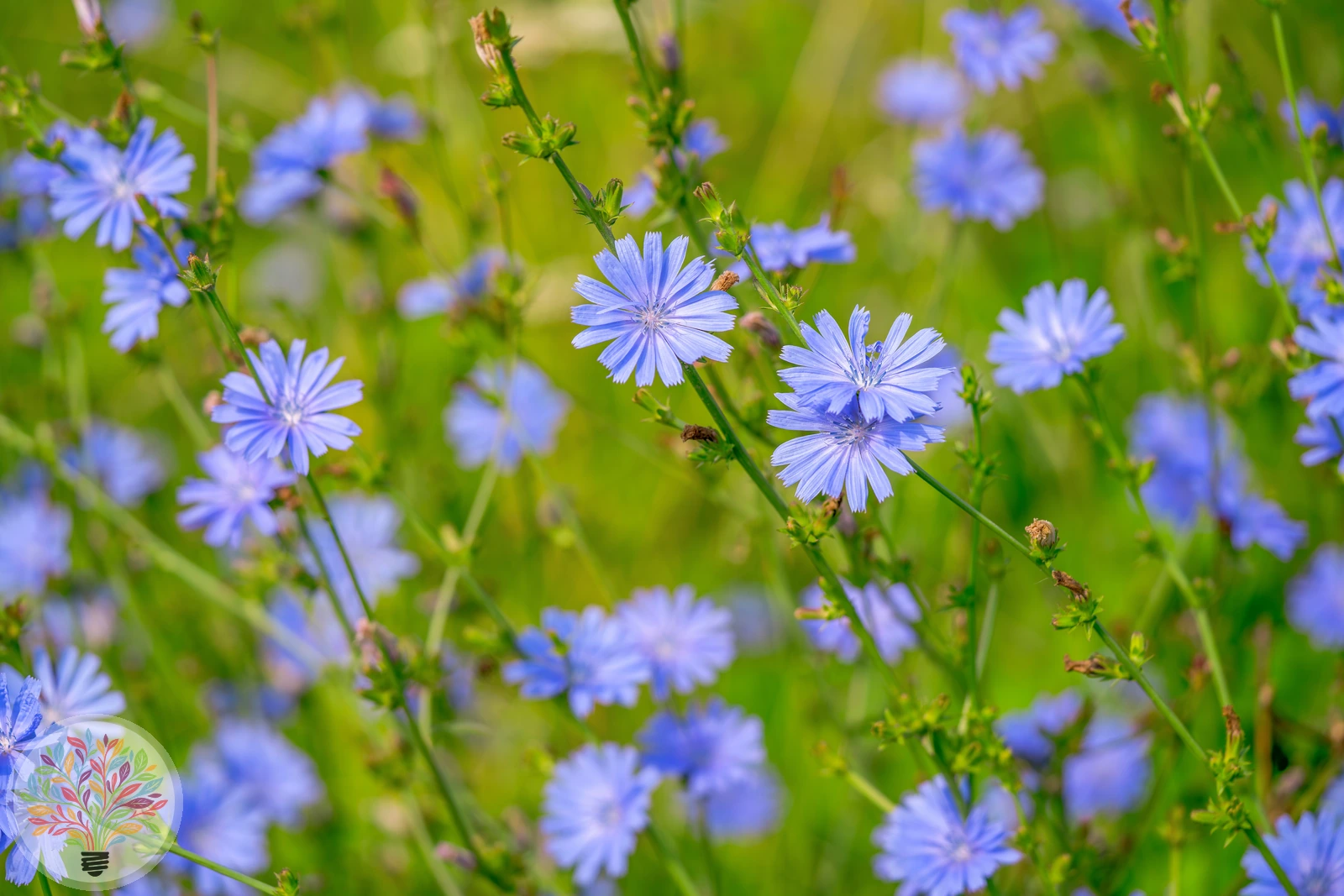
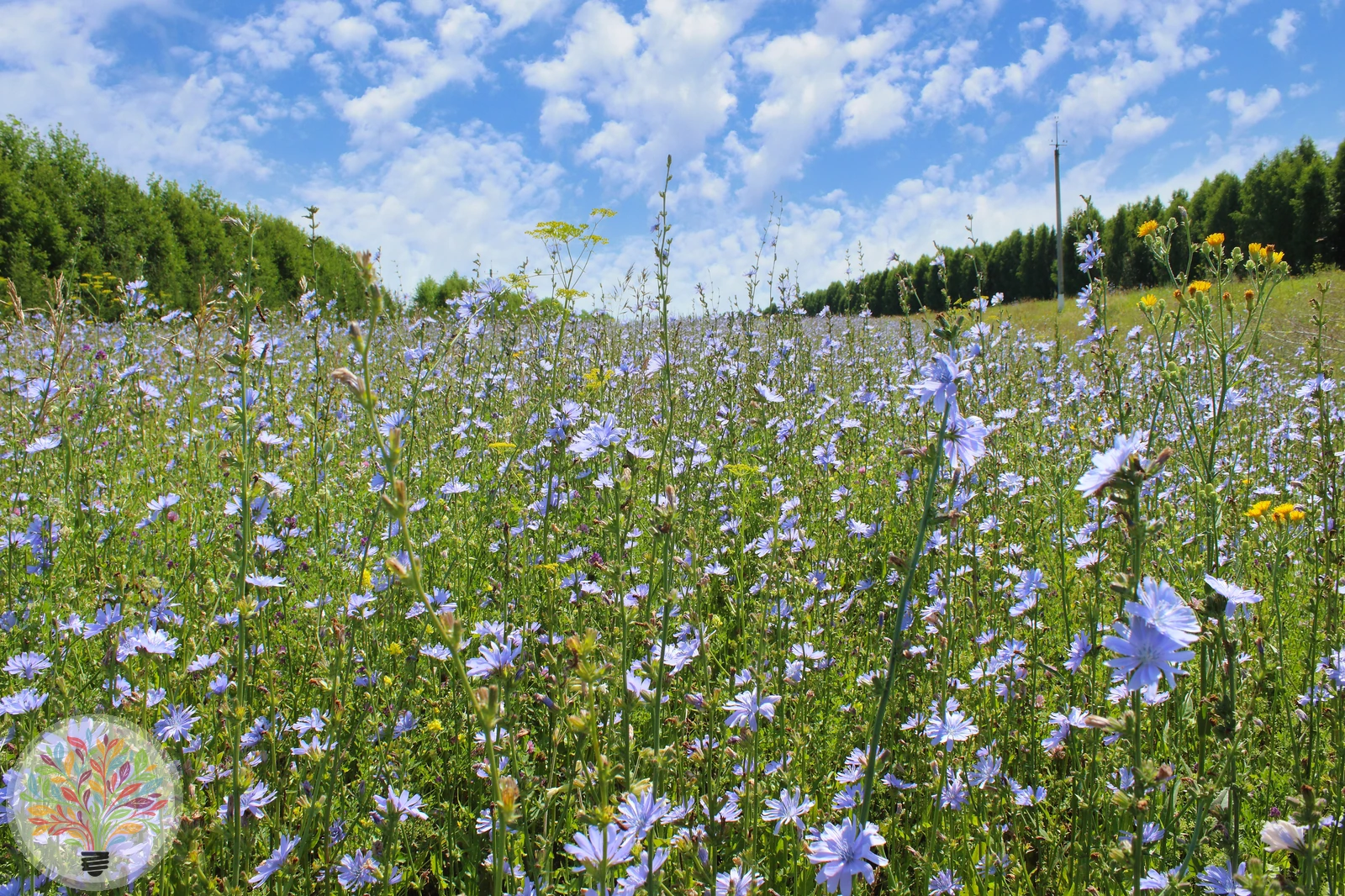
Du erkennst die Gewöhnliche Wegwarte (Cichorium intybus) an ihren leuchtend himmelblauen Blütensternen, die an sperrigen, fast blattlosen Stängeln sitzen und sich meist nur bei Sonnenschein am Vormittag öffnen. Diese robuste Pflanze ist eine Bereicherung für Deinen Garten, da sie als Archäophyt (eine vor langer Zeit eingeführte Art) perfekt an unser Klima angepasst ist. Besonders die Rotbeinige Furchenbiene (Halictus rubicundus) und die Dickkopf-Schmalbiene (Lasioglossum calceatum) profitieren von ihrem Pollenangebot. Wenn Du einen sonnigen Platz hast, an dem sich Natur entfalten darf, ist diese Blume die ideale Wahl für Dich. Mit ihrem tiefen Wurzelwerk ist sie zudem sehr pflegeleicht und widerstandsfähig.
Blaue Wunder von Juli bis Oktober: Ein Magnet für seltene Wildbienen und Falter.
Ökologisches Netzwerk
Klicken hebt Verbindungen hervor · Nochmals klicken öffnet die Artenseite
Netzwerk wird geladen...
BestäubungLarvalwirtBlütenbesuch
Ökologische Bedeutung
Nach aktuellen Beobachtungsdaten ist die Wegwarte eine zentrale Nahrungsquelle für spezialisierte Wildbienen wie die Rotbeinige Furchenbiene (Halictus rubicundus) und die Dickkopf-Schmalbiene (Lasioglossum calceatum). Auch die markante Haarige Dolchwespe (Scolia hirta) lässt sich häufig an den blauen Blüten beobachten. Schmetterlinge wie der Kleine Fuchs (Aglais urticae) nutzen den Nektar während der langen Blütezeit von Juli bis Oktober. Für die Raupen der Karden-Sonneneule (Heliothis viriplaca) stellt sie eine lebensnotwendige Futterpflanze dar. In den Wintermonaten bieten die verblühten Stängel zudem wertvolle Samen für heimische Singvögel. Damit fördert die Wegwarte die Artenvielfalt auf mehreren Ebenen Deines Gartens.
Jahreszyklus
Feb-MrzAustrieb der Blattrosetten am Boden
Apr-MaiIdeale Pflanzzeit für Jungpflanzen
JunAusbildung der hohen, kantigen Blütenstängel
Jul-OktHauptblütezeit und reger Insektenbesuch
OktSamenreife und natürliche Versamung
NovHerbst-Pflanzzeit bis zum ersten Frost
Dez-JanVertrocknete Stängel dienen als Winterquartier.
Sicherheitshinweis
Die Gewöhnliche Wegwarte (Cichorium intybus) wird in Fachdatenbanken als nicht kindersicher aufgeführt, weshalb Du beim Pflanzen in der Nähe von Spielbereichen umsichtig sein solltest. Es besteht jedoch keine Verwechslungsgefahr mit stark giftigen heimischen Arten. Die Pflanze ist in der Naturheilkunde bekannt, sollte aber im Ziergarten primär als ökologische Bereicherung betrachtet werden.
Standort & Merkmale
Licht
Sonne
Feuchtigkeit
Frisch (Mäßig feucht)
Boden
Mittelzehrer (Normaler Boden)
Blütezeit
Jul – Okt
Bodenreaktion
Basisch / Kalkhold
Bioregion
Continental
Wuchsform
Krautige Pflanze
Verholzung
Nicht verholzt
Blatttyp
Breitblättrig
Pflanzenhöhe
0,672 m
Morphologische Merkmale: TRY ID3 (CC BY 3.0) & TRY ID81 (CC BY)
Pflege & Anbau
- Standort: Wähle einen vollsonnigen Platz, damit die Blüten ihre volle Leuchtkraft entfalten können.
- Boden: Die Wegwarte ist ein Mittelzehrer (Pflanze mit mittlerem Nährstoffbedarf) und bevorzugt normale, mäßig feuchte Gartenerde.
- Pflanzzeit: Du kannst sie im Frühjahr von März bis Mai oder im Herbst von September bis November pflanzen, solange der Boden nicht gefroren ist.
- Pflege: Da sie sehr robust ist, benötigt sie kaum zusätzliche Düngung.
- Schnitt: Wenn Du die abgeblühten Stängel im Herbst stehen lässt, bietest Du Insekten ein Winterquartier.
- Vermehrung: Die Pflanze versamt sich an geeigneten Stellen zuverlässig von selbst.
- Gießen: Nur bei extremer Trockenheit ist zusätzliches Wasser nötig, da die Pfahlwurzel tiefere Schichten erschließt.
- Kombination: Eine hervorragende Partnerin ist die Wilde Möhre (Daucus carota). Beide Arten kommen natürlich in denselben Pflanzengesellschaften vor und ergänzen sich wunderbar in ihren Ansprüchen an Sonne und Boden.
Wissenschaftliches Profil
Die Gewöhnliche Wegwarte (Cichorium intybus) gehört zur Familie der Korbblütler (Asteraceae). In Mitteleuropa ist sie weit verbreitet und besiedelt typischerweise Ruderalflächen (vom Menschen geprägte Brachflächen) sowie trockene Wegränder. Sie wächst als ausdauernde, krautige Pflanze und bildet eine kräftige Pfahlwurzel aus, die bis zu zwei Meter tief in den Boden reichen kann. Die Blütenköpfe bestehen ausschließlich aus Zungenblüten und zeigen die für diese Art charakteristische, klare blaue Färbung.
Bestäuber & Besucher
91 Arten interagieren mit dieser Pflanze
Gewöhnliche SchmalbieneGrosser KohlweisslingEfeu-SeidenbieneGroße Salbei-SchmalbieneSteinhummelAckerhummelKleiner FuchsRapsweißlingBrauner WaldvogelWald-KuckuckshummelMooshummelKleiner HalsbockWeißbeinige SchmalbieneGemeiner SchmalbockAcker-SchmalbieneCryptocephalus aureolusHonigbieneFeldweg-SchmalbieneDickkopf-SchmalbieneHelle ErdhummelKomma-DickkopffalterWiesenhummelBedornte SchneckenhausbieneHelles GelbhörnchenHauhechel-BläulingGelbbindige FurchenbieneSandhummelHaarige DolchwespeHosenbieneRotbeinige FurchenbieneMalven DickkopffalterKleiner Kohl-WeißlingVerkannte GoldfurchenbieneÖstliche ZwergwollbieneFelsspalten-WollbieneGlockenblumen-ScherenbieneVierbindige FurchenbieneWeißbinden-SchmalbieneGartenwollbieneGelblingDüsterbieneHöhenhummelBirkenzeisigLuzerne-BlattschneiderbieneGoldschwebfliegeGemeine LangbauchschwebfliegeHainschwebfliegeBunte BlattschneiderbieneHalictus simplex-compressus-longobardicusGewöhnliche Bindensandbiene
Wirtsbeziehungen
5 Arten nutzen diese Pflanze als Wirt
Weitere Blütenbesucher
30 weitere Arten besuchen die Blüten
Gelbgrüner SchenkelkäferRasenameiseDistelfinkSynema globosumGrünblauer FallkäferOedemera flavipesRotbeiniger FeldlaufkäferHarpalus affinisSphaerophoria specNomiapis monstrosaMylabris quadripunctataOedemera barbaraOedemera caudataMuscina levidaAdia cinerellaSiphona geniculataDiptera sp16Azelia zetterstedtiiDolichopus plumipesEmpis bicuspidataRegenbremseLonchoptera bifurcataOpomyza germinationisPegoplata aestivaBotanophila striolataGelbe DungfliegeGemeine StrahlenmückePollenia rudisCoenosia tigrinaBellardia vulgaris
Quellen & Datenherkunft
•TRY v6.0 / BiolFlor flowering phenology (Request 47350) — CC BY 4.0TRY request 47350 (Public, Data Released, TRY v6.0; 2026-02-15). Cite TRY: Kattge et al. (2020), doi:10.1111/gcb.14904; original source: Trefflich, A., Klotz, S. & Kühn, I. (2002). Blühphänologie. BIOLFLOR, Schriftenreihe für Vegetationskunde 38:127–131.
•Cook et al. (2025) UK Butterfly & Moth Traits (DOI: 10.5285/dbc7cc17-cbbd-49dd-bab4-8e8855768d66)
•Interaktionsdaten via GloBI (CC-BY 4.0)
•pollinator_interactions
•Baden-Böhm F, App M, Thiele J (2022) — The FloRes Database: A floral resources trait database for pollinator habitat-assessment generated by a multistep workflow. Johann Heinrich von Thünen-Institut, Dryad, DOI: 10.5061/dryad.djh9w0w29 (CC0)
•FloraWeb / BfN
•EIVE 1.0 — Dengler et al. (2023), DOI: 10.3897/VCS.98324 (CC BY 4.0)
•GBIF Backbone Taxonomy — GBIF Secretariat (2024), DOI: 10.15468/39omei (CC BY 4.0)
•TRY Categorical Traits (ID3) — Kattge et al. (2012), DOI: 10.17871/TRY.3 (CC BY 3.0)
•TRY Global Spectrum (ID81) — Díaz et al. (2016/2021), DOI: 10.17871/TRY.81 (CC BY)
•Govaerts R et al. (2025) — World Checklist of Vascular Plants (WCVP) v14. Royal Botanic Gardens, Kew. DOI: 10.34885/xs7h-ze42 (CC BY 4.0)
•Foto: © Adobe Stock / AdobeStock_472617149
Alle Daten sind CC BY 4.0, CC0 oder kompatibel lizenziert. Namensnennung gemäß Lizenzbedingungen. Vollständige Quellenübersicht →
Stand: 18.12.2025. Korrekturen können über das Feedback-Formular gemeldet werden.